
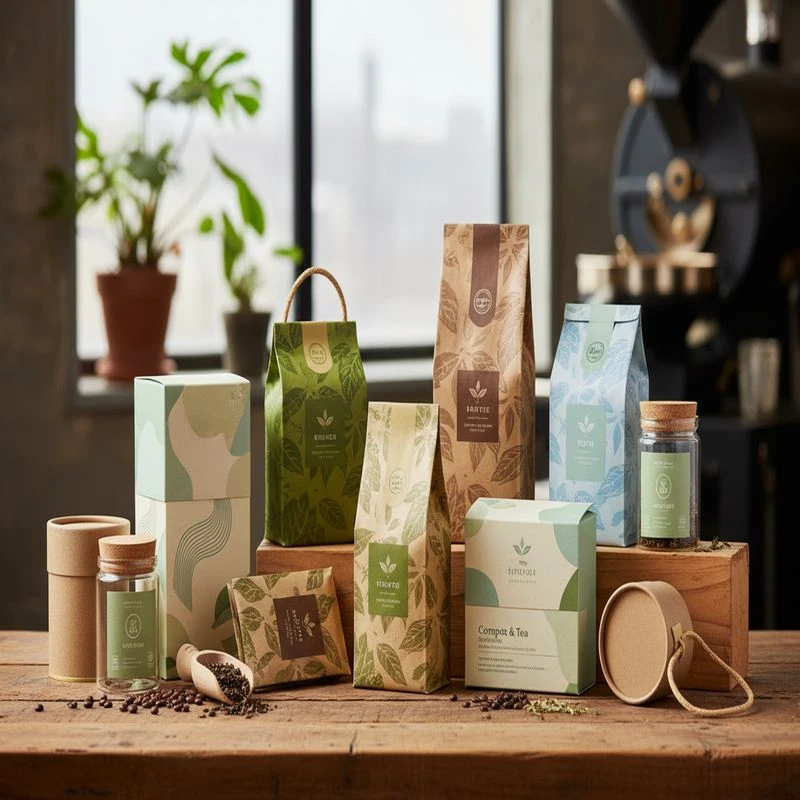
Elevate your brand’s commitment to the planet with innovative, eco-conscious packaging solutions tailored for the discerning South African market.
Coffee Packaging
Navigating the complex world of coffee packaging in South Africa presents a unique blend of opportunities and challenges, particularly when sustainability takes centre stage. For coffee brands, the primary takeaway is clear: consumers are increasingly demanding eco-friendly options, and your packaging is often the first, most tangible representation of your brand’s values. This isn’t merely about aesthetics; it’s about preserving freshness, extending shelf life, and, crucially, minimizing environmental impact throughout the product’s journey from bean to cup. The traditional multi-layer plastic pouches, while effective at barrier protection, are increasingly viewed with scrutiny due to their non-recyclability in many local waste streams.
The reasoning behind this shift is multifaceted. South African consumers are becoming more environmentally aware, driven by global trends and local initiatives. They seek transparency and expect brands to act responsibly. Moreover, regulatory pressures and waste management challenges within the country are pushing industries towards more sustainable practices. Therefore, adopting sustainable custom coffee packaging is not just a trend; it’s a strategic imperative for long-term brand relevance and growth. Failure to adapt can lead to reputational damage, loss of market share to eco-conscious competitors, and potentially, increased operational costs associated with future waste levies or compliance requirements.
Actionable steps for coffee brands involve a comprehensive review of current packaging materials and processes. Begin by exploring alternatives such as mono-material plastics that are locally recyclable, compostable films certified to South African standards, or even innovative reusable packaging systems for local deliveries or refill stations. Engage with local packaging suppliers who understand the South African waste infrastructure and can advise on materials that genuinely have an end-of-life solution here. For instance, while PLA-lined bags might be marketed as compostable, verify if industrial composting facilities capable of processing them exist in your distribution areas. Consider the entire lifecycle of your packaging: from sourcing raw materials to manufacturing, transportation, consumer use, and disposal. Investigate modified atmosphere packaging technologies that can extend shelf life with less material or simpler structures. For example, some brands are successfully transitioning to stand-up pouches made from single-polymer PE, which, unlike multi-layer laminates, can often be recycled through existing plastic recycling streams in major South African cities, provided they are clean and dry. This move not only aligns with sustainability goals but also simplifies consumer guidance on disposal, enhancing their post-purchase experience.
One potential pitfall is the phenomenon of ‘greenwashing,’ where packaging claims are misleading or unsubstantiated. Brands must be diligent in verifying certifications and understanding the true environmental impact of their chosen materials. A solution is to partner with accredited suppliers and seek third-party certifications for compostability or recyclability that are recognized globally and locally. Another challenge lies in maintaining product integrity with new materials, as sustainable alternatives sometimes have different barrier properties. This requires thorough testing to ensure your coffee remains fresh and protected from moisture, oxygen, and light. Work closely with packaging engineers to trial different film structures and degassing valves to guarantee that the switch to sustainable custom packaging does not compromise the quality and shelf life your customers expect. For example, testing new compostable films for their oxygen transmission rates (OTR) and water vapor transmission rates (WVTR) is crucial to prevent premature staling of your premium coffee beans. Regular sensory evaluations of packaged coffee stored in new sustainable materials over time will also provide valuable insights, ensuring that the integrity of the product is maintained from production to consumption.
Compostable Bags
The adoption of compostable bags for coffee and tea packaging represents a significant leap towards environmental responsibility, offering a viable alternative to traditional non-recyclable plastics. For brands in the South African market, embracing compostable bags means directly addressing the growing plastic pollution crisis and aligning with consumer demand for truly biodegradable solutions. The core takeaway here is that not all ‘biodegradable’ claims are equal; genuine compostability, especially in the South African context, requires adherence to specific standards and understanding of local waste infrastructure. These bags are designed to break down into organic matter, carbon dioxide, and water under specific conditions, returning valuable nutrients to the soil rather than accumulating in landfills or polluting natural environments.
The reasoning behind prioritizing certified compostable bags is rooted in the principles of a circular economy. Unlike recycling, which often involves complex processes and can lead to downcycling, composting offers a clear end-of-life pathway that enriches the soil. In South Africa, where recycling infrastructure for complex flexible packaging is still developing, compostable alternatives can bypass these challenges, provided there is access to appropriate composting facilities. This becomes particularly important for tea bags and ground coffee, where residual product makes recycling challenging. By choosing certified compostable materials, brands actively reduce their contribution to landfill waste and plastic pollution, demonstrating a tangible commitment to environmental stewardship that resonates strongly with eco-conscious consumers and potential B2B partners. This decision can also protect brands from future policy shifts or carbon taxes related to plastic waste.
Implementing compostable bags requires careful planning and selection. Start by identifying materials that are certified to international standards like EN 13432 or ASTM D6400, and crucially, local standards like SANS 1728 where applicable, which specifically outlines requirements for compostable packaging in South Africa. Partner with suppliers who can provide these certifications and have a proven track record. Consider the entire supply chain: from sourcing the compostable film to ensuring proper storage to maintain its integrity before filling, and finally, educating consumers on correct disposal. For example, advise customers if the packaging is suitable for home composting or requires industrial composting, and direct them to local municipal or private composting facilities if applicable. Brands might explore partnerships with local community composting initiatives or even establish their own take-back programmes to facilitate proper disposal, especially in areas with limited infrastructure. It is essential to communicate clearly on the packaging itself whether it is suitable for home or industrial composting, as the conditions required for breakdown differ significantly, and miscommunication can lead to bags ending up in landfills regardless.
A significant potential pitfall is the confusion between ‘biodegradable’ and ‘compostable.’ Many materials marketed as biodegradable may only break down into microplastics or require specific, non-natural conditions, failing to fully decompose. The solution is to insist on third-party certifications for *compostability* and understand the nuances of industrial versus home composting. Industrial composting facilities maintain specific temperature, moisture, and microbial conditions for efficient breakdown, which are often not met in a typical home compost heap. Another challenge is the barrier properties of compostable films, which historically have been inferior to conventional plastics. However, advancements in material science mean that high-barrier compostable films are now available, capable of protecting coffee and tea from oxygen and moisture. Work closely with your packaging supplier to conduct shelf-life testing to ensure product freshness is maintained. For instance, specific multi-layer compostable films are engineered to provide adequate oxygen and moisture barriers for roasted coffee beans, ensuring that their aromatic profile and freshness are preserved throughout the desired shelf life, typically 6-12 months. This often involves layers of materials like PLA, cellulose, and plant-based barrier coatings, all designed to break down effectively in a commercial composting environment while offering competitive performance. The table below illustrates common compostable materials used in sustainable custom packaging for coffee and tea, alongside their key characteristics and typical applications.
| Material Type | Key Characteristics | Typical Applications | Compostability (SANS 1728/EN 13432) |
|---|---|---|---|
| PLA (Polylactic Acid) | Derived from renewable resources (e.g., corn starch). Good clarity, barrier properties vary. | Coffee bags, tea bags, inner linings, clear windows. | Industrial Compostable |
| Kraft Paper (lined/coated) | Renewable, often recycled content. Can be coated with bio-based films for barrier. | Outer layers for coffee bags, tea boxes, pouches. | Often Industrial, depends on coating |
| Cellulose-based Films | Made from wood pulp, high transparency, good printability. | Individual tea bag wrappers, flow wraps, inner liners. | Home & Industrial Compostable (check specific product) |
| Bio-based Barrier Coatings | Applied to paper or other compostable films to enhance barrier properties. | Inner layers of pouches, laminates for coffee and tea bags. | Industrial Compostable |
This table highlights the diversity of compostable materials available, each offering distinct advantages for sustainable custom packaging. Understanding these characteristics allows brands to select the most appropriate material to balance product protection, consumer experience, and environmental impact. Always confirm specific certifications and local composting capabilities for chosen materials.
Custom Labels
Custom labels are far more than just adhesive pieces conveying product information; they are critical storytelling elements that can significantly amplify a coffee or tea brand’s commitment to sustainability, especially within the competitive South African market. The primary takeaway is that your label, much like your primary packaging, offers a powerful opportunity to reinforce your eco-conscious values and guide consumer behavior. It’s about ensuring every component of your packaging system, right down to the smallest detail, aligns with your overarching sustainability narrative. A custom label can educate, inspire, and differentiate your product in a crowded retail space, making it a pivotal tool for both branding and environmental responsibility.
The reasoning behind integrating sustainable practices into custom label design is twofold. Firstly, consumers are increasingly scrutinizing every aspect of a product, and a non-sustainable label on otherwise eco-friendly packaging can undermine your entire message. It creates a disconnect that can erode trust. Secondly, a thoughtfully designed sustainable label can actively contribute to the overall environmental performance of your packaging. This means considering the material of the label itself, the inks used for printing, and the adhesive that binds it to your primary packaging. In South Africa, where waste sorting and recycling can be complex, choosing labels that are compatible with the recycling or composting stream of your main packaging is paramount to ensure a truly holistic sustainable solution. Ignoring these details is a missed opportunity to complete the sustainable loop and can lead to consumer confusion or even criticism.
Actionable steps for creating truly sustainable custom labels begin with material selection. Opt for labels made from recycled content, such as post-consumer waste (PCW) paper, or those derived from renewable resources like sugarcane or stone paper. If your primary packaging is compostable, seek out compostable labels and adhesives that are certified to break down alongside it, ensuring the entire unit can be composted without contamination. Next, focus on the inks. Traditional petroleum-based inks can contain heavy metals and volatile organic compounds (VOCs). Transition to vegetable-based inks (e.g., soy, linseed oil) or water-based inks, which are more environmentally friendly and often biodegradable. The adhesive choice is equally important; look for water-soluble, repulpable, or compostable adhesives that don’t hinder the recyclability or compostability of the label and the package. Engage with label manufacturers who specialize in sustainable options and can provide evidence of their materials’ eco-credentials. For example, if you are using a recyclable PET pouch for your tea, ensure your label is also PET-compatible for recycling, or at least easily removable without leaving residues that contaminate the recycling stream. Clearly communicate the sustainable attributes of your label on the package itself, perhaps with small icons or a brief explanation of the recycled content or compostable nature, further educating your South African customer base.
A common pitfall is overlooking the adhesive. A sustainable label material printed with eco-friendly inks can still be rendered non-recyclable or non-compostable if a petroleum-based, non-removable adhesive is used. The solution is to specify adhesives that match the end-of-life pathway of your primary packaging. For instance, if your coffee bag is destined for paper recycling, ensure the label’s adhesive allows for clean separation during the repulping process. Another challenge can be the durability and print quality of sustainable label materials, which might differ from conventional options. Brands might worry about the label not withstanding moisture or friction in a retail environment. The solution involves working with experienced label suppliers who can recommend robust, eco-friendly materials and specialised coatings or varnishes that protect the label without compromising its sustainability. Always request samples and conduct real-world tests to assess durability, adhesion, and aesthetic quality under typical storage and display conditions. For example, a South African tea brand might choose a sugarcane-based label with a water-based adhesive for their compostable tea boxes, ensuring that when the box is composted, the label decomposes seamlessly with it. They would test this label for scuff resistance and colour vibrancy to ensure it withstands handling and still looks premium on the shelf. This holistic approach ensures that your sustainable custom packaging is not just a marketing claim, but a demonstrable commitment, from the largest bag to the smallest label.
B2B Branding
For coffee and tea brands operating in the South African market, B2B branding is profoundly impacted by sustainable custom packaging. It’s no longer just about the quality of the product inside, but the integrity and environmental responsibility reflected by its external presentation. The core takeaway here is that sustainable packaging serves as a powerful non-verbal declaration of your brand’s values, directly influencing your relationships with retailers, distributors, and corporate clients. In an era where corporate social responsibility (CSR) and environmental, social, and governance (ESG) factors are paramount, your packaging communicates your commitment before a single word is spoken, making it a critical asset in securing and growing your B2B partnerships.
The reasoning behind this elevated importance stems from shifting market dynamics. Retailers and hospitality groups in South Africa are increasingly facing pressure from their own customers, investors, and internal policies to green their supply chains. They are actively seeking partners who can help them meet their sustainability targets. When your coffee or tea product arrives in sustainable custom packaging—be it recyclable, compostable, or made from recycled content—it simplifies their reporting, reduces their waste management burden, and enhances their own brand image. Furthermore, for corporate clients looking to stock eco-friendly options for their offices or events, your sustainable packaging provides an immediate solution that aligns with their internal sustainability mandates. Brands that fail to adapt risk being overlooked in favor of competitors who demonstrate a stronger commitment to environmental stewardship, potentially losing out on lucrative contracts and broader market reach.
Actionable steps to leverage sustainable custom packaging for B2B branding start with clearly articulating your packaging’s eco-credentials. Develop comprehensive documentation detailing the materials used, their certifications (e.g., SANS 1728 for compostability, local recycling compatibility), and their end-of-life pathways. This information should be readily available for your B2B partners, making it easy for them to understand and communicate your sustainability efforts downstream. Incorporate sustainability messaging directly onto your B2B packaging, perhaps through subtle eco-badges or a QR code linking to a dedicated page on your website explaining your packaging choices. For example, wholesale sacks of coffee beans destined for cafes could feature large, clear labels indicating that the sack itself is recyclable, along with instructions for proper disposal, thus helping cafes manage their waste more effectively. Engage in proactive communication with potential and existing B2B partners, offering to discuss your sustainable packaging strategy and how it can contribute to their own environmental objectives. Participate in industry events and trade shows in South Africa, showcasing your sustainable packaging solutions as a key differentiator. Consider developing bespoke sustainable packaging options for specific B2B clients, demonstrating flexibility and a deep understanding of their unique needs and brand identity. This could involve offering larger, reusable containers for high-volume customers or providing branded compostable inner bags for tea, tailored to their operational requirements.
A common pitfall in B2B branding with sustainable packaging is inconsistent messaging or a lack of verifiable claims. Greenwashing, even unintentional, can quickly erode trust. The solution is absolute transparency and verifiable data. Work with certified suppliers and ensure all your sustainability claims are backed by scientific evidence or recognized certifications. Avoid vague terms like “eco-friendly” without further explanation. Another challenge is the potential perception of higher cost associated with sustainable packaging, which can be a barrier for B2B partners focused on margins. The solution involves presenting a clear value proposition that extends beyond cost. Highlight the long-term benefits such as enhanced brand reputation, compliance with future regulations, reduced waste disposal costs for the partner, and increased consumer appeal. Frame the investment in sustainable custom packaging as a strategic business decision that pays dividends in brand loyalty and market differentiation. For instance, you might present a table comparing the lifecycle costs of conventional versus sustainable packaging, including waste disposal fees and potential marketing advantages. Emphasize how your sustainable packaging can help their business attract and retain environmentally conscious customers, ultimately boosting their sales and differentiating their offering in the South African marketplace.
| Parameter | Conventional Packaging (e.g., Multi-layer Plastic) | Sustainable Custom Packaging (e.g., Compostable/Recyclable Mono-material) |
|---|---|---|
| Material Source | Fossil fuels, virgin plastics | Renewable resources (plant-based), recycled content |
| End-of-Life Pathway | Landfill, incineration, potential litter | Composting (industrial/home), recycling, biodegrading |
| Waste Management Cost for Partner | Potentially higher landfill levies, complex sorting | Lower disposal cost for compostable, easier recycling stream |
| Brand Image & CSR Alignment | Neutral to negative depending on public perception | Strong positive, enhances corporate social responsibility |
| Consumer & Retailer Demand | Decreasing preference | Increasing preference, market differentiator |
This table illustrates a clear comparison, emphasizing the benefits that sustainable custom packaging brings to B2B relationships beyond just the environmental impact. It provides tangible points that coffee and tea brands can use to advocate for their sustainable choices to wholesale buyers and corporate clients, showcasing the strategic advantage it offers in the South African business landscape.
Eco Design
Embracing eco-design principles for your coffee and tea packaging is not merely about choosing a different material; it’s a holistic approach to minimizing environmental impact throughout the entire lifecycle of your product. For South African brands, the fundamental takeaway is that designing with the environment in mind from the outset can lead to more innovative, cost-effective, and genuinely sustainable custom packaging solutions. This approach moves beyond simply “less bad” packaging to actively seeking opportunities to create packaging that is truly regenerative or circular, considering everything from material selection and manufacturing processes to transportation, consumer use, and ultimate disposal or reuse.
The reasoning behind integrating eco-design is compelling: it offers a proactive strategy to address environmental challenges rather than a reactive response to regulations or consumer pressure. By considering environmental factors at every stage of the design process, brands can identify opportunities for material reduction, energy efficiency, waste minimization, and improved recyclability or compostability. This can lead to lighter packaging that reduces transportation emissions, simpler designs that use fewer resources, and materials that have a clear, beneficial end-of-life pathway within South Africa’s evolving waste infrastructure. Ignoring eco-design means missing out on significant opportunities for innovation, cost savings, and enhanced brand reputation, potentially leaving brands vulnerable to future environmental legislation or changing market demands. It fosters a culture of continuous improvement, pushing brands to think creatively about how their packaging interacts with the environment and society.
Actionable steps for implementing eco-design begin with a comprehensive lifecycle assessment (LCA) of your current packaging. This involves analyzing the environmental impacts associated with all stages of your packaging’s life, from raw material extraction to manufacturing, distribution, use, and disposal. While a full LCA can be complex, a simplified internal review can highlight major impact areas. Based on these insights, prioritize design decisions guided by the “Reduce, Reuse, Recycle, Rot” hierarchy. For “Reduce,” focus on material minimization – can you use a thinner film, a smaller label, or remove unnecessary components? For “Reuse,” explore options like refillable coffee tins or tea caddies, encouraging consumers to participate in a circular model. “Recycle” necessitates choosing mono-materials that are widely accepted in South African recycling streams and designing for easy separation of components (e.g., easy-peel labels). “Rot” refers to compostable options, ensuring they meet certified standards and have access to composting facilities. For example, a South African coffee brand might redesign its bulk coffee bags by switching from a multi-layer laminate to a single-material (mono-material) polyethylene structure that is readily accepted by local plastic recyclers. They might also remove any unnecessary metallic components or design the bag with an integrated valve that is also made from a compatible, recyclable plastic, thus simplifying the recycling process for cafes and consumers alike.
A potential pitfall in eco-design is the trade-off between sustainability and functionality or aesthetics. Sometimes, a more sustainable material might have different performance characteristics (e.g., barrier properties, printability), or a minimalist design might appear less premium. The solution lies in innovative engineering and creative design. Work closely with packaging experts to find materials that meet both your environmental and functional requirements. For instance, advancements in bio-based barrier coatings can now provide performance comparable to conventional plastics, ensuring coffee freshness is not compromised. A visually appealing design doesn’t have to be complex; often, simplicity and transparency about sustainable choices can convey a powerful message of quality and authenticity. Another challenge is ensuring that your eco-design choices are truly beneficial and don’t inadvertently create new environmental problems (e.g., using a “recycled” material that requires excessive energy to process). The solution is continuous research, staying informed about the latest material science, and seeking third-party verifications. Engage with industry associations and sustainability consultants in South Africa who can provide current insights into local infrastructure and best practices. Consider participating in packaging innovation challenges or collaborating with universities to explore novel, locally relevant eco-design solutions. For example, some tea brands are exploring innovative tea bag materials made from plant starch that are home compostable, moving away from microplastic-shedding nylon or polypropylene. Through careful eco-design, they ensure these new tea bags maintain brewing performance and appeal, ultimately delivering a superior, environmentally conscious product to the South African consumer.
