
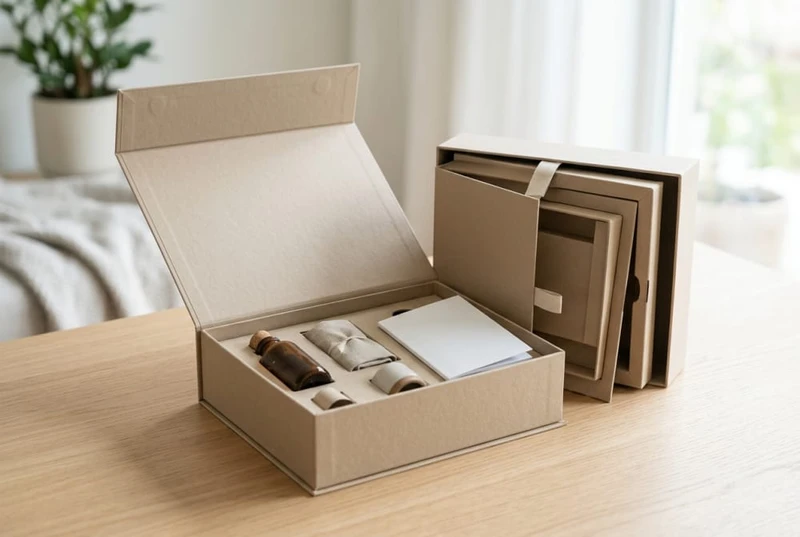
Subscription packaging should be designed as a repeatable system, not a one-off gift box. The most effective structures protect changing product mixes, guide the recipient through the reveal, and remain simple for a packing team to assemble month after month.
For South African subscription brands, custom packaging can strengthen brand memory when it balances presentation with practical realities: product variation, storage space, packing speed, transport handling and the need to avoid excess material. The aim is not to make every delivery identical. It is to make every delivery recognisably yours.
Subscription packaging at a glance
Subscription packaging concepts built for repeat shipments and stronger brand memory start with one core decision: choose a dependable outer format, then create variety through modular inserts, printed components and themed stickers.
A well-planned subscription box normally has four layers:
- Outer shipping or mailing box – protects the order and establishes the first physical impression.
- Presentation layer – tissue, a printed card, sleeve or inner-lid message that creates anticipation.
- Organisation layer – dividers, trays, inserts or bands that stop products moving and make the assortment easy to understand.
- Variable campaign layer – stickers, cards, labels and small printed pieces that can change by month, season or customer group.
This approach gives buyers a useful balance. The structural box can be ordered around a stable specification, while lower-commitment printed elements provide flexibility for changing editions.
| Packaging element | Best role in a subscription programme | What to check |
|---|---|---|
| Corrugated mailer | Repeat deliveries, direct-to-consumer orders | Internal size, closure, stacking needs and print area |
| Rigid presentation box | Premium gifting or curated keepsake formats | Storage, weight, outer protection and reuse expectations |
| Folding carton | Lightweight individual products or inner packs | Product fit, crush resistance and closure style |
| Die-cut insert | Holding a consistent set of products in position | Product tolerance, removal ease and changing product sizes |
| Divider | Separating several items or fragile components | Cell dimensions, assembly steps and product movement |
| Printed card | Instructions, story and offer communication | Version control, copy accuracy and disposal implications |
| Sticker | Theme, personalisation or short-run changes | Adhesion to the chosen surface and label placement |
Retention is influenced by the product, service, price, relevance and customer support as well as the packaging. Packaging cannot resolve a weak subscription proposition, but it can remove avoidable disappointment and make the arrival feel considered.
Planning a repeatable box format for rotating products and monthly campaigns
Start with the subscription range rather than the idealised “hero” box. List the smallest, largest, heaviest and most fragile possible products likely to appear over several editions. A box that only fits one month’s selection creates recurring packing problems as the assortment changes.
Choose an internal footprint before the exterior look
Set the usable internal length, width and depth based on the product range and the arrangement you want customers to see. Consider whether products should sit:
- in a single layer for immediate visibility;
- upright in cells for easy identification;
- in two layers with a card or tissue separating them;
- in a tray that can be lifted out; or
- loosely packed with protective fill for highly variable assortments.
Avoid specifying a very tight fit unless every product is fixed. Small changes in jar shape, wrapper thickness or bundled extras can make a previously suitable insert unusable.
A practical option is to define a stable box footprint with a modest amount of adjustable space. This can be handled by tissue, paper fill, a folded card, an adjustable divider or a smaller secondary carton. The objective is secure presentation without needing a newly engineered structure for every campaign.
Separate structural decisions from monthly creative decisions
Structural elements usually need longer-term consistency. These include board choice, box dimensions, closure, base construction and insert geometry. Campaign elements can change more readily:
- outer or inner-lid artwork;
- themed sticker sets;
- product information cards;
- colour-coded seals;
- limited-edition sleeves;
- personalised name labels; and
- QR codes leading to edition-specific content.
This distinction helps procurement teams control complexity. It also means a theme change does not automatically require unused boxes to be discarded.
Build a pack-out specification
A pack-out specification turns a visual concept into a workable packing process. It should show the assembly sequence, product locations, packing materials, card placement and final closure method. Include photographs or simple diagrams where helpful.
Before committing to production, check:
- whether the box can be assembled without specialist handling;
- whether inserts work with the full anticipated size range;
- whether staff can tell similar product variants apart;
- whether seals, labels and barcodes remain visible where needed;
- whether the packed unit closes cleanly without bulging; and
- whether the outer dimensions suit your storage and dispatch process.
The best-looking format is not automatically the best subscription format if it introduces multiple manual steps or makes product substitutions confusing.
Insert strategies that keep mixed assortments organised and visually appealing
Inserts do more than hold products in place. They establish hierarchy: what the recipient notices first, which products feel connected, and whether the contents look curated or simply packed.
The right insert depends on assortment stability and product sensitivity.
When to use die-cut inserts
Die-cut inserts work well where products have predictable dimensions, such as bottles, jars, tools, sample sets or collectible items. They can create a crisp reveal and limit movement during handling.
However, a precision-cut insert can become restrictive if contents rotate often. Confirm the product dimensions, including lids, pumps, caps, wrapped edges and any protective sleeves. Also check that a customer can lift each item out without tearing the insert or struggling with a tight cavity.
Use die-cut inserts when:
- most products stay the same size;
- position and presentation are important;
- items are breakable or prone to rubbing together; or
- the unboxing sequence is part of the brand concept.
When dividers or adaptable partitions are better
Dividers provide more flexibility for snack collections, hobby supplies, mixed beauty selections and changing wellness products. They separate products without locking the programme into one exact shape.
Partitions can also simplify stock management because one divider pattern may accommodate several product combinations. The trade-off is that the presentation may look less sculpted than a die-cut tray. Good visual design, consistent packing order and an appropriate top card can make a divided format still feel polished.
Use paper-based presentation thoughtfully
Tissue, shredded paper, crinkle fill and folded paper can soften the presentation and fill unused space. They are useful when stock varies, but should not conceal important products or force customers to dig through excessive material.
Keep it deliberate:
- use enough material to stabilise the contents, not to create clutter;
- select colours that support the brand palette and product visibility;
- make product information easy to find; and
- consider how recipients will separate or dispose of mixed materials.
If sustainability claims are planned, verify the applicable material composition, inks, coatings and local disposal guidance before making them. Do not assume that a paper-looking component is automatically recyclable in every setting.
How storytelling, print, and presentation shape the unboxing experience
A subscription delivery has a built-in advantage: it can develop a story over time. The packaging should make the edition understandable in seconds, then give interested recipients more detail to explore.
A useful unboxing flow is:
- Recognition – the outer box signals the brand through a consistent colour, mark or message.
- Welcome – an inner-lid print, card or seal sets the monthly theme.
- Discovery – the layout makes the product selection visible and easy to navigate.
- Explanation – a concise printed insert explains products, usage or the edition concept.
- Continuation – a subtle prompt points to care guidance, a playlist, a recipe, a tutorial or the next edition.
Keep the first message short. Dense copy, multiple competing offers and too many inserts can make an otherwise premium box feel promotional rather than curated.
Print choices should match the job of the box
Print on the outside should prioritise recognition and clear handling requirements where relevant. Print inside the box can carry more personality because it is seen in a calmer moment after delivery.
Consider which information truly needs permanent print. If the content, ingredients, product instructions or campaign message changes frequently, a separate card or label is generally more adaptable than printing it directly on every box.
For a higher-end gifting format, explore custom gift packaging where the box itself forms a meaningful part of the presentation. For recurring dispatch, custom packaging boxes can be specified around the dimensions, closure and print placement your subscription system requires.
Make brand recognition consistent, not repetitive
Consistency does not mean repeating the same visual on every panel. Keep a few recognisable cues stable, such as a core colour, typographic style, illustration approach or unboxing message. Then let each edition introduce a distinct theme.
This gives subscribers a reason to anticipate change while still making the parcel feel familiar. A different monthly palette can work well, provided crucial identifiers remain easy to recognise.
Sticker applications for themes, personalisation, and flexible monthly editions
Stickers are one of the most flexible subscription packaging tools. They can refresh an existing box, distinguish editions, seal tissue, identify product variants or add a personal touch without changing the primary box artwork.
Useful applications include:
- a themed seal for the outer closure;
- a name sticker on a welcome card;
- colour coding for subscription tiers or product preferences;
- a limited-edition badge;
- a label for a specific product arrangement;
- a tamper-evident seal where suitable for the pack format; and
- a scannable code with edition-specific digital content.
The surface matters. A sticker that adheres well to an uncoated carton may behave differently on a coated, textured or dusty surface. Test label size, adhesive suitability and placement before relying on a seal for closure or presentation.
Stickers also require careful information management. If they carry product, safety, ingredient, expiry or batch details, verify the information required for the relevant product category and target market. Leave sufficient contrast and readable type size. Avoid placing vital information over folds, seams or curved surfaces.
A range of custom printed stickers can support seasonal identity and variable information while keeping the main packaging format consistent.
Packaging differences across beauty, snack, hobby, and wellness subscription models
Different subscription models create different structural demands. A format that works for stationery or craft supplies may be unsuitable for jars, food products or personal-care items.
| Model | Typical packaging priority | Suitable structure approach | Key limitation to plan for |
|---|---|---|---|
| Beauty | Product visibility, leak containment, premium feel | Compartment insert, upright cells, tissue and information card | Containers, pumps and samples can vary greatly in shape |
| Snack | Assortment clarity, freshness protection, fast packing | Flexible divider or inner pouches within a mailer | Verify food-contact and labelling requirements where applicable |
| Hobby | Sorting small parts, repeatable layout, instruction access | Compartments, small cartons, resealable bags and a top card | Loose components can be difficult to count and organise |
| Wellness | Calm presentation, discretion and clear usage guidance | Simple tray, divider or nested carton with concise guide | Product claims and required information need careful review |
Beauty subscriptions
Beauty boxes often benefit from a reveal that keeps products upright and separates glass, pumps or tubes. Product labels should remain visible where possible, particularly when customers need to identify shades, routines or usage order.
Avoid over-engineering the insert around one bottle size. A hybrid solution—one or two fixed cavities plus flexible space—can accommodate monthly variation more easily.
Snack subscriptions
Snack boxes need practical organisation more than fragile-looking theatre. Group products by type, flavour or intended occasion, and avoid heavy items crushing lighter packs. If food is part of the offer, packaging buyers should separately verify the appropriate food-contact materials, product labelling and handling requirements.
A printed tasting card or flavour guide can make a mixed assortment feel curated without requiring every item to be custom packed.
Hobby subscriptions
Hobby, craft and collector formats benefit from clear counting and separation. Small pieces should not drift underneath filler or become caught in box folds. Use labelled compartments, grouped packs or a contents checklist to reduce confusion.
Instructions should be immediately visible. A recipient should not need to empty the entire box to find the first step or identify a missing component.
Wellness subscriptions
Wellness packaging often benefits from restraint. Calm colours, spacious layouts and a single well-written guidance card can be more effective than excessive inserts. Keep product instructions distinct from broad lifestyle messaging, and carefully review any claims made on packaging or printed materials.
Design choices that support faster fulfilment with fewer packing mistakes
A memorable subscription box must also work at the packing bench. Every additional component introduces another opportunity for an omission, incorrect variant or damaged presentation.
Design for a clear, repeatable sequence:
- use a single orientation for the box and insert;
- assign each product a visible location;
- limit the number of loose pieces where practical;
- use colour or icons to identify product groups;
- make the final inspection point obvious;
- select closures that are simple to use consistently; and
- avoid folds or tabs that are difficult to locate during assembly.
Reduce unnecessary stock-keeping units
A separate box for every subscription tier, month and product combination can make inventory difficult to manage. Where feasible, retain one or two structural formats and use cards, sleeves, stickers or inserts to differentiate editions.
That does not mean every programme should force products into one generic box. A premium tier, fragile range or oversized item may justify its own format. The question is whether the improved experience justifies the additional stock, storage and packing complexity.
Prototype with real products
Artwork approval is not a substitute for a practical packed sample. Evaluate a representative box with the actual products, protective materials, cards and closure components.
Look for:
- products shifting into one another;
- marks from friction or tight cavities;
- difficult removal of items;
- hidden labels or instructions;
- box bulging;
- inconsistent closure;
- unclear packing order; and
- an unboxing sequence that feels awkward rather than intuitive.
Where product selection changes often, review the format again when new items are introduced rather than assuming the original fit remains suitable.
What makes subscription packaging feel disposable instead of memorable
A package feels disposable when it adds effort without adding clarity, care or pleasure. This can happen at any budget level.
Common problems include:
- a generic outer box with no recognisable brand cue;
- excessive filler that obscures the contents;
- a loose assortment with no visual order;
- inserts that do not fit the products properly;
- too many flyers competing for attention;
- an edition theme that is unclear or disconnected from the products;
- difficult-to-open closures that damage the reveal;
- labels applied crookedly or over important information;
- packaging that appears premium but offers little protection; and
- materials combined in a way that is difficult for customers to separate.
The opposite is not necessarily a costly rigid box. A clean mailer, a sensible divider, a readable welcome card and one considered branded detail can create a more coherent experience than a complicated pack full of unnecessary components.
Before finalising your subscription packaging, define the recurring box format, list the full product-size range, map the packing sequence and test the complete reveal with real contents. XGolden Print can then help translate that specification into custom boxes, printed components and stickers suited to a consistent subscription presentation.
