
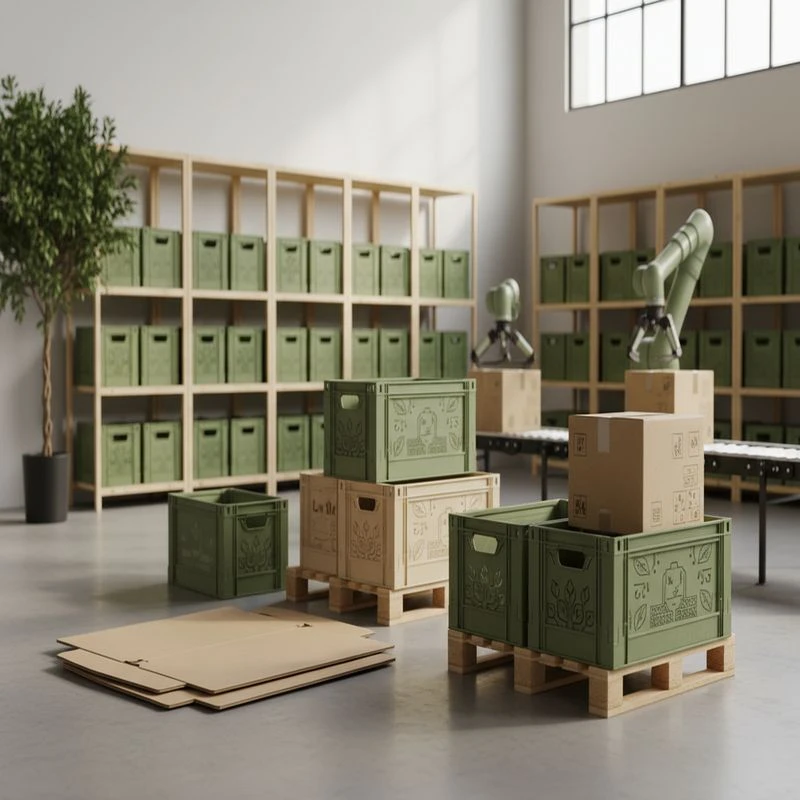
Driving Sustainable Supply Chains and Cost Efficiency in South Africa
In a world increasingly focused on sustainability, the logistics sector stands at a critical juncture, particularly in emerging markets like South Africa. The pervasive challenge of waste management, coupled with the escalating costs of raw materials and transportation, necessitates a fundamental shift in operational paradigms. For South African businesses, embracing reusable custom packaging is not merely an environmental imperative but a strategic business advantage, offering a powerful pathway to sustainable logistics. This approach promises not only to drastically reduce ecological footprints but also to unlock significant cost efficiencies and enhance supply chain resilience. By moving away from single-use paradigms, companies can create closed-loop systems that optimise resource utilization, streamline operations, and ultimately foster a more circular economy within the vibrant South African market. This journey involves careful consideration of materials, design, distribution networks, and innovative technologies, all tailored to the unique economic and environmental landscape of the region.
Reusable Packaging
The transition to reusable packaging is arguably one of the most impactful steps South African businesses can take towards a more sustainable and economically robust logistics operation. The core takeaway here is simple yet profound: adopting custom-designed reusable packaging can dramatically reduce waste generation and significantly lower long-term operational costs across various sectors. The reasoning behind this is multifaceted. Unlike single-use packaging, which contributes directly to overflowing landfills and demands continuous procurement, reusable options are designed for multiple cycles, often lasting for years. This drastically cuts down on material consumption, waste disposal fees, and the carbon emissions associated with manufacturing new packaging for every shipment. For South Africa, where waste management infrastructure often struggles with capacity and illegal dumping remains a persistent issue, reducing the volume of waste at its source offers substantial societal and environmental benefits, alleviating pressure on municipal services and protecting precious ecosystems.
Implementing reusable custom packaging involves a strategic shift rather than a simple product replacement. Businesses should initiate a comprehensive packaging audit to identify high-volume, single-use items that are ripe for conversion. Following this, piloting reusable systems on a smaller scale allows companies to gather practical data, iron out operational kinks, and gain invaluable insights before a full-scale rollout. Engaging closely with suppliers and logistics partners is crucial from the outset to ensure buy-in and seamless integration into the existing supply chain. One potential pitfall is the initial capital investment required for durable reusable packaging, which can seem daunting. However, this upfront cost is quickly offset by savings on recurring packaging purchases and waste disposal over the packaging’s extended lifespan. Furthermore, managing the reverse logistics – the collection, cleaning, and redistribution of empty packaging – can be complex. Solutions include establishing dedicated return routes, utilizing third-party pooling services, or integrating tracking technologies to monitor assets effectively. For South Africa, this focus on reverse logistics also presents an opportunity for job creation within the collection and cleaning sectors, contributing to local economic development.
Consider a beverage distributor in Gauteng transitioning from shrink-wrapped pallets to custom-designed, stackable plastic crates. The initial investment in crates might be substantial, but the elimination of recurring film costs, reduced product damage during transit, and faster loading/unloading times quickly demonstrate a positive return on investment. Another example is the automotive industry, where components are often shipped in specialised returnable racks or containers, ensuring precise fit, protection, and consistent handling across the supply chain. The benefits extend beyond cost; a visible commitment to reusable packaging enhances a company’s brand image, appealing to environmentally conscious consumers and fulfilling corporate social responsibility mandates. This proactive stance positions South African businesses as leaders in sustainable practices, ready to meet evolving regulatory landscapes and consumer expectations. It’s about building a future where packaging is a valuable asset, not a disposable burden.
| Feature/Consideration | Single-Use Packaging (Traditional) | Reusable Custom Packaging (Sustainable Logistics) |
|---|---|---|
| Environmental Impact | High waste generation, significant landfill contribution, continuous resource depletion, higher carbon footprint per cycle. | Drastically reduced waste, minimal landfill impact, resource conservation, lower carbon footprint over product lifespan. |
| Cost Structure | Low unit cost per item, but high recurring expenditure, significant waste disposal costs. | Higher initial capital investment, but substantial long-term savings on material procurement and waste management. |
| Durability & Protection | Often designed for minimal protection, susceptible to damage, leading to product loss. | Engineered for multiple trips and specific product protection, reducing damage and returns. |
| Operational Efficiency | Can be labour-intensive for assembly/disassembly, often inconsistent handling. | Streamlined handling, often stackable/nestable, optimised for automated systems, faster turnaround times. |
| Logistics Complexity | One-way flow, simpler but constant re-ordering. | Requires reverse logistics planning, cleaning, tracking, and asset management; potentially complex but closed-loop. |
| Brand Image | Neutral or negative due to environmental concerns. | Positive enhancement, demonstrates commitment to sustainability, appeals to eco-conscious stakeholders. |
This table clearly outlines the stark differences between conventional single-use packaging and reusable custom packaging within the context of sustainable logistics. While single-use options might appear cheaper upfront, their cumulative environmental and financial costs quickly outweigh the perceived benefits. Reusable solutions, though requiring initial investment and careful planning for reverse logistics, offer superior durability, operational efficiency, and a significant long-term positive impact on both the planet and the profit margin, making them a wise choice for forward-thinking South African businesses.
Durable Materials
The efficacy and longevity of reusable custom packaging hinge almost entirely on the selection of durable materials. The key takeaway for South African businesses is that investing in the right material science ensures the packaging can withstand rigorous logistics cycles, maintaining its integrity and functionality over countless uses, thereby maximizing its economic and environmental benefits. The reasoning behind this emphasizes the need for materials that are not only strong and resilient but also resistant to environmental factors, easy to clean, and, ideally, recyclable at their end-of-life. Common materials that fit this description include high-density polyethylene (HDPE), polypropylene (PP), various metals such as steel and aluminium, and even engineered wood composites. HDPE and PP are particularly popular due to their excellent strength-to-weight ratio, resistance to moisture and chemicals, and suitability for injection moulding into complex custom shapes. Steel, while heavier, offers unparalleled strength for heavy-duty applications like bulk containers or pallets, while aluminium provides a lighter yet robust alternative, especially where weight is a critical factor in air freight or specific automotive components.
To implement a successful material strategy, businesses should conduct a thorough analysis of their product characteristics, transport modes, and typical handling conditions. For instance, a food manufacturer transporting fresh produce might prioritize materials that are easily sanitizable and impervious to microbial growth, like food-grade HDPE. An industrial parts supplier, on the other hand, might opt for robust PP or steel containers that can withstand impacts and heavy stacking in a warehouse environment. It is crucial to consider the trade-offs: virgin materials often offer maximum durability and a longer lifespan, but recycled content materials reduce demand for new resources and support the circular economy, albeit sometimes with slightly reduced performance characteristics depending on the application. Local availability and sourcing are also paramount for South African companies to minimize lead times and transportation costs associated with the packaging itself. Several plastic manufacturers and metal fabricators within South Africa are capable of producing high-quality durable packaging, fostering local industry growth.
A common pitfall is underestimating the stresses packaging will endure, leading to premature failure and negating the “reusable” aspect. Over-engineering, however, can lead to unnecessarily high costs and increased weight, impacting fuel efficiency. A balanced approach is critical, designing for durability without excess. For example, a South African logistics company transporting automotive components might invest in custom-moulded PP crates with reinforced corners and integrated dividers, ensuring delicate parts are protected from vibrations and impacts during long-haul road transport across the country. These crates are designed to stack efficiently, optimising container space and reducing the number of trips required. Furthermore, when these durable materials eventually reach the end of their operational life – perhaps after hundreds or thousands of cycles – their recyclability becomes a key environmental benefit. Establishing partnerships with local recyclers for responsible disposal or repurposing ensures a truly closed-loop system, preventing these valuable materials from ending up in landfills and contributing to South Africa’s growing recycling economy. This thoughtful selection and lifecycle planning of durable materials are fundamental to the long-term success of any reusable custom packaging initiative.
B2B Distribution
Implementing reusable custom packaging within B2B distribution networks presents a significant opportunity for South African companies to streamline logistics, enhance operational efficiency, and build greater resilience into their supply chains. The core takeaway is that a well-designed reusable packaging system in a business-to-business context transforms packaging from a consumable expense into a managed asset, driving substantial savings and process improvements. The reasoning behind this lies in the structured and often repetitive nature of B2B supply chains. Unlike consumer-facing packaging, B2B reusable packaging can be optimised for specific product types, handling equipment, and transport methods, enabling tighter integration with warehouse automation and transport planning. This leads to reduced product damage, quicker loading and unloading times, optimised storage density, and a notable decrease in the waste generated at receiving sites, which is particularly beneficial for large manufacturing plants or distribution centres across South Africa that typically handle high volumes of goods.
For successful implementation, businesses must develop clear, robust protocols for the entire lifecycle of the reusable custom packaging within the distribution loop. This includes standardized procedures for cleaning, inspection, maintenance, and repair, ensuring the packaging remains in optimal condition for repeated use. Investing in tracking technology, such as RFID tags or barcoding, is an actionable step that allows for real-time visibility of packaging assets, preventing loss, optimising inventory levels, and improving overall asset utilization. Collaborative relationships with all supply chain partners – from suppliers to distributors and end-users – are absolutely critical. Gaining partner buy-in ensures that everyone understands their role in the return logistics process, whether it’s consolidating empty packaging, cleaning it, or reporting damage. Without this collaborative spirit, the reverse logistics chain, which is essential for a closed-loop system, can easily break down, turning the reusable packaging into a stranded asset.
Potential pitfalls include the complexity of managing a large pool of reusable assets across diverse geographic locations, especially in a country with varied infrastructure like South Africa. Initial capital outlay for the packaging pool and associated tracking/cleaning infrastructure can also be a barrier. However, solutions exist: pooling services offered by third-party logistics providers (3PLs) can manage the asset pool, cleaning, and redistribution on behalf of multiple companies, reducing individual company investment and complexity. For example, a major agricultural exporter in the Western Cape might partner with a 3PL to manage a pool of reusable crates for fresh fruit. These crates are filled at the farm, transported to the packing house, then to the port, and once emptied, are collected, cleaned, and returned to the farms for refilling. This closed-loop system reduces the need for disposable cartons, cuts waste, and ensures consistent quality. The cost savings from reduced packaging procurement and waste disposal, coupled with enhanced product protection and operational efficiencies, quickly make the case for adopting reusable custom packaging in South African B2B distribution networks. Moreover, it strengthens supply chain security and reduces reliance on fluctuating raw material prices for single-use alternatives.
| Consideration | Traditional B2B Distribution (Disposable Packaging) | Reusable Custom Packaging in B2B Distribution |
|---|---|---|
| Logistics Flow | Linear: packaging travels one-way with the product, then disposed. | Circular: packaging travels with product, then returns for reuse (reverse logistics). |
| Asset Management | No asset tracking needed for packaging; it’s a consumable expense. | Requires robust asset tracking (RFID, barcodes) and management systems. |
| Product Damage | Often higher due to generic, less durable packaging. | Significantly reduced due to custom-fit, robust, and protective design. |
| Waste Generation | High volume of packaging waste at receiving points. | Minimal packaging waste at all points in the supply chain. |
| Operational Impact | Can involve manual assembly/disassembly, waste handling. | Optimised for automated handling, reduces labour, improves throughput. |
| Collaboration Needs | Minimal collaboration beyond initial procurement. | High level of collaboration and coordination required among all supply chain partners. |
This table highlights the fundamental shifts required and the benefits gained when moving from a disposable to a reusable packaging model in B2B distribution. While the initial setup for reusable custom packaging demands more planning and collaboration, the long-term benefits in terms of cost reduction, waste elimination, and enhanced operational reliability make it an indispensable strategy for modern South African supply chains. It transforms packaging from a liability into a valuable, circulating asset that supports sustainable growth.
Eco Design
Integrating eco-design principles into the creation of reusable custom packaging is paramount for maximizing both environmental benefits and operational efficiencies throughout the entire lifecycle. The core takeaway is that by designing packaging with its full journey in mind – from raw material extraction to repeated use and eventual end-of-life – South African businesses can create solutions that are inherently sustainable, cost-effective, and aligned with circular economy goals. This proactive approach ensures that environmental considerations are not an afterthought but are embedded into the very fabric of the packaging solution. The reasoning behind eco-design extends beyond merely choosing recycled materials; it encompasses reducing material usage, optimising structural integrity for durability, ensuring repairability, enhancing modularity for various applications, and facilitating eventual recyclability or repurposing.
Actionable steps for implementing eco-design begin with conducting a comprehensive Life Cycle Assessment (LCA) for existing packaging to identify environmental hotspots. This provides a baseline against which new designs can be measured. Engaging packaging design experts who specialize in sustainability is crucial to develop custom solutions that meet specific product protection needs while adhering to eco-design principles. This might involve designing packaging that is nestable or collapsible when empty to minimize return logistics volume, or modular units that can be configured to protect different product sizes with fewer unique components. Standardization of components can also simplify repairs and reduce the need for specialised parts, extending the packaging’s active life. Furthermore, ensuring clear labelling and material identification (e.g., specific plastic codes) on the packaging is vital to facilitate efficient sorting and recycling when the packaging eventually reaches its end-of-life after numerous cycles. Avoiding complex multi-material designs, which are notoriously difficult to recycle, is another key principle.
A common pitfall in eco-design is over-engineering, where excessive material is used “just in case,” adding unnecessary weight and cost, thereby diminishing environmental benefits. Conversely, under-designing can lead to premature failure, turning a reusable item into waste sooner than intended. The challenge for South African companies is to strike a balance, designing for optimal durability and functionality without superfluous material. For instance, a food processing company looking for reusable containers might opt for a design that uses a single type of plastic (mono-material) to simplify recycling, incorporates ergonomic handles for easier manual handling, and features smooth internal surfaces for efficient cleaning and sanitation. These containers would be designed to stack securely, maximizing space in refrigerated trucks and warehouses. Considerations for local context are also vital; designing for resistance to specific South African climatic conditions (e.g., UV radiation, dust) can significantly extend packaging lifespan. Moreover, staying abreast of evolving environmental regulations and standards in South Africa, such as extended producer responsibility (EPR) schemes, ensures that packaging designs remain compliant and forward-looking. Eco-design transforms packaging from a linear, disposable item into a valuable, long-lasting asset within a circular system, reflecting a deeper commitment to sustainability that resonates with increasingly conscious consumers and regulatory bodies.
Innovation
The landscape of reusable custom packaging in South Africa is ripe for innovation, offering transformative opportunities to enhance efficiency, reduce costs, and deepen environmental commitment. The undeniable takeaway is that continuous innovation in materials, technology, and business models is the driving force behind scaling and optimising these sustainable packaging solutions within the dynamic South African market. As global and local demands for sustainability intensify, embracing cutting-edge advancements becomes not just an option, but a strategic necessity. The reasoning stems from the potential of these innovations to overcome existing challenges, such as the complexities of reverse logistics, the need for enhanced product protection, and the imperative to reduce overall supply chain costs.
One primary area of innovation is in smart packaging. Incorporating technologies like RFID (Radio-Frequency Identification) tags, QR codes, or even IoT (Internet of Things) sensors into reusable custom packaging provides real-time visibility and traceability. This is an actionable step for businesses aiming to optimise their asset management, track individual packaging units throughout their lifecycle, monitor environmental conditions (like temperature or humidity) for sensitive goods, and deter theft. Imagine a fleet of reusable crates transporting high-value electronics across South Africa, each equipped with an RFID tag that logs its location, usage history, and cleaning status, ensuring efficient rotation and maintenance. Another significant area is advanced materials science. This includes the development of lightweight composites that offer superior strength-to-weight ratios, reducing fuel consumption during transport, or bio-based polymers that enhance the biodegradability or compostability of packaging components at their end-of-life, should they ever leave the reusable loop. Exploring these materials can further decrease the environmental footprint of packaging while potentially offering new performance characteristics.
Beyond material and tech, innovation in business models is equally crucial. The “packaging-as-a-service” or pooling system model, where a third party owns, manages, cleans, and tracks the reusable custom packaging, is gaining traction. This reduces the upfront capital expenditure for individual businesses and externalizes the complexities of reverse logistics, making reusable packaging accessible to a wider range of South African companies, particularly SMEs. This collaborative approach fosters a shared economy where packaging assets are efficiently utilized across multiple users. Potential pitfalls include the high initial investment required for advanced tracking technologies, data security concerns, and the scalability of niche material innovations. However, solutions involve strategic partnerships with technology providers, thorough pilot projects to test and validate new systems, and fostering an ecosystem of collaboration between industry players, research institutions, and government bodies. For South Africa, this means leveraging local tech hubs, investing in R&D to address unique local logistics challenges (e.g., last-mile delivery in rural areas), and creating regulatory frameworks that encourage and support such innovations. By continuously pushing the boundaries of what’s possible, South African logistics can transform into a truly sustainable, efficient, and future-ready sector, with reusable custom packaging at its heart.
| Innovation Area | Description | Benefit for Reusable Custom Packaging in SA |
|---|---|---|
| Smart Packaging (IoT/RFID) | Embedded sensors, RFID tags, or QR codes for real-time tracking, condition monitoring, and inventory management. | Optimised asset utilization, reduced loss, enhanced traceability for compliance, improved cold chain management, streamlined reverse logistics for South African supply chains. |
| Advanced Materials | Lightweight composites, high-performance recycled polymers, bio-based plastics, self-healing materials. | Increased durability, reduced tare weight (lower fuel consumption), greater environmental benefit from sustainable sourcing, potential for local manufacturing and material development in SA. |
| Pooling Systems / PaaS | Third-party ownership and management of reusable packaging assets, offered as a service. | Lower upfront capital cost for businesses, reduced operational complexity of reverse logistics, greater scalability, optimised asset utilization across multiple users in South Africa. |
| Automated Cleaning & Sorting | Robotic systems and advanced machinery for efficient and hygienic cleaning, inspection, and sorting of returned packaging. | Ensures consistent hygiene standards, reduces labour costs, increases throughput, essential for food-grade and pharmaceutical reusable custom packaging. |
This table illustrates various innovative approaches that are revolutionizing reusable custom packaging and sustainable logistics. Each innovation brings distinct advantages, from enhancing the transparency and efficiency of packaging asset management to improving the environmental profile through advanced materials and enabling broader adoption through flexible service models. For South African businesses, embracing these innovations means staying competitive, reducing environmental impact, and building a more resilient and future-proof supply chain.
