
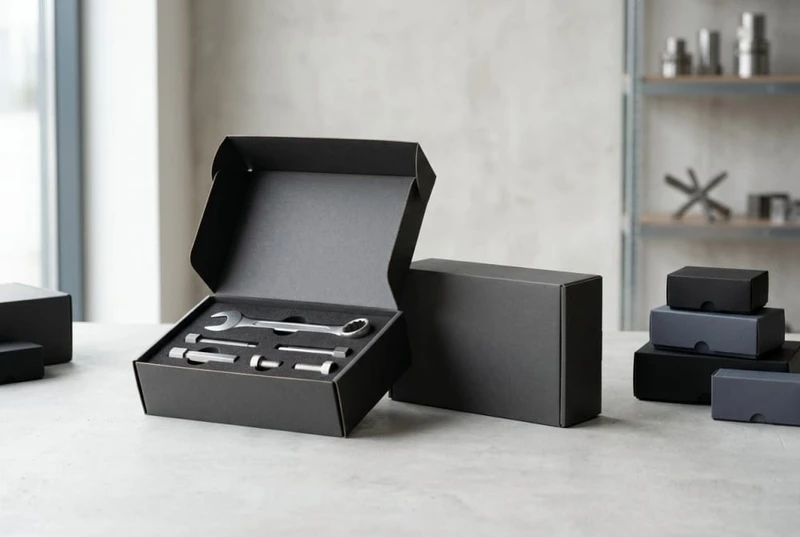
In South Africa, tools and hardware move through very different channels before they reach the end user. A torque wrench shipped to a mine near Rustenburg, a spare valve packed for a maintenance contractor in Durban, and a retail-ready hand tool set heading to Cape Town all face different handling conditions, buyer expectations, and storage systems. That is why custom boxes for industrial tools are not simply about appearance. They improve protection, identification, warehouse flow, counting accuracy, and the way buyers judge supplier reliability.
For distributors, importers, wholesalers, and industrial brands, packaging quality often affects more than shelf impact. It influences whether cartons stack safely in a warehouse, whether pickers can scan stock quickly, whether kit components stay complete, and whether the product looks suitable for a serious procurement environment. In South Africa, where goods may move through Johannesburg distribution hubs, regional depots in Pretoria, and freight channels linked to the Port of Durban or the Port of Ngqura, packaging has to support both transport stress and operational clarity.
Well-designed custom box solutions help create that balance. They can be built for hand tools, boxed kits, spare parts, fast-moving replacement components, and industrial hardware lines with varying sizes and weights. Combined with structured label placement and durable custom sticker applications, they also support barcode systems, warehouse bins, and traceability across multiple sales channels.
This guide looks at how custom packaging supports South African tool and hardware businesses across B2B supply, retail presentation, and industrial logistics. It covers box structures, insert design, stackability, brand value, supplier selection, sector-specific needs, and practical buying advice for companies that want better consistency across their packaging range.
Box designs for hand tools, kits, spare parts, and replacement components
Different tool and hardware products need different structural packaging logic. A single screwdriver, a drill bit assortment, a boxed maintenance kit, and a replacement bearing do not face the same risks. The first task in custom packaging design is to match the structure to the product shape, movement risk, weight, and sales channel.
For hand tools, compact folding cartons with reinforced locking tabs can work well when the product is light and sold through retail or merchant channels. If the item is heavier, a rigid or corrugated board structure may be more suitable, especially for pliers, hammers, spanners, and specialist workshop tools. Internal retention matters because loose movement inside the box quickly creates edge wear, scratches, and a poor unboxing impression.
Kits and sets need a different approach. These products typically include multiple compartments, printed count guides, and inserts that stop individual pieces from shifting in transit. In B2B environments, incomplete kits often create costly disputes. If a buyer in Germiston receives an electrical tool kit with one missing bit or socket, the supplier may face claims, returns, and delays on site. A structured insert reduces that risk and also makes visual inspection easier for receiving staff.
Spare parts and replacement components often require efficient storage more than display drama. Their packaging usually needs to fit shelving, bin systems, and batch handling. Small paper boxes, partitioned cartons, and compact tuck-end styles can work well when dimensions are standardised across product families. This is particularly useful for engineering spares, repair components, fittings, and industrial maintenance stock that moves repeatedly between central stores and job sites.
| Product type | Recommended box style | Main packaging objective | Insert need | Typical channel | Key benefit |
|---|---|---|---|---|---|
| Single hand tools | Folding carton or micro-corrugated box | Surface protection and branding | Low to medium | Retail and distributor | Neat presentation with manageable cost |
| Heavy-duty tools | Reinforced corrugated box | Load support and transport safety | Medium | B2B and industrial | Better resistance to crushing and impact |
| Tool kits | Rigid set box or partitioned carton | Part control and organised display | High | Retail and B2B | Reduces missing-item claims |
| Spare parts | Compact standard-size carton | Storage and quick identification | Low | Warehouse and maintenance | Improves shelving efficiency |
| Replacement components | Tuck-end carton with label zone | Batch coding and barcode scanning | Low | Trade and industrial supply | Supports stock control |
| Mixed hardware sets | Compartment box with insert tray | Separation of small items | High | Retail and field service | Improves counting accuracy |
The table shows that packaging structure should be selected around use conditions, not just product size. A common mistake is choosing one generic carton style for an entire line. While this may simplify sourcing, it often creates poor fit, excess void space, extra damage, and inconsistent product presentation.
How business buyers judge packaging quality differently from general consumers
General consumers often respond first to colour, graphics, and shelf appeal. B2B buyers in tools and hardware usually read packaging differently. They assess whether the supplier understands logistics, product discipline, and repeatability. In other words, the box becomes a signal of operational competence.
A procurement officer at an industrial distributor in Johannesburg may look at packaging and immediately judge whether it will stack cleanly, store neatly, and integrate into existing bin labels. A warehouse manager in Durban may focus on scannable barcodes, carton strength, and whether a replacement part can be identified without opening the box. A retail chain buyer in Cape Town may still care about visual appeal, but they will also watch for hanging options, case-pack discipline, and ease of shelf replenishment.
This difference matters because packaging that looks acceptable to a casual shopper may still look weak or unreliable to a professional buyer. Thin board, oversized empty space, inconsistent printing, poor label alignment, and sloppy insert fit can make the product seem low-value, even when the tool itself is strong. Industrial buyers often connect packaging discipline with manufacturing discipline.
In South Africa, many B2B purchases also involve repeated ordering across branches and projects. Consistent packaging sizes and graphics help buyers recognise trusted stock quickly. This becomes even more important in sectors such as mining, agriculture, electrical contracting, automotive service, and building supply, where downtime caused by wrong or damaged parts can have direct cost implications.
| Buyer type | First packaging concern | What signals quality | What signals risk | Decision impact | Typical result |
|---|---|---|---|---|---|
| Retail consumer | Appearance | Clear graphics and visible value | Dull or confusing design | Impulse and comparison shopping | Short-term shelf conversion |
| Retail buyer | Shelf readiness | Pack consistency and display efficiency | Poor case packs | Listing confidence | Better merchandising |
| Distributor | Handling efficiency | Uniform sizes and barcodes | Messy labels | Operational trust | Faster stock flow |
| Procurement manager | Supplier reliability | Durable structure and traceability | Weak cartons | Approved supplier perception | Stronger repeat orders |
| Warehouse manager | Storage compatibility | Stackability and scan zones | Irregular shapes | Labour efficiency | Lower handling errors |
| Maintenance team | Part identification | Readable labels and clear counts | Ambiguous product coding | Service speed | Fewer on-site delays |
The explanation is simple: B2B buyers do not only buy the product inside the packaging. They buy the operational ease that comes with it. Custom packaging helps present that value more clearly than generic cartons do.
Sticker uses for barcodes, bin systems, and accurate warehouse picking
Stickers are often treated as a minor finishing item, yet in industrial packaging they play a major role in stock control. In many South African warehouses, labels carry the information that keeps products moving correctly through receiving, shelving, picking, dispatch, and returns. If sticker placement is poorly planned, the result can be scanning delays, mispicks, and stock confusion.
For tools and hardware, barcode stickers should be positioned where they remain visible even after cartons are stacked on shelves or placed in bins. A label hidden under closure flaps or placed on a crushing point causes avoidable problems. The best practice is to reserve a standard label panel across a product family so that warehouse teams know exactly where to look. This is particularly useful when products are handled at scale in distribution centres serving Gauteng, KwaZulu-Natal, and the Western Cape.
Sticker materials also matter. Standard paper labels can work for indoor shelf environments, but parts exposed to oil, dust, abrasion, or fluctuating humidity may need stronger adhesive systems or coated surfaces. Bin systems for spare parts often demand labels that stay readable after repeated handling. QR codes, internal stock codes, batch numbers, and shelf-location cues can all be integrated if the layout is disciplined.
For importers and manufacturers, stickers are also valuable when product lines change often. Instead of reprinting every carton design for every variant, businesses can standardise the main box and customise product-specific information through variable labels. That can improve agility while keeping a consistent brand appearance.
| Sticker use | Information carried | Best placement | Environment | Common risk | Operational gain |
|---|---|---|---|---|---|
| Barcode label | SKU and scan code | Side panel | Warehouse shelves | Unreadable orientation | Faster receiving |
| Bin label | Part name and code | Front-facing panel | Stores and service rooms | Label wear | Quicker picking |
| Batch sticker | Lot and date data | Top or side | Traceability systems | Smudged print | Improved recall control |
| Variant label | Size or specification | Standardised label block | Mixed product ranges | Wrong variant match | Flexible production |
| Dispatch label | Order and route data | Outer carton face | Transport and courier use | Torn corners | Better shipment accuracy |
| Compliance sticker | Safety or handling note | Visible corner zone | Industrial handling | Covered by tape | Clearer handling guidance |
The table highlights that sticker planning should be part of packaging design from the start, not added at the end. When label zones are integrated into the carton artwork and structure, warehouse accuracy usually improves.
Durability and stackability choices that support efficient storage and transport
Durability is one of the clearest reasons South African tool and hardware companies invest in custom packaging. Products may travel long distances by road, move through ports, or sit in layered warehouse stacks for extended periods. A carton that performs well in a short retail chain may not survive industrial transport from Durban inland to Johannesburg or onward to mining and agricultural regions.
Board grade should be selected around weight, fragility, stacking height, and humidity exposure. For heavier hardware items, corrugated structures with stronger compression performance are often more suitable than standard paperboard cartons. If a product line is commonly palletised, the box footprint should also work with stable stacking patterns. Narrow and tall cartons may look efficient individually but become unstable under transport vibration.
Stackability improves more than safety. It also helps warehouse density, cleaner pallet loads, and easier counting. Standardising several sizes across a broader industrial product range can reduce wasted space and simplify storage planning. This is particularly valuable for wholesalers managing mixed inventory from fasteners and tools to repair parts and service kits.
Packaging durability should also be matched to the outer shipping environment. A retail-facing box does not always need to absorb the full transport burden if it is protected inside a secondary carton. But if the primary pack itself is the shipping unit, then edge crush strength, closure reliability, and abrasion resistance become more important.
The line chart shows a realistic upward trend in demand for custom industrial packaging in South Africa. Growth is driven by organised warehousing, procurement formalisation, and a wider push toward packaging that supports both logistics and brand consistency.
| Packaging factor | Low requirement case | High requirement case | Main business impact | Relevant channel | Priority level |
|---|---|---|---|---|---|
| Compression strength | Light retail items | Heavy hardware cartons | Prevents crushing | Distribution | High |
| Moisture resistance | Climate-controlled storage | Coastal logistics | Protects print and board | Port-linked supply | Medium to high |
| Closure integrity | Low-touch display packs | Repeated handling stock | Keeps packs sealed | Warehouse | High |
| Footprint consistency | Mixed one-off items | Standard product families | Improves stacking | Distributor stores | High |
| Abrasion resistance | Short shelf life | Long transit cycles | Maintains appearance | Retail and export | Medium |
| Insert retention | Single-piece items | Multi-part kits | Reduces internal movement | B2B and retail | High |
For South African businesses managing multi-channel distribution, the strongest packaging choice is often the one that reduces total handling cost rather than the one with the lowest unit price.
Insert planning for kits and sets where missing parts lead to claims
Insert design is critical for kits, maintenance sets, and multi-part hardware products. When a buyer opens a box and finds that one part is missing, damaged, or difficult to identify, the supplier may face replacement cost, claim processing, and reputational damage. In industrial settings, the problem can be even larger because missing components can delay work.
Good inserts do three things at once. First, they immobilise the contents. Second, they create visible part order. Third, they make counting easier at packing and receiving stages. This is especially helpful for electrical kits, plumbing repair sets, fastening assortments, and workshop service kits where many components are small and easy to misplace.
Inserts can be made from folded board, die-cut paper structures, partition systems, or more rigid internal supports depending on the load. The right choice depends on the part mix, the required presentation level, and whether the product is sold through retail, e-commerce, or direct industrial supply. For industrial buyers, practical clarity usually matters more than decorative complexity.
One useful method is to design inserts with visual vacancy logic. If a slot is empty, the absence is immediately obvious. This supports quality control in packing and helps the receiving team confirm completeness quickly. For companies shipping to project sites in Mpumalanga, Limpopo, or the Northern Cape, that clarity can reduce site-level disputes.
The bar chart reflects where demand for structured tool packaging is strongest. Mining, construction, and electrical supply environments place a high premium on completeness, durability, and fast identification, which makes insert planning especially valuable.
Retail display packaging versus carton-first packaging for distribution
Not all tool packaging should be designed like retail packaging. A major strategic decision is whether the product is primarily sold through display-led channels or through carton-focused distribution systems. These models require different priorities.
Retail display packaging must communicate value quickly. It needs clear branding, readable specifications, strong front-facing graphics, and sometimes a hanging feature or shelf-ready display format. It may include windows or enhanced print finishes if the market position justifies them. However, display packs still need enough durability to survive replenishment and handling.
Distribution packaging, by contrast, prioritises efficiency. It focuses on standard sizes, strong barcodes, case handling, stackability, and product code visibility. Buyers in B2B supply often prefer outer-carton discipline and neat identification over decorative flourishes. For many replacement parts and service components, over-designed retail boxes can actually create unnecessary cost.
The smartest packaging programmes often separate the roles of the pack layers. The primary pack may protect and identify the item clearly, while the outer carton is engineered for transport and pallet movement. This allows brands to support both industrial and retail requirements without forcing one channel’s logic onto another.
| Packaging focus | Retail display pack | Distribution-first pack | Main success measure | Best use case | Cost logic |
|---|---|---|---|---|---|
| Visual impact | High | Moderate | On-shelf attention | DIY and merchant retail | Supports conversion |
| Barcode visibility | Medium | High | Scan speed | Warehouse supply | Supports operations |
| Stackability | Medium | High | Pallet stability | Wholesale logistics | Reduces damage cost |
| Graphics complexity | High | Low to medium | Consumer clarity | Retail ranges | Depends on positioning |
| Insert emphasis | Presentation and retention | Retention and counting | Product control | Kits and sets | Prevents claims |
| Outer-carton role | Secondary support | Primary logistics layer | Transit efficiency | Industrial supply | Improves bulk handling |
The table clarifies that retail and distribution packs are not opposing ideas. They simply answer different questions. The right custom packaging system depends on where the product moves and who evaluates it first.
Visual errors that make hardware packaging look cheap or generic
Many tool and hardware brands lose value through avoidable visual mistakes. In this category, buyers often expect clarity, confidence, and order. Packaging that looks inconsistent or generic can weaken trust even when the product quality is strong.
One common mistake is using graphics that do not match the seriousness of the product. Overcrowded layouts, weak typography, random colour blocks, and stock-style imagery can make the item look promotional rather than professional. Another issue is poor hierarchy. If the buyer cannot immediately see the product name, size, specification, and intended application, the pack creates friction.
Generic packaging also often fails to distinguish product families properly. If drill accessories, cutting tools, fasteners, and maintenance parts all use the same undifferentiated front panel, buyers struggle to navigate the range. A better approach is to use consistent master branding with controlled colour coding, structure rules, and label locations.
Low-value signals also come from structural choices: oversized empty cartons, visible internal shifting, crushed corners, weak flap alignment, and stickers applied without placement discipline. Industrial packaging does not need to be flashy, but it should feel intentional. Neatness, fit, and repeatability are powerful signals in B2B markets.
The area chart illustrates a broader market trend: more South African industrial suppliers are moving away from generic packaging toward systems that combine branding, storage logic, and operational clarity.
How custom packaging builds consistency across industrial product lines
Consistency is one of the biggest long-term gains from custom packaging. Industrial product lines often grow over time through new sizes, variants, and replacement parts. Without a packaging system, the result is a patchwork of mismatched cartons, inconsistent labels, and uneven buyer experience.
A structured packaging programme gives the business a common visual and operational language. Product families can share standard dimensions, approved print zones, colour codes, barcode panels, and closure logic. This helps distributors and customers identify products quickly and it also supports internal production planning.
For South African businesses selling across multiple sectors, this consistency matters. A company supplying hardware to construction merchants in Bloemfontein, maintenance contractors in Gqeberha, and mining accounts in North West Province should still look like one coherent supplier. Packaging can provide that continuity even when the products themselves vary widely.
This is also where production technology makes a difference. A capable packaging workshop can support better line consistency through accurate cutting, stable print registration, reliable finishing, and repeatable output between small batches and larger runs. With advanced machinery and a skilled production team, it is possible to maintain high standards from material selection through final inspection, which is essential for customers who need dependable packaging across repeat orders.
Manufacturing flexibility is equally important. Some industrial brands need short runs for pilot ranges or regional launches, while others need scaled production for established distribution. A supplier that can manage both small-batch custom work and larger volumes gives tool and hardware companies more room to adapt product mixes without sacrificing packaging quality.
Service capability completes the picture. Practical packaging support is not only about making boxes. It includes helping clients choose structures, reviewing insert requirements, planning sticker applications, and aligning the pack with storage and transport realities. That kind of responsive support is especially useful for buyers trying to standardise packaging across a broad industrial range.
The comparison chart shows why standardised custom packaging often outperforms generic packaging across several commercial measures. The strongest gains tend to be in brand consistency, protection, and warehouse usability.
South African market outlook for tool and hardware packaging
The South African market for industrial tools and hardware packaging is shaped by a mix of infrastructure activity, repair and maintenance demand, import flows, and distribution modernisation. Johannesburg remains a major commercial hub for storage and wholesale movement, while Durban plays a crucial role in container-linked logistics. Cape Town and Gqeberha also support key trade routes and regional distribution networks.
Tool and hardware businesses are facing pressure from three directions at once: they need stronger protection, clearer brand presentation, and better operational efficiency. This creates a favourable environment for custom boxes, well-planned labels, and rationalised insert systems. Instead of viewing packaging as a finishing detail, many buyers now treat it as part of product performance.
By 2026, several trends are likely to influence packaging decisions further. Digital stock systems will push higher barcode discipline and more consistent packaging data zones. Sustainability requirements will increase demand for material efficiency and recyclable paper-based structures where practical. Policy and procurement expectations may also place more emphasis on responsible sourcing, measurable packaging waste reduction, and transport efficiency. At the same time, the need for resilient packaging will remain strong as businesses continue balancing cost pressure with delivery reliability.
Industry applications across major sectors
Packaging needs vary strongly by sector, even within the same country and product class. Mining suppliers usually value ruggedness, coding clarity, and dependable kit completeness. Construction channels often require mixed-format packaging that supports merchant retail and site delivery. Automotive service distributors may prioritise part identification and shelf fit, while agriculture-related channels often need practical, durable packs that cope with transport over wider regional distances.
Electrical and mechanical maintenance suppliers are another important segment. Their packaging often needs to support rapid retrieval of replacement components, easy batch tracking, and compact storage. In all of these sectors, the winning packaging design is the one that reduces friction while reinforcing confidence in the supplier.
Buying advice for importers, distributors, and industrial brands
When choosing custom packaging for tools and hardware, buyers should begin with operational questions, not graphics alone. Where will the product be stored? How far will it travel? Is the product sold individually, as a kit, or through bulk case packs? Does the warehouse rely on barcode scanning? Will customers inspect for missing parts? The answers shape the structure more effectively than generic assumptions.
It is also wise to review packaging by product family. A single brand may need one logic for heavy hand tools, another for spare parts, and another for retail kits. Where possible, standardise dimensions and label positions to simplify procurement and warehouse handling. Ask packaging suppliers about board grades, compression performance, insert options, print consistency, and how they manage repeatability between runs.
In South Africa, buyers should also consider freight paths, climatic variation, and inventory handling practices. Coastal humidity, inland transport vibration, and long storage cycles can all influence packaging performance. A supplier with practical production experience is more likely to guide these decisions effectively.
Case examples from the South African market
A tool distributor serving Gauteng and KwaZulu-Natal replaced mixed generic cartons with a standard family of custom corrugated boxes for repair tools and replacement components. By aligning barcode panels and reducing carton size variation, the business improved shelf identification and reduced picking confusion in its warehouse.
A retailer supplying DIY and trade outlets in Cape Town shifted its mid-range tool kits to partitioned boxes with visual inserts. Returns linked to missing small parts fell because packers and customers could immediately see whether each compartment was filled correctly.
An industrial brand supplying maintenance stock to mining clients near Rustenburg and Kathu adopted stronger outer cartons with clearer product coding and standardised variant stickers. The change improved pallet stability and helped buyers identify the correct parts faster at receiving stage.
Choosing local and regional packaging partners
Local and regional packaging support can be valuable for South African tool and hardware businesses that need shorter lead times, flexible batch quantities, and easier communication on packaging revisions. Buyers should look for suppliers who understand industrial requirements rather than only premium gift-box presentation. The right partner should be able to produce durable paper boxes, stickers, inserts, and related packaging components while also advising on fit, labelling, and consistency.
It helps to ask for prototypes or pilot runs for complex kits and heavy items. This allows testing for fit, stackability, label readability, and transport performance before full rollout. Strong suppliers are also usually willing to refine dielines, recommend suitable materials, and align the packaging approach with your actual sales channels.
About our packaging approach for South African clients
We support South African businesses with packaging solutions designed around product protection, visual consistency, and practical handling. On the technology side, our workshop uses modern equipment that supports accurate production, stable finishing quality, and reliable detail control across box and sticker work. That helps us maintain clarity in print, fit, and conversion for industrial packaging projects.
From a manufacturing perspective, we handle both smaller customised orders and larger production volumes with attention to material choice and inspection discipline. This is important for clients who need to test a new hardware range first and then scale once the market response is clear. Consistency between batches remains a priority because industrial buyers notice variation quickly.
From a service perspective, we work with clients to match packaging to the product and channel rather than forcing a one-size-fits-all format. That can include guidance on box structures, inserts for kits, label placement, and packaging combinations that support retail, B2B, or warehouse-driven supply. The goal is efficient, high-quality packaging that meets the specific needs of each client’s product line.
Frequently asked questions
| Question | Answer | Why it matters | Best for | Common mistake to avoid | Practical tip |
|---|---|---|---|---|---|
| Do all tools need heavy corrugated boxes? | No, only where weight and transport risk justify it. | Controls cost | Mixed product ranges | Over-packaging light items | Match board grade to load |
| Are inserts worth the extra cost? | Yes for kits, sets, and small multi-part products. | Reduces claims | Service kits | Ignoring count visibility | Use inserts with obvious empty slots |
| Should barcode labels be added later? | Ideally no, they should be planned into the pack design. | Improves scan accuracy | Warehouses and distributors | Random label placement | Create standard label zones |
| Can one box design fit all sales channels? | Sometimes, but often separate retail and logistics needs must be balanced. | Protects channel performance | Multi-channel brands | Using display logic for bulk supply | Consider layered packaging roles |
| Does packaging really affect B2B perception? | Yes, it often signals reliability and operational discipline. | Supports repeat business | Industrial suppliers | Focusing only on product inside | Keep packs neat and consistent |
| What should change by 2026? | Expect stronger focus on sustainability, scanning, and material efficiency. | Future-proofs procurement | Growing brands | Delaying packaging updates | Review your packaging system annually |
The FAQ table summarises the most practical buying questions. In most cases, the best packaging choice is the one that supports protection, identification, and consistency at the same time.
For South African tool and hardware businesses, custom packaging is no longer just a branding upgrade. It is a practical system for protecting products, improving storage, supporting warehouse accuracy, and strengthening the way buyers view the supplier. Whether the need is for hand tools, replacement components, kits, or industrial product families, the right mix of box structure, inserts, stickers, and stack-ready design can create measurable value across the supply chain.
