
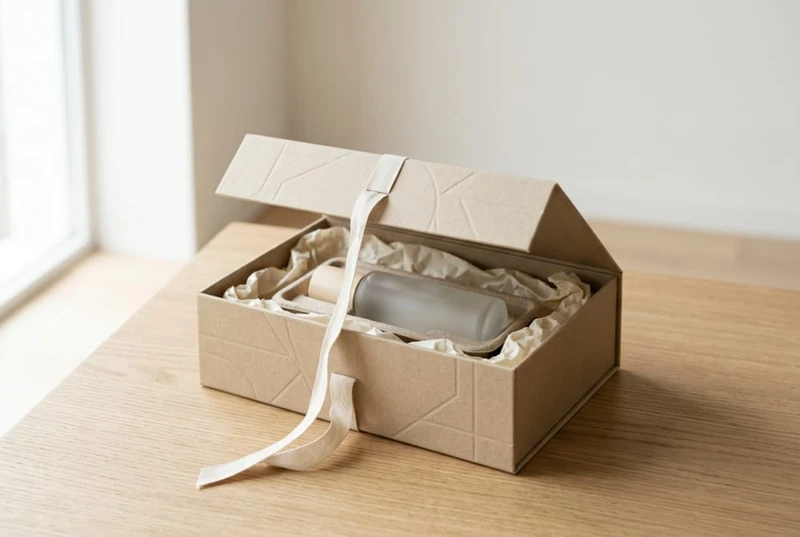
For direct-to-consumer brands, the best shipping packaging does two jobs at once: it protects the product through handling and makes the parcel immediately recognisable as yours. The starting point is not a logo or a box colour. It is the product’s size, fragility, order pattern and the way the parcel will be picked, packed, labelled and transported.
Shipping-oriented packaging ideas for brands selling directly to consumers should therefore focus on right-sized packs, practical closure methods, clear labels and branding that survives the delivery journey. A well-designed system can reduce unnecessary void fill, avoid awkward packing steps and give customers a more considered unboxing experience.
How ship-in-own-container thinking changes packaging development from day one
Ship-in-own-container packaging means the product’s branded retail pack is designed to travel through the delivery network without needing a separate outer carton in every case. It can be effective for robust products, gift sets and products where presentation is central to the sale.
This approach needs to be considered early, while the product packaging is still being specified. Retrofitting a retail box for shipping often results in weak closures, poor stacking strength or oversized dimensions.
Start development by documenting the actual order journey:
- Product configuration — Will customers buy one item, a refill, a set or a mixed bundle?
- Product vulnerability — Identify corners, glass, pumps, loose components, sharp edges, moisture sensitivity and surfaces that can scuff.
- Handling requirements — Consider picking, sealing, labelling, sorting, stacking and returns.
- Brand presentation — Decide which elements need to be visible at delivery and which can be reserved for the inside of the pack.
- Security and tamper evidence — Determine whether a seal, tear strip or secondary closure is appropriate for the product category.
- End-of-life expectations — Consider how easily customers can separate paper, board, film and adhesive elements where relevant.
A true ship-in-own-container solution is not automatically suitable for every product. A premium rigid box may look excellent but can pick up marks, crush at corners or reveal its contents if it travels without protection. In those cases, a branded shipping carton or protective mailer around the retail pack may be the more reliable choice.
Before committing to an approach, check packaging requirements set by the marketplaces, fulfilment partners or sales channels you use. Requirements can differ by product type and change over time.
Design the shipping surface separately from the gift-box surface
A box that doubles as a gift box does not need branding on every panel. External printing may be restrained, while the inner lid, tissue, insert or thank-you card carries more of the brand story.
This gives the outer pack a practical role: clear delivery information, suitable handling space and a durable finish. The inside then becomes the place for colour, product education and campaign messaging.
Box sizing decisions that reduce void fill and dimensional weight costs
Box size is one of the most important commercial packaging decisions for e-commerce. An oversized carton creates more empty space, typically needs more cushioning and can increase the shipping charge where transport providers use dimensional or volumetric measurements.
The aim is not to make the box as small as possible. It is to leave enough room for the product, the required protection and quick packing without creating excessive unused volume.
Use these questions when setting internal dimensions:
- What is the largest product orientation that must fit?
- Does the product need protection on all sides, or only at specific impact points?
- Will orders commonly include two or more units?
- Can the same carton accommodate a planned accessory, sample or printed insert?
- Can the packing team load the product without forcing it into the box?
- Is there sufficient space for a return, where returns are part of the sales model?
A useful approach is to build a packaging range around real order profiles rather than creating one box for every SKU. For example, many brands can work with a small set of pack sizes for single items, standard orders, bundled orders and larger gift purchases.
| Order profile | Suitable packaging direction | Main consideration |
|---|---|---|
| Single robust item | Compact mailer or self-locking carton | Avoid excess air around the product |
| Fragile single item | Corrugated carton with fitted protection | Protect vulnerable edges and movement |
| Multi-item order | Carton with dividers, wrap or adaptable void fill | Prevent items from colliding |
| Gift set | Presentation box inside a protective shipper, or a transit-ready branded box | Preserve the gift experience in transit |
| Subscription or repeat order | Consistent, easy-open carton sized for a predictable selection | Make replenishment packing repeatable |
| Apparel or soft goods | Mailer or lightweight carton, depending on perceived value and product protection | Balance presentation with low bulk |
Measure the packed product, not only the product
A common mistake is to size a box around the bare item, then discover that the wrapped, sleeved or bundled item no longer fits efficiently. Measure the final packed configuration, including lids, pump dispensers, product cards, protective wraps and any insert.
Where transport charges may be affected by parcel dimensions, confirm the applicable calculation method directly with the relevant delivery provider. Packaging teams should also check external dimensions after board thickness, folds and closure features are accounted for.
Choosing custom box formats for marketplace sales and branded DTC orders
The ideal format depends on whether the order is sent through a marketplace, from your own online shop, as a wholesale fulfilment order or through a combination of channels.
Marketplace orders often reward straightforward, durable packaging with space for operational labels and minimal ambiguity during fulfilment. Branded DTC orders may justify a more expressive pack, but they still need practical sealing, product restraint and a clear label area.
Common formats and where they fit
Regular shipping cartons Corrugated cartons are a versatile option for heavier products, fragile items and multi-product orders. They can be printed externally or used as a simple protective outer layer around a branded retail box. Choose the board construction and size according to the product’s weight, shape and anticipated handling conditions.
Self-locking mailer boxes These folding cartons create a neat presentation and can often be assembled without separate tape. They suit lightweight to moderate products, curated sets and apparel, provided the product and transit conditions are appropriate for the chosen material.
Rigid presentation boxes Rigid boxes are suited to premium gifting, keepsakes and high-perceived-value products. For normal parcel delivery, assess whether a protective outer shipper is needed to keep the presentation box clean and intact.
Paperboard folding cartons A printed folding carton can be an effective retail pack, but it should not be assumed to be a shipping pack. It may need an outer carton, wrap or another form of protection, particularly for fragile or heavy items.
Mailing bags and flexible mailers These can be practical for textiles, refill pouches and non-fragile goods. They are less suitable when crush protection, stackability or premium presentation is essential.
For branded DTC packaging, custom printed boxes can be specified as a coordinated system rather than an isolated item. For example, use a robust outer carton for larger orders, a branded mailer for standard orders and a retail carton with a compatible insert for gifting.
Leave room for channel-specific operations
A beautiful box becomes difficult to use if there is no clear location for shipping labels, barcodes, returns information or warehouse scanning. Reserve one exterior panel that is reasonably flat, visible and free of dense artwork.
Also consider whether a marketplace or fulfilment partner may apply its own labels. If so, ensure they will not cover critical product information, opening instructions or key parts of the design.
Sticker roles in bundle management, logistics, and promotional messaging
Stickers are a flexible way to add information without producing a different printed box for every promotion, SKU variation or order type. They are especially useful when a core carton design remains consistent across seasons.
In fulfilment, stickers can support:
- SKU identification and stock rotation;
- bundle assembly instructions;
- variant markers, such as size, scent or shade;
- packing checks for promotional sets;
- tamper seals or closure reinforcement;
- handling notes where appropriate;
- return-routing or internal processing references.
For the customer, stickers can add a campaign message, limited-edition detail, QR code, product-care prompt or invitation to reorder. Keep promotional stickers secondary to essential operational information. A parcel with too many labels can look cluttered and may slow down the packing process.
The adhesive and face stock should suit the surface it will be applied to. A sticker that works on smooth coated board may behave differently on uncoated carton, recycled-content board or flexible packaging. Confirm how labels will perform under expected storage and transport conditions before selecting them for a high-volume workflow.
Use custom stickers for packaging and product identification where variable messaging or short-run differentiation is more practical than changing the full box artwork.
Balancing transit protection with a clean and frustration-free unboxing experience
Customers should not have to fight through excessive tape, loose fillers and unclear layers to reach the product. At the same time, a minimalist unboxing is only successful if the product arrives in acceptable condition.
The answer is targeted protection: place cushioning and restraint where the product actually needs it.
Match protection to the product risk
Different products fail in different ways:
- Glass containers may need separation, corner protection and movement control.
- Cosmetics with pumps or caps may need measures that reduce the chance of accidental opening or leakage.
- Printed surfaces and coated boxes may need protection from rubbing and abrasion.
- Apparel and soft accessories may need moisture resistance and tidy presentation more than crush protection.
- Multi-item bundles may need dividers or paper-based restraint so items do not knock together.
- Heavy products need packaging that supports their weight and does not open unexpectedly when lifted.
Avoid adding protective components simply because they look premium. A large amount of filler can make a small purchase appear wasteful and makes disposal more complicated. Likewise, avoid packing a fragile item with minimal protection merely to achieve a sparse aesthetic.
Make opening intuitive
A good delivery pack should show the customer where to begin. Consider features such as a clear opening edge, tear strip, lift tab or simple resealing method where it serves the pack’s purpose.
Check that any easy-open feature does not weaken the pack before delivery. If returns are likely, consider whether the packaging can be resealed cleanly or whether return instructions should advise customers to retain the original shipper.
Packaging adjustments that help fulfilment teams work faster at scale
Packaging development should include the people who assemble orders. A format that looks efficient on a flat layout can create avoidable delays when it needs complicated folding, multiple pieces of tape or a precise sequence of inserts.
Design for repeatable packing:
- Use a limited, clearly defined set of carton sizes.
- Make pack assembly easy to understand without referring to lengthy instructions.
- Ensure inserts fit in one obvious orientation.
- Use bundle labels that distinguish similar products quickly.
- Keep the label panel consistent across box sizes.
- Avoid designs where the courier label must cover important branding or instructions.
- Plan how flat-packed cartons, stickers and protective materials will be stored near the packing station.
- Write a straightforward packing specification for each order type.
For seasonal offers, do not assume that a new promotional insert will fit into an existing carton. Recheck internal clearance, closure performance and the amount of protection remaining around the product.
Where a product is packed by an external fulfilment operation, share artwork, dielines, assembly guidance and approved pack-out images before launch. This helps reduce variation between the intended design and the day-to-day packing process.
Common shipping failures that start with poor packaging decisions
Many delivery problems originate before the parcel reaches the packing bench. They come from selecting a format based on appearance alone, using dimensions that do not reflect real orders or overlooking the operational label requirements.
Watch for these common issues:
- One oversized box for every order
This increases empty space and can require more void fill. It may also make a small order feel less considered.
- A retail carton treated as a transit carton
Retail packs can be attractive without having the closure strength or protective capacity required for parcel shipping.
- No allowance for bundled orders
If customers frequently buy two or three products, forcing them into a single-product shipper leads to inconsistent packing.
- Insufficient protection for product movement
Damage can result when items shift, collide or press against the outer wall of the carton.
- Overly complicated unboxing layers
Too much tape, too many inserts and unnecessary plastic components can frustrate customers and slow fulfilment.
- No designated shipping-label area
Labels applied over logos, product information or opening instructions reduce both usability and presentation.
- Artwork that ignores scuffing and handling
Dark uncoated surfaces, delicate finishes and large areas of solid colour can require thoughtful protection and material selection.
- Packaging changes without pack-out review
A new bottle shape, insert or promotional item can change the way the entire pack performs.
Before placing a full production order, review physical samples with the exact product configuration, intended closure method, labels and protection. If the pack will be used across several sales channels, assess each channel’s handling and packaging requirements separately.
How to move from generic mailers to a recognisable branded shipping system
A recognisable shipping system does not require every parcel to be heavily printed. It requires consistent visual and structural decisions across the packaging range.
Start with a practical hierarchy:
- Define your essential packaging formats.
Choose the fewest formats that cover your normal single-item, multi-item and gift orders.
- Set a clear brand framework.
Use consistent colours, logo placement, typography and messaging across cartons, inserts and labels. Keep exterior design practical enough for addressing and scanning.
- Specify the role of each layer.
Decide what the outer shipper, retail pack, protective material, insert and sticker each need to achieve.
- Create rules for variable campaigns.
Use stickers, inserts or sleeves for seasonal messages so the core packaging can remain usable beyond one promotion.
- Standardise pack-out instructions.
Document product orientation, filler quantity, closure method and label location for each order profile.
- Review after launch.
Monitor recurring packing difficulties, customer comments, returns related to packaging and product-condition issues. Use these observations to refine the next packaging run.
The strongest branded shipping systems are usually simple enough for a fulfilment team to repeat accurately and distinctive enough for customers to remember. Start with the products and orders that represent most of your shipments, then build out the packaging range only when a genuine operational or customer need arises.
When specifying your next packaging run, prepare a short brief covering product dimensions, order combinations, protection needs, desired unboxing style, label placement and expected sales channels. That information will make it easier to compare box formats and select a packaging system that works beyond the first delivery.
