
Ensuring Safe Transit and Enhanced Efficiency for Your Valuable Cargo Across the Rainbow Nation.
Custom Packaging for Automotive Parts in SA
Navigating the complex and varied logistical landscape of South Africa demands more than just standard packaging; it requires intelligent, durable custom packaging specifically engineered for automotive parts. The takeaway here is clear: generic, off-the-shelf solutions are often a false economy, leading to potential damage, costly returns, and significant delays. For businesses operating within or transporting goods to South Africa, understanding the critical role of bespoke packaging is paramount to safeguarding valuable automotive components.
The reasoning behind this imperative lies in South Africa’s unique challenges. From bustling urban centres to remote rural areas, automotive parts often endure long-distance transit over diverse road conditions, through varying climates, and sometimes face less-than-ideal handling during loading and unloading. A delicate electronic control unit (ECU), a precisely machined engine block, or a perfectly painted body panel each have distinct vulnerability profiles. Standard cardboard boxes, for example, might offer minimal protection against vibration, impact, or moisture, leaving sensitive parts exposed to risks that can compromise their functionality or appearance. Investing in durable custom packaging for automotive parts from the outset dramatically reduces these risks, ensuring that components arrive at their destination – be it a dealership, a repair shop, or a manufacturing plant – in pristine condition.
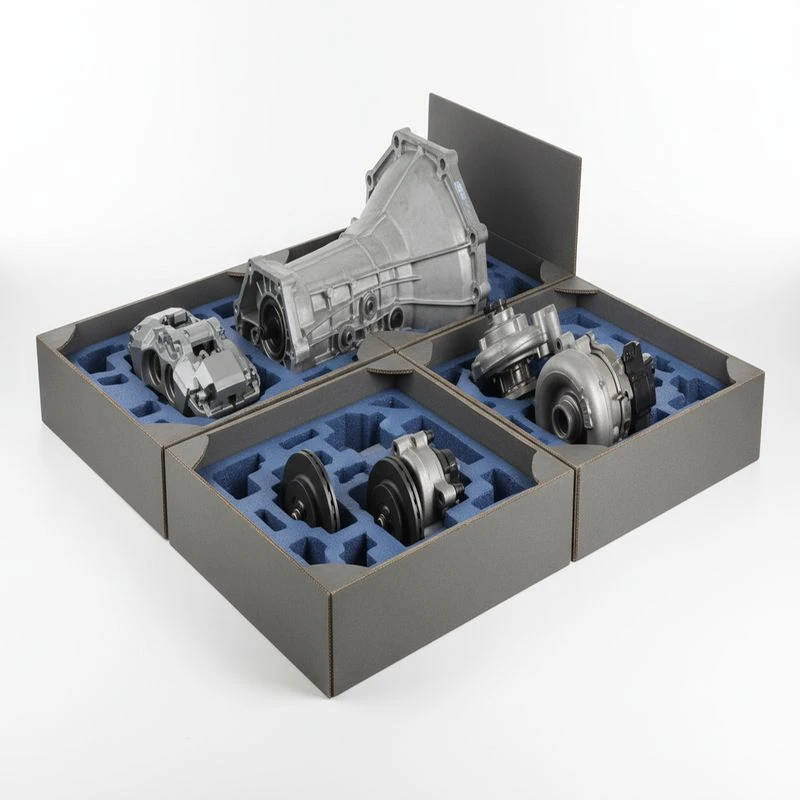
To implement this effectively, businesses should undertake several actionable steps. Firstly, conduct a thorough assessment of each automotive part’s specific requirements. This involves evaluating its weight, dimensions, fragility, material composition, and any environmental sensitivities (e.g., rust, static electricity). Secondly, engage with packaging specialists who understand the South African logistics environment and can design solutions tailored to these needs. This might involve custom-fit foam inserts for delicate sensors, robust wooden crates for heavy engine components, or multi-layered corrugated solutions for body panels. Practical examples include custom-moulded plastic trays that perfectly cradle transmission gears, preventing movement and abrasion, or anti-static bags within sturdy boxes for sensitive electronic modules. A common pitfall is to prioritize initial cost savings over protection, only to incur far greater expenses from damaged goods, customer dissatisfaction, and reputational harm. The solution is to view packaging as an integral part of the product’s value chain, a protective shell that preserves its integrity and ensures its readiness for use upon arrival. By proactively addressing these packaging needs, companies can significantly enhance their operational efficiency and maintain a competitive edge in a demanding market.
Furthermore, consider the end-to-end journey of the part. Will it be stacked high in a warehouse? Will it be transported by road, rail, or air? Each mode of transport and storage environment presents different stresses. For instance, parts stored in warehouses exposed to high humidity require packaging with moisture barriers. Components travelling long distances on South African roads, which can often be rough, demand superior shock absorption and internal bracing to prevent movement-induced damage. Effective custom packaging for automotive parts also considers ease of handling and unpacking at the destination. Solutions that are designed for quick and safe removal of parts can save valuable time and reduce labour costs at the receiving end. This holistic approach ensures that every aspect of the logistical chain is supported by appropriate packaging, turning a potential point of vulnerability into a strength. Companies that neglect this critical aspect risk not only financial losses from damaged inventory but also the erosion of trust with their B2B partners who rely on timely and intact deliveries.
Advanced Protective Design for Fragile Components
For fragile automotive components, advanced protective design is not merely an option but an absolute necessity. The takeaway is that generic cushioning or basic wrapping falls far short of providing the comprehensive protection required for sensitive parts, especially when facing the rigours of transit within the South African market. Businesses must embrace sophisticated design principles to mitigate the specific threats these components encounter, ensuring their flawless functionality upon installation.
The reasoning behind this intensified focus stems from the myriad ways fragile parts can be compromised. These include physical impacts from drops or bumps, continuous vibrations during transport that can loosen connections or cause internal stress, abrasion from movement against packaging walls, and environmental factors such as extreme temperature fluctuations, humidity, or static electricity. An engine control unit (ECU), delicate sensors, glass components, or even intricately painted surfaces are highly susceptible to these forces. A well-engineered protective design anticipates these stressors. For example, precision-cut foam inserts (like polyethylene or polyurethane) can provide custom cushioning that absorbs shock and prevents movement. Anti-static materials are crucial for protecting sensitive electronics from electrostatic discharge (ESD), which can cause invisible but critical damage. Corrosion inhibitors, either incorporated into packaging materials or applied directly to metal components, are vital for parts susceptible to rust in humid climates.
Implementing advanced protective design involves several actionable steps. Firstly, detailed analysis of the component’s geometry and vulnerability points is essential. This allows designers to create custom cavities and support structures that cradle the part securely. Secondly, selecting the right combination of materials is critical. This might involve multi-layered packaging solutions where an outer durable corrugated box encases an inner structure of high-density foam or thermoformed plastic trays. For heavier, fragile items, custom wooden crates with internal blocking and bracing might be required. Practical examples include suspensions systems for headlamps or infotainment screens that incorporate precision-moulded plastic forms to hold them perfectly immobile, or heavy-duty airbags used as void fill to prevent movement of larger, delicate assemblies within a crate. A common pitfall is the assumption that more cushioning automatically means better protection; however, poorly designed cushioning can sometimes amplify vibrations or allow movement. The solution lies in engineering protective designs that are tested to specific industry standards, mimicking real-world transport conditions. This might involve drop tests, vibration tests, and compression tests to validate the packaging’s performance before mass deployment.
Furthermore, considerations extend beyond mere impact resistance. For items sensitive to moisture, desiccants within sealed bags or VCI (Volatile Corrosion Inhibitor) packaging materials can prevent rust and corrosion, a significant concern when shipping metal parts through varying South African climates. Electrostatic discharge (ESD) protection is another critical aspect for electronic components. Packaging solutions incorporating conductive or static-dissipative materials ensure that no harmful static electricity builds up or discharges onto the sensitive electronics during handling or transport. Another often overlooked aspect is the interaction between the part and the packaging material itself. Abrasive packaging materials can scratch or mar painted surfaces or delicate finishes. Therefore, selecting non-abrasive inner linings or films is crucial for cosmetic parts. By focusing on these granular details, businesses can ensure their durable custom packaging for automotive parts offers comprehensive protection, reducing damage rates and ultimately contributing to significant cost savings and enhanced customer satisfaction. The goal is to create a micro-environment for each part that shields it from all potential harm throughout its journey.
Industrial Strength Materials for Enduring Transit
When it comes to the South African automotive parts market, selecting industrial-strength materials for packaging is not a luxury but a fundamental necessity. The takeaway here is that the robustness of your packaging materials directly correlates with the safety and integrity of your automotive components during transit, making it a non-negotiable aspect of effective logistics. Substandard materials inevitably lead to compromised protection, increasing the likelihood of damage and incurring significant costs.
The reasoning behind this insistence on industrial-grade strength stems from the harsh realities of the supply chain. Automotive parts, whether heavy engine blocks or intricate transmission assemblies, are frequently subjected to intense physical stressors. These include heavy stacking in warehouses, repeated lifting and shifting with forklifts, exposure to varying temperatures and humidity, and the constant vibrations and impacts encountered during road and rail transport across vast distances. Generic packaging materials often lack the structural integrity to withstand these pressures. For example, single-wall corrugated boxes will collapse under the weight of multiple stacked heavy parts, leading to crushing damage. Non-treated wood can absorb moisture, warp, or become susceptible to pests, while thin plastics may crack or puncture. Durable custom packaging for automotive parts, therefore, must be constructed from materials specifically designed to resist these forces, maintaining their protective properties throughout the entire journey.
Implementing this requires a strategic approach to material selection. Firstly, for heavy and bulky items, multi-wall corrugated cardboard (e.g., triple-wall) offers superior compression strength and puncture resistance compared to standard options. For even greater durability and reusability, heavy-duty plastics like high-density polyethylene (HDPE) in the form of custom crates or pallets are excellent choices, offering weather resistance and impact absorption. For extremely heavy or irregularly shaped components, treated lumber crates (ISPM 15 compliant for international shipping) reinforced with steel banding provide unparalleled structural support. Steel is also invaluable for strapping or banding large consolidated shipments to pallets, preventing shifting during transit. Practical examples include custom-built steel racks designed to hold multiple windshields securely, preventing flex and breakage, or heavy-duty plastic containers with reinforced bases for transporting multiple smaller, dense parts like brake calipers. A common pitfall is underestimating the cumulative stress packaging undergoes, leading to material failure. The solution involves consulting with packaging engineers who can recommend materials based on the part’s weight, fragility, and the expected logistical conditions, backed by material strength testing protocols like burst strength, edge crush test (ECT), and compression tests. These tests ensure the chosen materials meet or exceed the required specifications for the journey ahead.
Beyond structural integrity, material choice also impacts environmental resilience. In South Africa, where temperatures can swing dramatically and humidity levels vary, materials must be stable. Moisture-resistant coatings for corrugated cardboard, UV-stabilised plastics for outdoor storage, and even rust-inhibiting additives for metal components within the packaging are critical considerations. The ability of the material to maintain its integrity under these fluctuating conditions directly impacts the long-term protection of the automotive part. Furthermore, the material’s ability to withstand repeated handling by various personnel and machinery without degradation is vital for B2B logistics, where packages may be loaded, unloaded, sorted, and re-stacked multiple times. Choosing materials that are not only strong but also designed for efficient handling, perhaps with built-in ergonomic features or compatibility with standard lifting equipment, further enhances the overall supply chain efficiency. This holistic approach to durable custom packaging for automotive parts ensures that every element, from the smallest fastener to the largest engine, arrives at its destination in perfect condition, ready for its intended use without compromise.
| Material Type | Typical Application (Automotive) | Key Advantages | Considerations in SA Logistics |
|---|---|---|---|
| Multi-wall Corrugated Cardboard | Engine components, body panels, smaller consolidated parts | Cost-effective, recyclable, good cushioning for moderate impacts, printable. | Susceptible to moisture; requires moisture barriers for wet conditions. Best for protected transit. |
| High-Density Polyethylene (HDPE) Crates/Totes | Smaller parts, reusable loops, delicate electronics, parts requiring wash-down. | Durable, weather-resistant, stackable, reusable, good impact resistance. | Higher initial cost, may require custom moulding. Excellent for returnable packaging systems. |
| Treated Plywood/Wood Crates (ISPM 15) | Heavy engines, transmissions, large fragile assemblies, export. | High strength-to-weight ratio, excellent protection for heavy/oversized items, very stackable. | Heavier, requires more handling equipment. Must be ISPM 15 compliant for international shipments. |
| Custom Foam Inserts (PE/PU) | ECUs, sensors, glass components, painted surfaces. | Superior shock absorption, custom fit, non-abrasive, anti-static options. | Adds to overall package volume and cost. Essential for delicate items to prevent movement. |
This table highlights various materials crucial for constructing durable custom packaging for automotive parts. Each material offers distinct benefits tailored to the specific protection needs of different automotive components, while also presenting unique considerations for the diverse logistical environment of South Africa. Choosing the right material ensures optimal protection and cost-efficiency.
Streamlining B2B Transport with Optimised Packaging
Optimised packaging is not just about protecting individual parts; it’s a strategic tool for streamlining B2B transport, significantly enhancing efficiency and cost-effectiveness across the entire supply chain. The critical takeaway here is that poorly designed packaging can lead to wasted space, slower loading/unloading, and increased freight costs, while optimised durable custom packaging for automotive parts actively contributes to a more fluid and economical logistical operation.
The reasoning behind this transformative impact lies in how packaging interacts with transport systems. Inefficient packaging often means odd shapes, non-stackable configurations, or excessive void space, all of which translate directly into less efficient use of truck, container, or warehouse space. This results in fewer items per shipment, higher per-unit freight costs, and more frequent transportation runs. Conversely, packaging designed for optimisation considers factors like standard pallet dimensions, ease of forklift access, and ergonomic handling. It aims to maximise payload density, reduce manual labour requirements, and minimise the potential for damage during transit, which in turn reduces costly insurance claims and administrative overhead associated with damaged goods.
To effectively streamline B2B transport, businesses should adopt several actionable steps. Firstly, focus on standardisation and modularity where possible. Designing packaging in dimensions that efficiently fill standard pallets (e.g., 1200x1000mm or 1200x800mm in Europe/SA) or container sizes allows for maximum space utilisation, reducing “empty air” shipping costs. Secondly, prioritise stackability and stability. Packaging should be robust enough to support the weight of multiple layers above it without crushing or deforming. Features like interlocking designs or reinforced corners contribute significantly to stable stacking. Thirdly, consider ergonomic design for handling. Packaging should be easy for workers to lift, move, and access using standard equipment, reducing strain and speeding up processing times. For returnable logistics loops, reusable packaging solutions like plastic totes or collapsible metal racks significantly cut down on waste and long-term packaging costs. Practical examples include custom-designed plastic crates that perfectly nest when empty, saving return freight space, or corrugated boxes that are sized precisely to fit a standard pallet with no overhang, preventing damage and maximising load capacity. A common pitfall is failing to collaborate with logistics partners during the packaging design phase. The solution is to involve carriers and warehouse managers early on, gaining insights into their handling procedures and equipment to ensure seamless integration and maximum efficiency for your durable custom packaging for automotive parts.
Furthermore, optimised packaging directly impacts loading and unloading speeds, a critical factor in maintaining tight delivery schedules in the automotive sector. Packages that are uniformly sized, clearly labelled, and easily accessible can be moved through distribution centres and onto delivery vehicles much more rapidly. This not only reduces labour costs but also improves vehicle turnaround times, meaning drivers and trucks spend less time idle and more time on the road, improving overall fleet efficiency. Additionally, a robust and well-designed package minimises the need for re-packaging or re-stacking during transit, which can be a common cause of delays and damage. By designing packaging that stands up to the rigours of the journey from the outset, companies can avoid these costly disruptions. Ultimately, streamlining B2B transport with intelligent, durable custom packaging for automotive parts transforms logistics from a potential bottleneck into a competitive advantage, leading to faster deliveries, lower operational costs, and higher customer satisfaction within the demanding South African market.
Precision Labelling for Enhanced Supply Chain Management
Precision labelling is an indispensable component of efficient supply chain management, particularly within the automotive sector where traceability and accuracy are paramount. The unequivocal takeaway is that clear, accurate, and durable labelling on your custom packaging for automotive parts is not merely a formality; it is a critical operational tool that ensures seamless identification, tracking, and handling, thereby preventing errors and enhancing overall logistical flow.
The reasoning behind this emphasis is multifaceted. In a complex supply chain involving thousands of unique automotive parts, effective labelling provides immediate and unambiguous identification of contents, quantity, origin, and destination. Without precise labels, packages can be misrouted, handling instructions overlooked, and inventory counts become inaccurate, leading to costly delays, wrong deliveries, and significant administrative burdens. Furthermore, in the automotive industry, compliance with regulatory standards (e.g., for dangerous goods or specific part certifications) often hinges on clear and visible labelling. Labels act as the primary communication channel between the physical package and the digital supply chain management systems, enabling efficient scanning, data capture, and real-time tracking from manufacturer to end-user.
To achieve precision labelling, several actionable steps must be diligently followed. Firstly, identify all essential information that needs to be present on the label. This typically includes part numbers, descriptions, quantities, batch numbers, origin, destination, weight, and any special handling instructions (e.g., “Fragile,” “This Way Up,” “Keep Dry”). Secondly, ensure the use of durable label materials and printing methods that can withstand the environmental conditions and physical handling the package will encounter. Labels that smudge, peel, or fade become useless, negating their purpose. Thermal transfer printing or pre-printed labels with protective coatings are often preferred. Thirdly, implement standardised barcode or QR code systems. These allow for rapid and accurate data capture, integrating seamlessly with inventory management and enterprise resource planning (ERP) systems. Consistent placement of labels on the durable custom packaging for automotive parts is also vital, typically on at least two adjacent sides for easy visibility regardless of orientation. Practical examples include large, high-contrast labels for heavy engine crates displaying bold ‘DO NOT STACK’ warnings, or smaller, high-resolution labels on individual component boxes with embedded QR codes linking to comprehensive product specifications. A common pitfall is the use of non-standard or inconsistent labelling across different product lines or regions, leading to confusion. The solution involves developing a universal labelling standard that all suppliers and partners can adhere to, supported by robust quality control checks at the packaging stage to ensure all labels are correctly applied and legible.
Beyond basic identification, precision labelling also enables proactive risk management. For instance, labels indicating temperature sensitivity or requiring specific storage conditions alert handlers to potential issues, allowing for corrective actions to be taken during transit or storage. For international shipments to South Africa, labels must also comply with customs regulations and include any necessary tariff codes or origin information, preventing delays at borders. The use of multi-lingual labels can also be beneficial in diverse logistical environments. Furthermore, integrating smart labels or RFID tags into the durable custom packaging for automotive parts offers advanced tracking capabilities, providing real-time location data and enhanced security against theft or tampering. This level of detail and technological integration transforms labelling from a passive requirement into an active management tool, significantly boosting the accuracy, speed, and reliability of the entire automotive parts supply chain. By mastering precision labelling, businesses can virtually eliminate misidentification errors, streamline inventory processes, and ensure that every automotive component reaches its intended destination precisely as expected.
| Design Element | Purpose | Automotive Part Example | Benefit in SA Logistics |
|---|---|---|---|
| Custom Fit & Void Fill | Prevents movement, reduces abrasion, shock absorption. | ECUs, sensors, delicate interior trim. | Minimises impact damage from vibrations on long road trips. |
| Anti-Static Protection | Shields sensitive electronics from electrostatic discharge (ESD). | Electronic control modules, infotainment systems. | Ensures electronic functionality despite handling and environmental static. |
| Corrosion & Moisture Barrier | Prevents rust, corrosion, and water damage. | Machined metal parts, bare engine components. | Critical for humid climates and varying storage conditions in South Africa. |
| Blocking & Bracing | Secures heavy or oversized parts within the package, prevents shifting. | Engine blocks, transmissions, large body panels. | Maintains stability during heavy handling and bumpy transport. |
| Shock Absorbing Materials | Dissipates kinetic energy from impacts and drops. | Glass components (headlamps, mirrors), fragile sensors. | Protects against damage from accidental drops or rough handling. |
This table outlines essential design elements that constitute advanced protection for fragile automotive components. Each element addresses a specific type of vulnerability, ensuring that durable custom packaging for automotive parts is engineered to withstand the diverse challenges of the South African supply chain. Implementing these features significantly reduces the risk of damage, preserving the quality and functionality of the components.
| Label Element | Description | Importance for SA Logistics |
|---|---|---|
| Part Number & Description | Unique identifier and brief description of the component. | Crucial for accurate inventory, sorting, and avoiding misdeliveries. |
| Quantity & Unit of Measure | Number of items in the package and how they are counted. | Facilitates quick receiving and stock reconciliation; vital for customs. |
| Origin & Destination | Manufacturer’s location and final delivery address. | Ensures correct routing and traceability throughout the supply chain. |
| Barcodes / QR Codes | Machine-readable codes for automated data capture. | Enables efficient scanning, real-time tracking, and integration with ERP systems. |
| Handling Instructions / Hazard Symbols | Pictograms and text for special care (e.g., “Fragile,” “Flammable”). | Mandatory for safety and preventing damage, especially for sensitive or hazardous parts. |
| Batch/Serial Number | Specific identifier for manufacturing batch or individual item. | Essential for warranty, recalls, and detailed traceability of durable custom packaging for automotive parts. |
This table details the critical information that should be prominently displayed on labels for durable custom packaging for automotive parts. Adhering to these labelling standards ensures efficient handling, accurate tracking, and compliance with logistical and regulatory requirements within the South African market. Precision in labelling minimises errors and enhances the overall speed and reliability of the automotive supply chain.
