
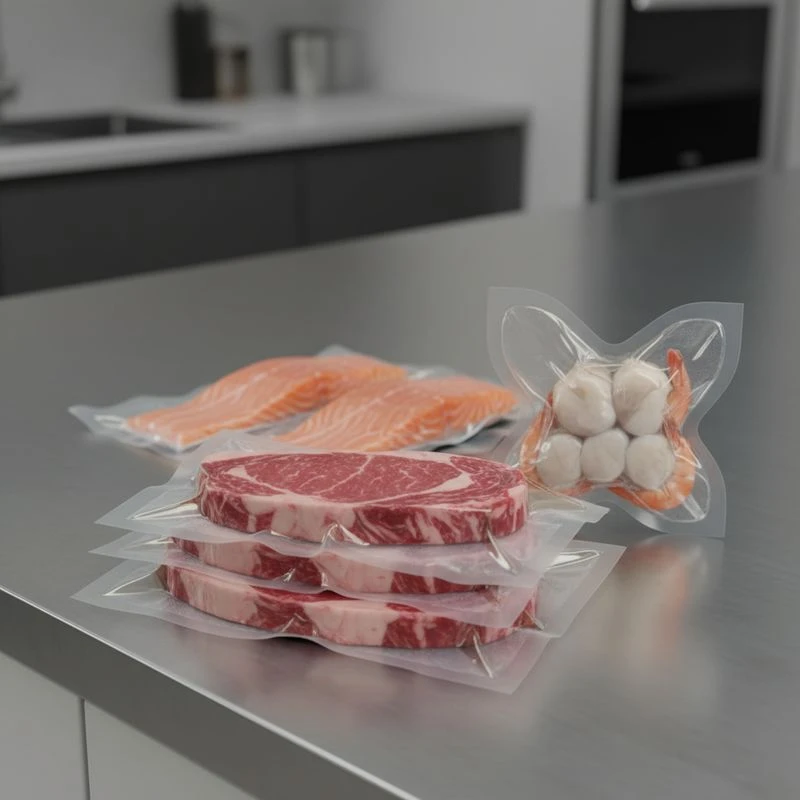
Unlocking Superior Freshness and Safety for Local Businesses
The South African meat and seafood industry operates in a dynamic environment, constantly striving to meet consumer demands for quality, extended shelf life, and uncompromising food safety. From bustling coastal fishing communities to expansive inland livestock farms, producers and distributors alike face the challenge of preserving their perishable goods in a climate that can often be unforgiving. This is where Custom Vacuum Packaging for Meat and Seafood steps in as an indispensable ally, offering a transformative approach to product preservation that goes far beyond traditional methods. By removing oxygen from the packaging environment, businesses can significantly slow down spoilage, maintain the integrity of their products, and ultimately deliver a superior offering to their customers. This innovative solution is not just about keeping food fresh; it’s about safeguarding reputations, expanding market reach, and ensuring that South African tables are graced with the finest produce our land and oceans have to offer, consistently and reliably.
Vacuum Packaging
Custom vacuum packaging is not merely a trend; it’s a fundamental shift in how the South African meat and seafood industry can ensure the longevity and quality of its products. The core principle is remarkably simple yet profoundly effective: by extracting air from around the food item and then sealing it in an impermeable barrier, the packaging eliminates the primary culprit behind spoilage – oxygen. This absence of oxygen dramatically curtails the growth of aerobic bacteria and moulds, which are responsible for discoloration, off-flavours, and unpleasant odours. Furthermore, vacuum packaging acts as a formidable shield against moisture loss, effectively preventing freezer burn, which can degrade the texture and taste of frozen meats and seafood, turning premium produce into an unsaleable commodity. For a nation like South Africa, with its diverse climate and extensive supply chains, minimizing waste and maximizing product value through enhanced shelf life is a game-changer.
Choosing the right film for your custom vacuum packaging is paramount, as different products demand specific barrier properties. For instance, fresh fish might require a high-barrier film to lock in its delicate moisture and prevent oxidation of its fats, while cured meats might benefit from a more robust, puncture-resistant film that can withstand handling and transport. Considerations for packaging size and shape are also critical; small, individual portions for retail will require different film characteristics and sealing methods than bulk packaging destined for restaurants or export. Businesses must assess their product range, target market, and logistics to select films that offer optimal protection, clarity for presentation, and durability. Consulting with packaging experts can provide invaluable insights, helping to navigate the myriad of options from co-extruded films to specialised pouches designed for specific applications, ensuring that every product is perfectly matched with its protective layer. Missteps in film selection, such as using a film with inadequate oxygen barrier properties, can lead to premature spoilage, while incorrect vacuum levels can either damage delicate products or leave too much residual air, negating the benefits. Proper equipment calibration and staff training are therefore not just optional extras, but essential components of a successful custom vacuum packaging strategy.
Implementing a robust custom vacuum packaging system involves more than just purchasing a machine; it requires a holistic understanding of the process from product preparation to final sealing. For instance, ensuring that meat and seafood are properly chilled before packaging is crucial, as vacuum packaging slows down spoilage but does not halt it entirely. The choice between rollstock film and pre-made pouches will impact operational efficiency and packaging aesthetics. Rollstock is often favoured for high-volume operations, offering cost efficiencies and seamless integration with automated machinery, while pre-made pouches provide flexibility for smaller batches or unique product shapes. The South African market’s varied demands, from artisan butchers to large-scale seafood exporters, necessitate a flexible approach. Understanding the nuances of film thickness, seal strength, and gas permeability allows businesses to tailor their custom vacuum packaging solution precisely, ensuring that each cut of meat and every piece of seafood arrives at its destination in peak condition, embodying the quality and care invested in its journey. The proactive adoption of these packaging technologies helps to cement South African products as leaders in quality and freshness on both local and international stages.
| Film Type | Key Characteristics | Typical Application (Custom Vacuum Packaging for Meat and Seafood) | Benefits |
|---|---|---|---|
| PA/PE (Nylon/Polyethylene) | Good oxygen barrier, puncture resistance, moisture barrier | Fresh red meat, poultry, fish fillets, processed meats | Extended shelf life, prevents freezer burn, durable |
| EVOH (Ethylene Vinyl Alcohol) | Excellent oxygen barrier, moderate moisture barrier | Smoked fish, cured meats, high-fat content seafood | Superior oxygen protection, preserves colour and flavour |
| PVDC (Polyvinylidene Chloride) | Very high oxygen and moisture barrier, chemical resistance | Ready-to-eat meals, highly perishable seafood, high-value cuts | Maximum shelf life, robust protection against environmental factors |
This table illustrates a selection of common film types utilized in Custom Vacuum Packaging for Meat and Seafood, highlighting their specific properties and optimal applications. The choice of film directly impacts the effectiveness of the packaging in preserving quality and extending shelf life. Understanding these differences allows South African businesses to make informed decisions, ensuring their products are protected by the most suitable barrier technology available, thereby maximizing freshness and market appeal.
Food Safety
In the highly regulated and consumer-sensitive world of food production, food safety is non-negotiable, and Custom Vacuum Packaging for Meat and Seafood emerges as a cornerstone of robust safety protocols in the South African market. By meticulously removing atmospheric oxygen, vacuum packaging severely inhibits the proliferation of aerobic spoilage bacteria, which are major contributors to foodborne illnesses and product degradation. This critical step extends beyond mere shelf life; it’s about creating an environment where harmful microorganisms struggle to thrive. Furthermore, the sealed nature of vacuum packaging provides an effective barrier against cross-contamination, a significant concern in processing plants and during transit. Once sealed, the product is isolated from external contaminants, ensuring that its integrity is maintained from the moment it leaves the processing line until it reaches the consumer’s kitchen. This adherence to stringent hygiene and containment standards is vital for businesses looking to meet local regulations and increasingly rigorous international food safety benchmarks, such as HACCP and ISO 22000, which are crucial for export markets.
Implementing custom vacuum packaging effectively within a food safety framework requires more than just the packaging process itself. It demands a holistic approach that starts with impeccable hygienic practices during product handling and preparation. Staff must be rigorously trained in sanitation protocols, ensuring that products are clean and free from initial contamination before packaging. Temperature control throughout the entire cold chain is equally critical; vacuum packaging works in conjunction with refrigeration, not as a replacement for it. Maintaining optimal chilling temperatures (typically between 0-4°C) is essential to suppress the growth of anaerobic bacteria, such as Clostridium botulinum, which can thrive in oxygen-deprived environments. Clear and accurate labelling, including storage instructions and best-before dates, empowers consumers to handle and store the product safely at home, completing the chain of responsibility. Businesses should view packaging not as the final step, but as an integral part of their comprehensive food safety management system, continuously monitoring and auditing their processes to identify and mitigate potential risks. This proactive approach ensures that every package of meat or seafood leaving their facility is not only fresh but also safe for consumption, building invaluable consumer trust.
The potential pitfalls in food safety related to vacuum packaging often stem from a misunderstanding of its limitations or from systemic failures in the production process. For instance, while vacuum packaging prevents aerobic spoilage, it doesn’t sterilize the product. If raw materials are already contaminated or if proper chilling temperatures are not maintained, pathogens can still multiply, potentially posing a health risk. Packaging defects, such as a weak seal or a pinhole puncture in the film, can compromise the vacuum, allowing oxygen and contaminants to re-enter, effectively negating the safety benefits. To counteract these risks, businesses must implement robust quality control protocols, including regular seal integrity tests and visual inspections of packaged products. Furthermore, educating consumers about the importance of refrigeration for vacuum-packaged goods is crucial, as some might mistakenly believe that the packaging alone makes the product shelf-stable at room temperature. For the South African meat and seafood industry, investing in high-quality equipment, continuous staff training, and rigorous adherence to food safety standards around Custom Vacuum Packaging for Meat and Seafood is not merely compliance; it’s a strategic commitment to protecting public health and upholding brand integrity in a competitive market.
B2B Production
For South African businesses operating in the B2B sector – supplying restaurants, hotels, catering companies, and large retailers – Custom Vacuum Packaging for Meat and Seafood is not just a value-add; it’s a strategic imperative for optimising production and achieving significant cost efficiencies. The ability to bulk package products, whether it’s prime cuts of beef for a steakhouse, large fillets of hake for a hotel chain, or ready-to-cook portions for a catering service, revolutionizes operational logistics. This method substantially reduces product waste by extending shelf life, meaning fewer discarded goods due to spoilage and a more consistent inventory turnover. Extended shelf life also translates directly into an expanded distribution reach, allowing producers to supply markets further afield, including export opportunities, with the confidence that their product will arrive in pristine condition. Furthermore, custom packaging enables consistent product presentation and portion control, which is highly valued by B2B clients who rely on uniformity for their own operational efficiency and quality standards. Imagine a restaurant receiving perfectly portioned steaks or fish, ready for immediate preparation, saving precious time and labor in a busy kitchen.
Optimising B2B production through custom vacuum packaging involves strategic decisions regarding machinery and process integration. High-volume operations will benefit immensely from automated chamber vacuum sealers, which can handle continuous production and large package sizes with speed and consistency. These machines are designed for industrial use, offering durability and precision, crucial for maintaining consistent quality across thousands of packages daily. Integrating these packaging lines seamlessly into existing production workflows is key to avoiding bottlenecks and maximizing throughput. This might involve setting up dedicated packaging zones, ensuring a smooth flow from processing to packaging to cold storage. Customisation options are also critical for B2B clients, extending beyond just shelf life. This could include branding on the packaging, specific portion sizing to meet client recipes, or even multi-pack solutions for diverse product offerings. For instance, a seafood supplier might offer a chef a selection of vacuum-sealed individual portions of different fish types, all branded and ready for use. While the initial investment in high-quality machinery and custom packaging materials can seem substantial, a thorough return on investment (ROI) analysis will quickly reveal the long-term savings from reduced waste, improved efficiency, and enhanced market access.
Navigating the B2B production landscape with custom vacuum packaging also comes with its own set of potential pitfalls and requires proactive solutions. One common challenge is the initial capital expenditure for advanced packaging machinery. While the long-term benefits are clear, smaller businesses might struggle with upfront costs. Solutions can include leasing equipment, exploring government incentives for food processing upgrades, or starting with semi-automatic systems before scaling up. Another critical aspect is staff training; operating and maintaining sophisticated vacuum packaging equipment requires skilled personnel. Adequate training programmes are essential to ensure efficient operation, troubleshoot minor issues, and maintain high standards of hygiene and seal integrity. Managing the supply chain for packaging materials is also vital; ensuring a consistent supply of custom films and pouches that meet specific product requirements and production schedules is paramount to avoid interruptions. For a South African producer looking to supply diverse markets from local wholesalers to international cruise lines, the reliability and scalability of their packaging solution are key. By addressing these challenges head-on with careful planning, investment in training, and strategic supplier relationships, businesses can fully harness the power of Custom Vacuum Packaging for Meat and Seafood to elevate their B2B operations, ensuring they remain competitive and profitable in a demanding market.
| Parameter | Small Scale (Artisan/Local Supply) | Medium Scale (Regional Distribution/Hotels) | Large Scale (National/Export B2B) |
|---|---|---|---|
| Packaging Volume (Units/Day) | Up to 500 | 500 – 5,000 | 5,000+ |
| Equipment Type | External vacuum sealers, small chamber machines | Medium to large chamber vacuum machines, semi-automatic systems | Automated thermoforming/tray sealing lines, industrial chamber machines |
| Customisation Focus | Material choice, basic branding | Portion control, client-specific branding, varied film types | High-volume branding, multi-product solutions, export compliance |
| Key Benefit Focus | Extended local sales, reduced waste | Consistent quality, enhanced market reach, efficiency | Scalability, international market access, significant cost savings |
This table outlines the varying parameters and approaches to Custom Vacuum Packaging for Meat and Seafood across different scales of B2B production within South Africa. It demonstrates how businesses can tailor their investment in equipment and customisation efforts to match their operational volume and market objectives. Recognizing these distinct needs allows producers to make strategic decisions that optimise their packaging processes, ensuring profitability and market competitiveness, whether serving local delis or international distributors.
Sealing Technology
The integrity of a vacuum package hinges entirely on the quality of its seal, making advanced sealing technology a critical component for businesses engaging in Custom Vacuum Packaging for Meat and Seafood in South Africa. A perfectly executed seal is the impenetrable barrier that locks out oxygen and prevents moisture ingress, guaranteeing the extended freshness and safety benefits that vacuum packaging promises. Without a reliable, airtight seal, the entire process is compromised, leading to potential product spoilage, financial losses, and damage to brand reputation. Different sealing methods, primarily heat sealing and impulse sealing, each play a vital role depending on the film type and production requirements. Heat sealing applies continuous heat and pressure to melt and fuse the film layers, creating a strong, durable bond suitable for high-volume, consistent applications. Impulse sealing, on the other hand, uses a brief, intense pulse of heat, ideal for thicker films or situations requiring precise temperature control, common in diverse product lines. The efficacy of these seals is influenced by a trinity of factors: temperature, pressure, and dwell time, all of which must be meticulously calibrated and controlled to achieve optimal results consistently.
To ensure consistent and high-quality seals, businesses must adopt several actionable steps and best practices. Regular maintenance of sealing bars and heating elements is paramount; worn-out parts can lead to weak or incomplete seals, allowing air ingress. Calibration of sealing equipment should be a routine procedure, ensuring that the precise temperature, pressure, and dwell time settings are consistently applied for each package type. A proactive approach to quality control includes routine seal integrity testing, such as the widely used water bath test, where sealed packages are submerged in water and observed for bubbles that indicate a leak. For delicate or high-value products, more sophisticated methods like vacuum leak detection or burst tests may be employed to guarantee absolute seal integrity. Selecting the right sealer for specific film types and production volumes is equally important. A small butcher might opt for a tabletop chamber sealer with a reliable impulse seal bar, while a large seafood exporter would require industrial-grade, automated thermoforming machines with robust heat-sealing capabilities capable of continuous operation and complex film structures. Investing in quality equipment from reputable suppliers, coupled with comprehensive staff training on operation and maintenance, can significantly mitigate the risk of seal failures, ensuring every product is perfectly protected.
The potential pitfalls associated with sealing technology are often a direct result of oversight or inadequate investment. Inconsistent seals, manifesting as tiny leaks or weak points, can lead to subtle product spoilage that is not immediately apparent but compromises shelf life and freshness over time. This can be caused by fluctuating voltage, worn-out sealing components, incorrect temperature settings for a specific film, or even small food particles caught in the seal area. The consequences range from product recalls to diminished customer trust. To mitigate these risks, businesses must implement rigorous quality control protocols that include regular visual inspection of seals and periodic testing. Furthermore, continuous operator training is crucial to identify and rectify minor issues before they escalate. Another challenge lies in adapting sealing parameters for different packaging materials or product characteristics. For instance, packaging a product with high moisture content might require specific film and sealing temperature adjustments to prevent steam from affecting the seal. For the South African meat and seafood industry, where product diversity is high, a flexible sealing solution that can adapt to various films and packaging formats without compromising seal quality is invaluable. By prioritizing precision, maintenance, and ongoing training in their sealing technology, businesses can ensure that their Custom Vacuum Packaging for Meat and Seafood consistently delivers on its promise of superior preservation and food safety, ultimately protecting their investment and enhancing their market standing.
Freshness
In the competitive South African market, the perception and reality of freshness are paramount for meat and seafood, directly influencing consumer choice and brand loyalty. Custom Vacuum Packaging for Meat and Seafood stands as the ultimate technological solution for extending this critical attribute, far beyond what traditional packaging methods can achieve. The science behind it is clear and compelling: by diligently removing oxygen from the package, the vacuum environment dramatically slows down the oxidation process, which is responsible for the rapid deterioration of fats, leading to rancidity and off-flavours in both meat and seafood. This absence of oxygen also inhibits the natural enzymatic reactions that contribute to colour degradation, ensuring that red meats retain their vibrant hue and fish maintains its appealing natural colour. Furthermore, vacuum packaging acts as a formidable barrier against moisture loss, preventing the dehydration that can cause meat to dry out and seafood to lose its delicate texture. The direct impact on taste and texture is profound; products remain succulent, tender, and retain their original flavour profile for significantly longer periods. This extended freshness allows South African producers to offer superior quality, differentiate their products, and cater to a discerning consumer base that values natural taste and optimal texture.
Achieving maximum freshness through custom vacuum packaging requires more than just the packaging process itself; it necessitates meticulous attention to pre-packaging handling and post-packaging storage. Best practices dictate that meat and seafood should be rapidly chilled to optimal temperatures immediately after processing, as vacuum packaging effectively locks in the existing freshness rather than creating it. The cooler the product is at the point of packaging, the longer its inherent quality will be preserved. Any delay in chilling or packaging can allow initial bacterial growth or enzymatic activity to occur, which vacuum sealing will only slow down, not reverse. Ideal storage conditions post-packaging are equally crucial; vacuum-sealed products must be kept consistently refrigerated (typically below 4°C) or frozen to maximize their extended shelf life. Communicating these storage requirements clearly to end-users, whether they are retailers or direct consumers, is vital to ensure they maintain the cold chain, thereby preserving the product’s peak quality until consumption. Implementing a “first-in, first-out” inventory management system also helps ensure that older stock is moved before fresher stock, preventing products from overstaying their optimal shelf life, even with the benefits of vacuum packaging. These integrated steps collectively elevate the standard of freshness delivered to the South African consumer, distinguishing products that are simply packaged from those that are meticulously preserved.
While custom vacuum packaging offers remarkable benefits for freshness, there are potential pitfalls that businesses must be aware of and actively manage. One significant pitfall is the misconception that vacuum packaging can miraculously restore or improve the quality of initially poor product. It cannot; if the meat or seafood is of inferior quality or already near its spoilage point before packaging, vacuum sealing will only preserve that existing state, albeit for a longer time. Therefore, only the freshest, highest-quality produce should be selected for vacuum packaging. Another challenge, particularly with red meat, is the temporary “loss of bloom” – the darker, purplish-red colour that results from myoglobin being deprived of oxygen. While the vibrant red colour returns within minutes of opening the package and exposure to air, consumers unfamiliar with this phenomenon might perceive the product as less fresh. Educating retailers and consumers about this natural reaction is key to managing expectations. Similarly, improper storage conditions after packaging, such as leaving vacuum-sealed items at room temperature, will negate all freshness benefits and could lead to rapid spoilage. For the South African meat and seafood industry, leveraging Custom Vacuum Packaging for Meat and Seafood is about more than just technology; it’s about a commitment to consistent quality, comprehensive education, and stringent adherence to best practices at every stage, ensuring that the promise of extended freshness is always delivered.
