
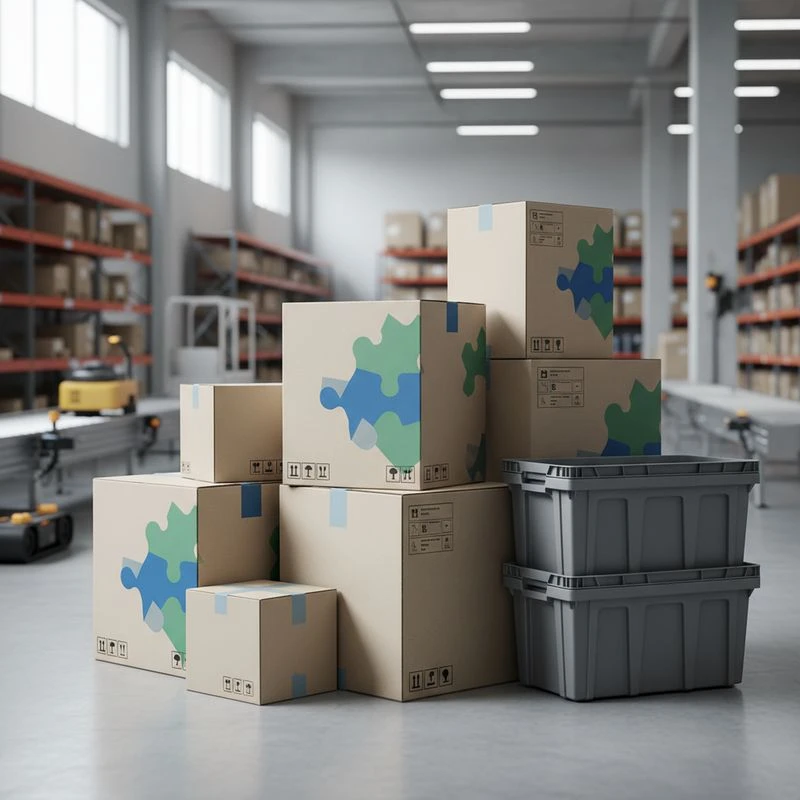
Transforming Warehouse Operations and Distribution with Tailored Packaging Solutions
In the dynamic and often challenging South African market, the efficiency of your logistics and warehouse operations directly impacts your bottom line and customer satisfaction. The key takeaway for any business looking to gain a significant competitive edge lies in embracing custom packaging solutions. Far from being a mere afterthought, tailored packaging serves as a strategic asset, optimising every stage from storage to final delivery. Generic, off-the-shelf packaging frequently leads to a cascade of inefficiencies, including wasted space, increased material costs, higher damage rates, and slower processing times. Custom solutions, however, are specifically designed to meet the unique demands of your products, your operational workflows, and the diverse conditions encountered across South Africa’s extensive supply chains. By leading with a proactive approach to custom packaging, businesses can unlock substantial improvements in their logistics footprint, ensuring products arrive safely, cost-effectively, and on schedule, ultimately strengthening their market position and enhancing their service offering to clients nationwide.
Logistics Packaging
The strategic deployment of custom packaging for logistics and warehouse solutions in the South African market is a game-changer, fundamentally shifting the paradigm from a cost centre to a value-generating component of the supply chain. The primary takeaway here is that custom logistics packaging is not just about fitting your product; it’s about fitting your entire operational ecosystem, from the initial pick in the warehouse to the final mile delivery. Many South African businesses currently grapple with standard packaging that, while readily available, is rarely optimised for their specific product dimensions, fragility, or handling requirements. This often results in excessive void fill, unstable pallet loads, increased risk of damage, and ultimately, higher freight costs due as much to wasted space as to weight.
The reasoning behind this strategic shift is compelling: inefficiencies in packaging create bottlenecks and introduce vulnerabilities throughout the logistics chain. For instance, irregularly sized boxes might prevent optimal stacking, leading to underutilised warehouse space and fewer units per truckload. Fragile items in generic cartons require more protective dunnage, which adds to material costs, labour for packing, and disposal challenges. Furthermore, the diverse and often rugged transport conditions across South Africa, from bustling urban centres to remote rural areas, demand a more robust and intelligently designed approach to packaging than a generic solution can provide. Understanding these inherent challenges provides the impetus for businesses to re-evaluate their current packaging strategies and seek tailored alternatives that can withstand the rigours of the local environment.
To transition effectively, businesses should begin by conducting a comprehensive audit of their existing packaging and logistics processes. This involves identifying specific pain points: where is damage most frequent? Where is packing time excessive? Where are freight costs disproportionately high due to volumetric weight? Actionable steps include collaborating with experienced packaging designers and manufacturers who understand the nuances of the South African logistics landscape. They can help assess product vulnerabilities, handling methods, storage conditions, and transport routes to propose custom solutions. For example, a company distributing electronic components might move from standard corrugated boxes with generic bubble wrap to custom-fit inserts within reinforced cartons, designed for specific pallet configurations. This not only protects the components better but also speeds up packing, reduces material waste, and ensures a more stable and efficient load during transit. Another practical example might involve designing collapsible, reusable plastic crates for inter-warehouse transfers, reducing single-use waste and improving handling efficiency. Potential pitfalls include a short-sighted focus solely on the unit cost of custom packaging without considering the broader, long-term savings in reduced damages, optimised freight, and improved operational efficiency. The solution lies in a holistic cost-benefit analysis, demonstrating the strong return on investment that custom packaging for logistics and warehouse solutions can deliver.
Heavy Duty
For industries operating in the demanding South African environment, where products often endure long transit distances, diverse climatic conditions, and varied handling methods, the paramount takeaway is that heavy-duty custom packaging is not merely an option but a non-negotiable requirement. Businesses dealing with industrial machinery, mining equipment, large agricultural produce, or high-value components must prioritise packaging designed to withstand extreme stresses. Generic heavy-duty solutions, while perhaps thicker, often lack the specific structural integrity or material properties needed to adequately protect against the unique challenges presented by South African roads, port operations, and warehousing environments. This oversight can lead to catastrophic product damage, significant financial losses, and severe reputational harm, particularly when dealing with high-cost or mission-critical items.
The reasoning for this intensified focus on heavy-duty custom packaging stems from the inherent nature of the products themselves and the logistical context. Large, heavy, or irregularly shaped items require specialised support, cushioning, and external protection that standard packaging simply cannot provide. Imagine transporting sensitive medical equipment or large-scale manufacturing parts across uneven provincial roads; the vibrations, impacts, and potential for shifting loads demand a level of engineering in packaging that goes beyond basic corrugated cardboard. Moreover, South Africa’s climate, ranging from humid coastal areas to arid interior regions, necessitates materials that can resist moisture, temperature fluctuations, and UV exposure over extended periods. Neglecting these factors can lead to material degradation, compromise structural integrity, and ultimately, expose the product to preventable damage. The critical importance of robust custom packaging for logistics and warehouse solutions becomes undeniable when considering these environmental and operational variables.
Implementing effective heavy-duty custom packaging involves several actionable steps, starting with a thorough engineering assessment of the product’s weight, dimensions, stress points, and fragility profile. Following this, material selection becomes crucial. Businesses should explore options beyond standard cardboard, such as multi-wall corrugated board, reinforced timber crates, steel cages, or advanced composite materials that offer superior strength-to-weight ratios and environmental resistance. Structural design must account for dynamic forces, including shock absorption, compression strength for stacking, and secure fastening mechanisms. For instance, a mining company might commission custom wooden crates with internal blocking and bracing specifically engineered for a large pump, ensuring it remains immobile and protected during multi-modal transport. Another practical example involves using heavy-duty plastic pallets or custom metal frames for returnable logistics loops, significantly extending packaging lifespan and reducing waste. A key pitfall is assuming that “heavy-duty” simply means “thicker material”; instead, it requires intelligent design that considers load distribution, material science, and testing protocols like drop tests, vibration tests, and compression tests. The solution lies in partnering with packaging engineers who specialise in industrial applications and can provide certified solutions, often incorporating features like corrosion inhibitors or anti-static properties, specifically tailored to the rigorous demands of the South African market.
| Heavy-Duty Packaging Material | Typical Applications (South Africa) | Key Advantages for Logistics | Potential Disadvantages |
|---|---|---|---|
| Multi-Wall Corrugated Board | Automotive parts, machinery components, bulk perishables | High compression strength, lightweight, customisable, recyclable, cost-effective for large volumes. Ideal for custom packaging for logistics and warehouse solutions due to adaptability. | Less resistant to moisture than wood/steel, lower impact resistance for very heavy items. |
| Treated Timber Crates/Pallets | Mining equipment, industrial machinery, export goods, high-value art | Exceptional strength and rigidity, excellent impact protection, good for irregular shapes, high stacking capability. | Heavier, can be more expensive, requires treatment for international shipping (ISPM 15), disposal can be an issue. |
| Steel Cages/Skids | Engine blocks, heavy industrial components, returnable logistics | Maximum durability and protection, suitable for extreme weights, highly reusable, secure. | Very heavy, higher initial cost, requires specialised lifting equipment, can rust if not treated. |
This table illustrates the diverse options available for heavy-duty custom packaging, crucial for navigating South Africa’s demanding logistics landscape. Each material presents a unique balance of strength, cost, and environmental resistance, directly impacting supply chain efficiency. Businesses must carefully match the material’s properties with their product’s vulnerability and journey requirements to achieve optimal protection and cost-effectiveness.
B2B Distribution
In the realm of B2B distribution across the South African market, the most significant takeaway is that custom packaging solutions are pivotal for streamlining operations, enhancing supply chain visibility, and ensuring seamless integration with recipients’ warehouse systems. Unlike B2C, where individual consumer experience is paramount, B2B logistics demand packaging that facilitates efficient handling of larger volumes, precise inventory management, and robust protection during bulk transport. Generic packaging often falls short here, leading to inefficiencies such as mismatched palletisation, difficulty in product identification at receiving docks, and increased manual handling, all of which contribute to higher operational costs and potential delays for both the sender and the receiver. Custom packaging for logistics and warehouse solutions directly addresses these challenges by optimising for the entire B2B journey.
The reasoning behind this imperative for tailored B2B packaging is rooted in the complex nature of business-to-business transactions. B2B shipments typically involve larger quantities of goods destined for warehouses, distribution centres, or manufacturing facilities, where speed and accuracy are paramount. Packaging that isn’t designed for optimal palletisation can lead to unstable loads, inefficient use of transport space, and an increased risk of damage during transit and offloading. Furthermore, in an environment where many South African businesses rely on sophisticated warehouse management systems (WMS), custom packaging with integrated scannable barcodes, clear product identification, and consistent dimensions can drastically reduce receiving times and errors. Conversely, poorly designed packaging can cause bottlenecks at receiving bays, requiring extensive manual sorting and verification, which erodes efficiency and adds to labour costs. The need for precise and predictable packaging becomes critical when considering the scale and continuity required in B2B supply chains.
To implement effective B2B custom packaging, businesses should follow a structured approach. First, collaborate closely with your B2B customers to understand their receiving capabilities, storage constraints, and WMS requirements. Actionable steps include designing packaging that perfectly fits standard South African pallet dimensions (e.g., 1000x1200mm or 800x1200mm) to maximise cube utilisation during transport and storage. For example, a supplier of automotive parts might design custom cartons that interlock securely when stacked on a pallet, eliminating the need for excessive stretch wrap and improving load stability. Incorporating clear, standardised labelling and scannable barcodes directly onto the packaging is another crucial step, allowing for quick and accurate scanning upon arrival, streamlining inventory updates for both parties. Practical examples include returnable packaging systems – such as custom plastic totes or crates – which reduce waste and improve handling efficiency in closed-loop B2B networks, common in manufacturing sectors. A potential pitfall is designing custom packaging in isolation without considering the downstream impact on the recipient’s operations, which can negate the intended benefits. The solution lies in a consultative design process, ensuring the custom packaging for logistics and warehouse solutions not only protects the product but also acts as an enabler for a more efficient and integrated B2B supply chain, ultimately fostering stronger supplier-customer relationships within the South African market.
Protection
When it comes to safeguarding products within the diverse and often challenging South African logistics landscape, the overarching takeaway is that custom packaging offers superior protection, directly minimising losses, mitigating risks, and significantly enhancing customer satisfaction. Generic packaging, by its very nature, provides a generalised level of protection that often falls short for products with specific vulnerabilities or those exposed to harsh transit conditions. This inadequacy can lead to a host of problems, including physical damage, spoilage, theft, and even product contamination, all of which incur substantial financial costs through returns, replacements, and diminished brand reputation. Tailored packaging solutions are engineered precisely to combat these threats, ensuring products reach their destination in pristine condition, regardless of the journey across South Africa’s varied terrains and climates.
The reasoning behind investing in bespoke protective packaging is clear: every product has a unique risk profile. A fragile electronic device requires different protection than a perishable food item or a robust industrial part. South Africa’s infrastructure, while improving, can still present challenging roads, varying handling practices at different logistics hubs, and diverse environmental factors like high humidity or extreme temperatures. Standard packaging cannot adequately address this complexity. For example, a delicate medical instrument shipped in a generic box with loose fill is highly susceptible to shock and vibration damage, whereas custom-moulded foam inserts within a reinforced carton would absorb these forces effectively. Perishable goods demand climate-controlled packaging or moisture barriers that generic solutions rarely provide, leading to spoilage and waste. Furthermore, the risk of theft, particularly for high-value goods, is an ongoing concern in some areas, necessitating packaging with enhanced security features that are typically absent in off-the-shelf options. This deep understanding of product vulnerability combined with environmental stressors underscores the critical need for custom packaging for logistics and warehouse solutions, specifically designed for robust protection.
Implementing effective product protection through custom packaging involves a systematic approach. First, conduct a detailed vulnerability assessment of your product: what are its weak points? What are its environmental sensitivities? What type of physical stresses will it encounter? Actionable steps include partnering with packaging engineers to design solutions that incorporate specific protective elements. For fragile items, this might involve custom-fit cushioning like engineered foam, air pillows, or suspension packaging that isolates the product from external impacts. For moisture-sensitive goods, integrating desiccant packs, hermetic seals, or waterproof liners becomes crucial. For high-value goods, tamper-evident seals, covert tracking devices integrated into the packaging, or robust, hard-to-break closures can be incorporated as practical examples of security features. A company distributing high-end electronics, for instance, might move from standard boxes to custom-designed clamshell plastic cases or foam-lined corrugated containers that perfectly cradle each component. A common pitfall is the “over-packaging” dilemma, where businesses add excessive materials out of fear, leading to unnecessary costs and environmental impact. The solution lies in precise engineering and testing (e.g., drop tests, vibration tests, compression tests) to determine the minimum effective protection needed. This ensures optimal safety without wasteful expenditure, delivering the ideal custom packaging for logistics and warehouse solutions that balance cost and comprehensive product safety for the South African market.
| Protection Feature Type | Custom Packaging Solution Example (South Africa) | Benefit for Products/Logistics |
|---|---|---|
| Shock & Vibration Absorption | Custom-moulded foam inserts (e.g., for electronics), suspension packaging for delicate instruments, corrugated dividers with cushioning. | Prevents physical damage from impacts and movement during transit on varied road conditions. Essential for fragile custom packaging for logistics and warehouse solutions. |
| Moisture & Environmental Control | Hermetically sealed bags, desiccant pouches, insulated liners, water-resistant coatings for cartons. | Protects against humidity, rain, and temperature fluctuations, crucial for perishables, sensitive chemicals, and electronics in diverse climates. |
| Tamper-Evidence & Security | Serialised security seals, void-indicating tapes, RFID tags integrated into packaging, reinforced locking mechanisms. | Deters theft, identifies tampering, crucial for high-value goods and pharmaceuticals, enhancing supply chain integrity. |
| Anti-Corrosion | VCI (Volatile Corrosion Inhibitor) films or papers, rust-inhibiting coatings for metal parts. | Prevents rust and corrosion on metal components, vital for industrial machinery and automotive parts during storage and transit. |
This table highlights various crucial protection features achievable through custom packaging, directly addressing the diverse risks faced in South African logistics. By understanding and integrating these specific solutions, businesses can significantly reduce product damage and loss, thus fortifying their supply chain against common vulnerabilities. Selecting the right combination of features through custom packaging for logistics and warehouse solutions is key to ensuring product integrity from origin to destination.
Efficiency
Achieving peak operational efficiency across the South African supply chain is a continuous pursuit, and the core takeaway for businesses looking to truly excel is that custom packaging fundamentally drives significant gains in efficiency and substantial cost savings. Generic packaging often creates hidden inefficiencies – from excess packing time and underutilised storage space to inflated shipping costs due to suboptimal volumetric weight. Custom packaging for logistics and warehouse solutions are precisely engineered to streamline every touchpoint, reducing labour, optimising space, and mitigating preventable losses, thereby translating directly into a healthier bottom line and a more agile operation capable of responding to market demands.
The reasoning behind this direct link between custom packaging and efficiency is multifaceted. Firstly, packaging that perfectly fits the product reduces the need for excessive void fill and manipulation, cutting down on packing labour and materials. This is particularly crucial in high-volume warehouse operations across South Africa, where even seconds saved per package can accumulate into hours of productivity gains daily. Secondly, custom dimensions allow for maximum cube utilisation in warehouses and during transport. This means more products can be stored in the same footprint and more units can be loaded onto each truck, dramatically reducing storage costs and freight expenses, which are significant in a country with vast distances. Furthermore, packaging designed for ease of handling and quick identification minimises errors in picking, packing, and shipping, accelerating throughput and enhancing inventory accuracy. Poorly designed packaging, conversely, can lead to frequent re-packing, double handling, and difficulty in stacking, all of which are detrimental to efficient operations and add unnecessary costs to the logistics chain.
To harness the power of custom packaging for enhanced efficiency, businesses should adopt a strategic approach. Begin by conducting a thorough time-and-motion study of current packing processes and a detailed analysis of warehouse space utilisation and freight manifests. Actionable steps include designing packaging that integrates seamlessly with existing automated or semi-automated packing lines, thereby reducing manual intervention. For instance, an e-commerce distributor might opt for custom-designed ‘frustration-free’ packaging that is quick to assemble and easy for customers to open, simultaneously reducing packing time in the warehouse and improving the unboxing experience. Another practical example involves developing modular custom packaging solutions that can be configured in various ways to accommodate different product assortments within a single shipment, maximising space and simplifying order fulfilment. Implementing returnable and reusable custom packaging systems for inter-company or closed-loop supply chains can also significantly reduce waste and recurring material costs over time. A common pitfall is a resistance to the initial investment required for custom solutions, overlooking the substantial long-term savings. The solution lies in performing a comprehensive Return on Investment (ROI) calculation that factors in reduced labour costs, optimised freight charges, lower material consumption, and decreased damage rates. By focusing on these tangible benefits, businesses in the South African market can clearly see how custom packaging for logistics and warehouse solutions is an investment in operational excellence and sustained profitability.
| Efficiency Metric | Impact of Standard Packaging | Impact of Custom Packaging for Logistics and Warehouse Solutions |
|---|---|---|
| Packing Time | Often longer due to generic sizing, need for excessive void fill, manual adjustments. | Reduced significantly due to perfect fit, fewer materials needed, easier assembly, often compatible with automation. |
| Warehouse Space Utilisation | Suboptimal stacking, wasted overhead space, irregular shapes leading to inefficient layouts. | Maximized vertical and horizontal space usage through uniform dimensions and stackable designs. |
| Shipping Costs (Volumetric) | Higher due to excessive package size relative to product, more air shipped per unit. | Lowered by minimising package dimensions, optimising cube utilisation, fitting more units per load. |
| Damage & Returns Rate | Higher risk due to insufficient protection, leading to costly returns, re-shipments, and customer dissatisfaction. | Significantly reduced by tailored protection, leading to fewer claims, improved customer trust, and cost savings. |
| Inventory Management | Can be complex due to varied package sizes, difficult identification, increased handling errors. | Streamlined by consistent dimensions, clear labelling, and ease of scanning, improving accuracy and speed. |
This table clearly illustrates how custom packaging directly impacts various efficiency metrics, showcasing a stark contrast between standard and tailored approaches. By addressing these areas, businesses can unlock substantial operational improvements and cost savings throughout their South African supply chain. The strategic choice of custom packaging for logistics and warehouse solutions is thus a powerful lever for enhancing overall business efficiency.
