
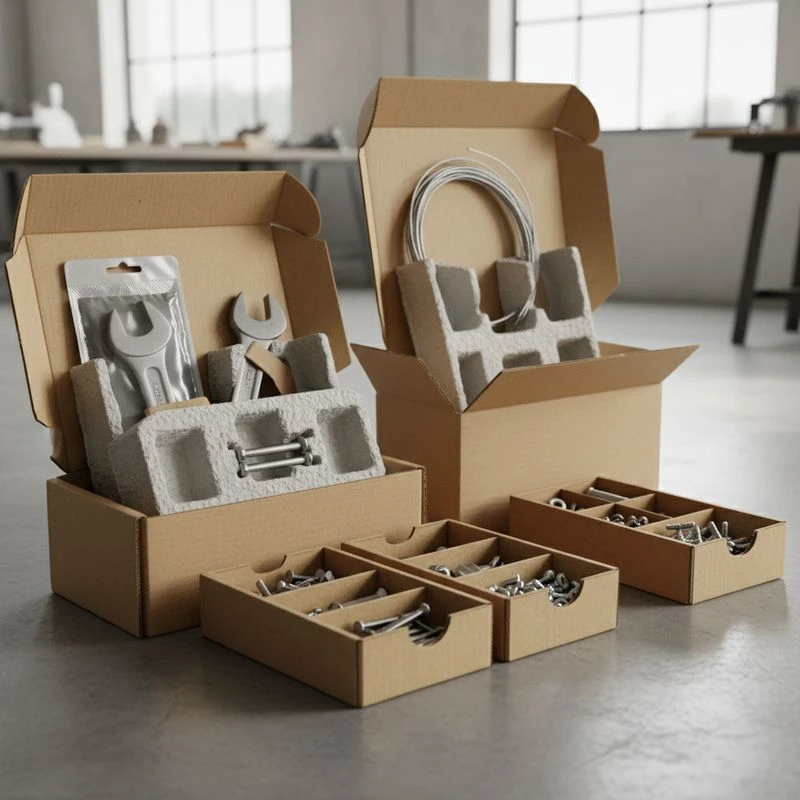
Industrial Packaging
In the dynamic and often challenging South African market, the integrity of industrial tools and hardware from factory floor to end-user hinges significantly on the quality of their packaging. Opting for bespoke industrial packaging isn’t merely an expense; it’s a strategic investment that pays dividends in reduced damage, enhanced brand perception, and streamlined logistics. Imagine a scenario where a consignment of precision engineering components arrives at a remote mining site, not only intact but also presented in a way that reflects the manufacturer’s commitment to quality. This is the tangible benefit of moving beyond generic, one-size-fits-all solutions. Poorly packaged goods risk not only physical damage, leading to costly replacements and project delays, but also tarnishing a brand’s reputation for reliability. Furthermore, the diverse climates and terrains encountered across South Africa, from coastal humidity to arid interior, demand a packaging solution that can withstand varied environmental stressors without compromise.
To truly harness the power of custom industrial packaging, businesses must first undertake a thorough assessment of their products’ unique requirements. Consider the weight, dimensions, fragility, and any specific environmental sensitivities of your tools and hardware. For instance, delicate electronic instruments will require robust shock absorption and anti-static properties, while heavy-duty drilling equipment might demand reinforced wooden crates with internal bracing. Once these foundational needs are understood, the next step involves exploring the array of advanced materials available. This could range from high-density polyethylene (HDPE) for its impact resistance, custom-foamed inserts for secure fit, or even specialised anti-corrosion VCI (Volatile Corrosion Inhibitor) films for metallic parts exposed to moisture. Engaging with a packaging expert early in the product development cycle can also prevent costly redesigns down the line, ensuring that the packaging is an integrated part of the product’s journey, not an afterthought. They can guide you through material selection, structural design, and even regulatory compliance for specific industries within South Africa.
A common pitfall businesses face is underestimating the vibrations and impacts experienced during transit, particularly when shipping across South Africa’s extensive road network. A simple cardboard box, even if seemingly sturdy, is often insufficient for heavy or delicate industrial items. This can lead to internal component shifting, surface abrasions, or even structural failure of the product itself. The solution lies in employing multi-layered protection, incorporating outer crates, intermediate cushioning, and internal securing mechanisms like custom foam cut-outs or specialised strapping. Moreover, custom packaging allows for optimal space utilization, enabling more efficient stacking and loading onto pallets or into shipping containers, thereby reducing shipping costs over time. Think about the potential for reusability for returnable transit packaging – this not only saves money but also aligns with growing sustainability mandates. By focusing on smart design, robust materials, and a clear understanding of the logistics chain, businesses can transform their industrial packaging from a necessary cost into a competitive advantage.
Protective Cases
For high-value, sensitive, or frequently transported industrial tools and hardware in the South African market, investing in high-quality protective cases is not just a recommendation but an absolute imperative. These aren’t merely containers; they are sophisticated engineering solutions designed to safeguard assets from the most punishing environments and rigorous handling. The initial outlay for a superior protective case might seem significant compared to a standard box, but this perspective often overlooks the considerable long-term savings. Preventing a single instance of damage to a calibration instrument, a diagnostic device, or specialised mining equipment can easily outweigh the cost of multiple cases. Considering the potential for equipment downtime, repair costs, or even outright replacement, coupled with the intangible damage to client trust and project timelines, the economic rationale for robust protection becomes undeniably clear. South Africa’s industrial sectors, spanning mining, energy, and manufacturing, frequently operate in harsh conditions where dust, moisture, extreme temperatures, and rough handling are daily realities, making protective cases indispensable.
When selecting the right protective cases, a methodical approach ensures optimal protection and value. Start by evaluating the specific threats your equipment faces. Is it primarily impact during transit, water ingress, dust contamination, or perhaps vibration? For instance, for equipment prone to impact and shock, cases made from robust polymers like polypropylene, often found in brands known for their ruggedness, are ideal. These cases often feature reinforced corners, secure latches, and pressure equalization valves. The internal configuration is just as critical; custom foam inserts, precisely cut to cradle each component, eliminate movement within the case, distributing shock and preventing friction. These inserts can be made from various foam densities, from soft polyethylene for cushioning to firmer polyurethane for structural support. For items requiring environmental sealing, look for cases with IP (Ingress Protection) ratings that guarantee resistance against dust and water. Actionable steps include collaborating with a specialist supplier who can offer a range of case options, advise on materials, and design custom foam layouts tailored to your exact tools and hardware, ensuring a snug and secure fit that accounts for all sensitive points.
One common pitfall when procuring protective cases is choosing a generic, off-the-shelf solution that doesn’t account for the unique contours or vulnerabilities of your specific industrial tools. A loosely fitting case, even if externally robust, can still allow internal components to shift and collide, leading to damage. Another mistake is overlooking the need for secure, reliable latches and handles that can withstand repeated use and heavy loads without failing. Imagine a technician trying to carry a heavy case with a flimsy handle across uneven terrain – a potential disaster. The solution lies in customisation: ensure the case dimensions perfectly accommodate your equipment, and that internal cushioning is tailored to prevent any movement. Furthermore, consider features like padlockable clasps for security, integrated wheels for ease of transport of heavier items, and stackable designs for efficient storage. For specialist applications, such as equipment used in highly corrosive environments, even the metal components of the case (hinges, latches) need to be specified as stainless steel or other resistant alloys. By focusing on these details, businesses can ensure their custom packaging provides maximum protection, extending the lifespan of their valuable industrial tools and hardware and maintaining operational readiness across South Africa’s challenging industrial landscape.
B2B Shipping
Efficient B2B shipping of industrial tools and hardware across South Africa relies heavily on intelligent, purpose-designed custom packaging. It’s about far more than just getting an item from point A to point B; it’s about optimising the entire logistical chain, ensuring cost-effectiveness, minimizing transit damage, and maintaining delivery schedules. When a critical piece of machinery or a bulk order of fasteners needs to reach a client in Johannesburg from a manufacturing plant in Cape Town, the packaging solution must be robust enough to endure long-haul road transport, secure enough to deter theft, and efficient enough to be handled quickly at various depots. Generic packaging often leads to wasted space within shipping containers, requiring more shipments than necessary, which directly inflates transportation costs and carbon footprint. Moreover, it can result in goods shifting during transit, increasing the likelihood of damage and the associated costs of claims, returns, and customer dissatisfaction. Therefore, adopting a strategic approach to custom packaging for B2B shipping is a primary takeaway for any enterprise looking to thrive in South Africa’s competitive industrial sector.
To optimise B2B shipping through tailored packaging, businesses should first engage in a comprehensive analysis of their supply chain. Understand the typical routes, modes of transport, and handling procedures involved. For items frequently shipped on standard pallets, designing packaging that maximizes pallet space without overhangs or wasted vertical space is crucial. This often means creating custom boxes or crates with dimensions that are modular to standard pallet sizes (e.g., 1200mm x 1000mm or 1200mm x 800mm for South Africa). Implementing standardized, stackable packaging designs not only reduces wasted space but also improves loading and unloading times, minimizing labour costs and potential for human error. For heavy or unusually shaped items, custom skids or crates with integrated lifting points or forklift entry slots are essential for safe mechanical handling. Beyond physical dimensions, consider the weight distribution within each package to prevent instability during stacking. Collaboration with your logistics partners is a critical actionable step here; they can provide invaluable insights into their handling equipment capabilities and preferred packaging formats, helping you to design custom packaging for industrial tools and hardware that seamlessly integrates into their operations.
A significant pitfall in B2B shipping packaging is the failure to anticipate the dynamic forces and environmental stressors that packages encounter during their journey. Vibrations from road transport, sudden braking, accelerations, and even variations in temperature and humidity can compromise product integrity if packaging is not designed appropriately. For example, relying on simple tape for heavy cartons often leads to splits, exposing contents. The solution lies in employing robust sealing methods, such as industrial-grade strapping or reinforced adhesive tapes, and using materials that maintain their structural integrity under diverse conditions. Furthermore, clear and durable labelling is paramount for B2B shipping; mislabeled or poorly labelled packages lead to misrouting, delays, and potential losses. Custom packaging can integrate large, unambiguous labels for destination, contents, and handling instructions directly into the design, or provide specific, protected areas for label application. For high-value items, incorporating tamper-evident seals into the custom packaging design provides an additional layer of security and peace of mind. By proactively addressing these elements, businesses can significantly enhance the efficiency, safety, and reliability of their B2B shipping operations for industrial tools and hardware.
| Parameter | Description | Benefit for Custom Packaging for Industrial Tools and Hardware |
|---|---|---|
| Palletization & Modularity | Designing package dimensions to fit standard pallet sizes efficiently (e.g., 1200x1000mm). | Maximizes shipping container space, reduces logistics costs, simplifies handling. |
| Stackability & Stability | Ensuring packages can be securely stacked without crushing or instability. | Prevents damage during transit, optimises warehouse storage, safer handling. |
| Weight Distribution | Balancing the load within the package and across the pallet. | Enhances safety for manual and mechanical handling, prevents tipping. |
| Handling Features | Incorporating features like hand-holds, forklift entry points, or lifting eyes. | Facilitates easier and safer loading/unloading, reduces risk of handler injury. |
| Environmental Protection | Resistance to moisture, dust, temperature fluctuations, and UV. | Maintains product integrity through diverse South African climates, extends shelf-life. |
This table highlights crucial design parameters that, when integrated into custom packaging for industrial tools and hardware, can dramatically improve the efficiency and safety of B2B shipping. By focusing on these aspects, companies can move beyond basic containment to a strategic packaging approach that aligns with complex logistics needs. Each parameter contributes directly to cost savings and reduced product damage, making the initial investment in custom solutions highly justifiable.
Heavy Duty
When dealing with industrial tools and hardware, especially in demanding environments such as those found across South Africa’s mining, manufacturing, and construction sectors, heavy-duty packaging isn’t merely an option; it’s an absolute necessity. The takeaway here is clear: inadequate packaging for weighty or robust items will inevitably lead to damage, safety hazards, and significant financial losses. Industrial equipment often features sharp edges, considerable weight, and complex components that are vulnerable to impact, vibration, and compression. A standard carton or lightly constructed crate will simply buckle under these stresses, leading to compromised structural integrity and exposing the contents to unacceptable risks. Investing in custom heavy-duty packaging ensures that these valuable assets reach their destination in perfect condition, ready for immediate deployment, thereby minimizing downtime and costly repairs or replacements, which are particularly disruptive in critical industrial operations.
Designing effective heavy-duty packaging for industrial tools and hardware begins with an in-depth understanding of the product’s physical characteristics and its journey. For exceptionally heavy items, multi-layered wooden crates constructed from robust timber, often reinforced with steel banding, are indispensable. These crates must be designed with sufficient internal bracing and blocking to prevent any movement of the product during transit, which is critical given the varied road conditions across South Africa. For items with sharp protrusions or uneven surfaces, custom-moulded inserts made from high-density foams or specialised plastics can provide a precise, protective cocoon. Beyond just materials, the structural engineering of the packaging plays a vital role. This includes load-bearing capacities of bases, the integrity of corner joints, and the overall rigidity to withstand stacking pressures. A key actionable step is to conduct simulated drop tests and vibration analyses, replicating real-world shipping conditions, to validate the packaging design. Collaborating with packaging engineers who specialize in heavy-duty solutions can provide crucial expertise, ensuring that all potential stress points are addressed and that the custom packaging meets or exceeds industry safety standards, protecting both the product and those handling it.
A common pitfall in heavy-duty packaging is underestimating the dynamic forces at play during mechanical handling and transit, leading to packaging failure. For example, simply wrapping a heavy item in plastic film and strapping it to a flimsy pallet will almost certainly result in the item shifting, breaking free, or damaging other cargo. Another error is neglecting the importance of adequate cushioning and void fill for heavy items, believing their inherent robustness negates the need for internal protection. Even a strong metal part can suffer cosmetic damage or have its calibration affected by constant rattling. The solution involves using specialised heavy-duty dunnage, such as engineered wood blocks, high-density polyethylene foam, or even inflatable air bags designed for heavy loads, to secure the item within its outer container. Furthermore, consider the environment where the package will be stored or used; heavy-duty packaging should also offer resistance to moisture, pests, and UV radiation if the items are destined for outdoor storage or use in rugged conditions. By embracing these principles of robust material selection, structural integrity, and rigorous testing, businesses can guarantee that their custom packaging provides unparalleled protection for even the heaviest and most critical industrial tools and hardware, ensuring safe passage across the challenging landscapes of South Africa.
Durable
In the demanding industrial landscape of South Africa, the durability of custom packaging for industrial tools and hardware is not merely a desirable attribute; it’s a fundamental requirement that underpins operational longevity and strengthens brand trust. Durable packaging means products arrive as intended, resist environmental degradation during storage, and can even facilitate reverse logistics or be reused, offering both economic and environmental advantages. Imagine a scenario where a critical spare part for a mining machine, stored for months in a remote warehouse, needs to be deployed urgently. If its packaging has deteriorated due to humidity, dust, or pests, the component itself could be compromised, leading to costly delays and operational breakdowns. A lack of durability translates directly into product damage, increased waste, and ultimately, a negative perception of the manufacturer’s commitment to quality. Therefore, prioritizing highly durable custom packaging is a strategic imperative for any business operating within South Africa’s diverse industrial sectors, ensuring asset protection throughout its lifecycle.
Achieving true durability in custom packaging requires a comprehensive approach to material selection and design. For applications where moisture is a concern, such as coastal regions or humid storage facilities, incorporating moisture barriers and desiccant packs within a sealed, robust outer container is crucial. UV-resistant materials are essential for packaging that might be exposed to prolonged sunlight, preventing material degradation and ensuring label legibility. For reusable packaging, such as returnable plastic crates or heavy-duty cases, the choice of materials like high-density polyethylene (HDPE) or cross-linked polyethylene foam, known for their resilience against impacts and chemicals, is paramount. Furthermore, robust closures – think heavy-duty latches, reinforced straps, or tamper-evident seals – are critical for maintaining integrity throughout multiple handling cycles. An actionable step involves assessing the full lifecycle of your packaging: from initial shipment to potential long-term storage, reuse, or eventual disposal. Work with packaging specialists to select materials and designs that specifically address these lifecycle requirements, considering factors like material fatigue, resistance to environmental factors prevalent in South Africa, and ease of cleaning for reusable options. This foresight in design ensures that the custom packaging for your industrial tools and hardware remains effective and protective over extended periods.
A common pitfall is to equate “durable” solely with “thick” or “heavy,” leading to over-packaging that increases costs and environmental impact without necessarily adding proportionate protective value. Another error is overlooking the chemical compatibility of packaging materials with the product itself or with cleaning agents if the packaging is intended for reuse. For instance, some plastics can become brittle when exposed to certain solvents. The solution lies in smart, engineered durability rather than just bulk. This involves using advanced materials like composites, incorporating structural design elements that enhance strength-to-weight ratios, and applying protective coatings or treatments where necessary. Consider features that extend the functional life of the packaging, such as replaceable components (e.g., latches, hinges) or modular designs that allow for easy repair. For products requiring an extended shelf-life or those stored in challenging conditions, the packaging should also protect against dust ingress, pest infestation, and even fungal growth. By adopting a holistic view of durability, businesses can ensure their custom packaging for industrial tools and hardware not only protects assets effectively but also contributes positively to their operational efficiency and sustainability goals across South Africa.
| Durability Feature | Description | Benefit in South African Industrial Context |
|---|---|---|
| UV Resistance | Packaging materials designed to withstand prolonged exposure to sunlight without degradation. | Prevents material breakdown and discolouration for outdoor storage or prolonged transit. |
| Moisture Barrier Films | Multi-layered films or coatings that prevent water vapour and liquid ingress. | Protects sensitive tools from humidity and corrosion in diverse climates (coastal to inland). |
| Impact Resistant Polymers | Use of high-grade plastics (e.g., HDPE, polypropylene) that absorb shocks and resist cracking. | Essential for resisting rough handling and impacts during transport on varied road conditions. |
| Reinforced Closures | Heavy-duty latches, hinges, and sealing mechanisms designed for repeated use and security. | Ensures contents remain secure, extends packaging lifespan, and deters tampering. |
| Chemical & Oil Resistance | Materials that do not degrade or react when exposed to common industrial chemicals or oils. | Maintains packaging integrity in environments where spills or chemical exposure are possible. |
The table above illustrates specific features that contribute to the overall durability of custom packaging for industrial tools and hardware. Implementing these elements ensures that packaging can withstand the harsh realities of South African industrial environments, protecting products over their entire lifecycle. This proactive approach not only safeguards valuable assets but also enhances the reputation of the supplier as reliable and forward-thinking.
