
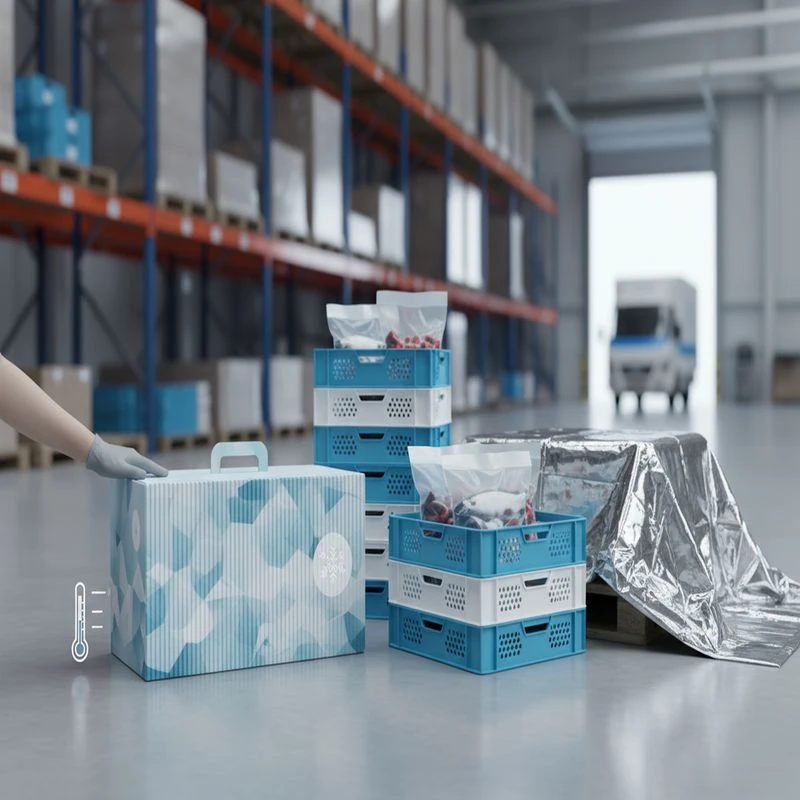
Navigating unique challenges with innovative solutions for optimal freshness and market success.
Frozen Packaging
The journey of frozen food from production to the South African consumer’s plate is fraught with potential pitfalls, and at the heart of mitigating these risks lies the efficacy of its packaging. In a market as diverse and challenging as South Africa, generic solutions simply won’t suffice. Custom packaging for frozen food becomes not just a preference, but a strategic imperative. This tailored approach is vital for several reasons, primarily to combat freezer burn, maintain the intrinsic quality of the product—including its texture, flavour, and nutritional value—and to ensure strict compliance with local and international food safety regulations. Moreover, superior packaging plays a critical role in extending shelf life, reducing waste, and ultimately safeguarding brand reputation.
When selecting materials for custom frozen food packaging, businesses must consider a multifaceted array of factors. High-barrier films, for instance, are indispensable. These are typically multi-layered structures featuring materials like LLDPE (Linear Low-Density Polyethylene), PET (Polyethylene Terephthalate), or Nylon, specifically engineered to provide robust protection against oxygen ingress and moisture vapour transmission. Oxygen is a primary culprit in oxidative rancidity, which can lead to off-flavours and colours, while moisture loss results in freezer burn, a common bane for frozen products. For products requiring rigid support, such as frozen ready meals or desserts, laminated cartons with an inner film liner or trays made from PET or PP (Polypropylene) are often employed. These materials offer structural integrity during handling and storage, and their thermal properties can contribute to maintaining temperature stability.
Beyond the functional aspects, the aesthetic and informational qualities of packaging are equally crucial. Custom packaging offers businesses the canvas to differentiate themselves in a competitive market. High-quality print, vibrant colours, and clear nutritional information are all vital components. Digital printing advancements now allow for greater flexibility in design, even for smaller batches, facilitating seasonal promotions or specific market segment targeting. However, a common pitfall is underestimating the extreme temperature fluctuations the packaging will endure, from blast freezing to transport in varied ambient conditions. An inadequate barrier, for example, might initially seem cost-effective but will inevitably lead to product dehydration and spoilage, negating any perceived savings. The solution lies in rigorous testing and collaboration with packaging specialists who understand the unique demands of the South African cold chain, ensuring that materials are specified not just for their cost, but for their proven performance under stress. Investing in advanced barrier technologies and structural designs specifically for custom packaging for frozen food ensures that products reach consumers in pristine condition, reinforcing brand trust and securing repeat business.
Understanding the types of films and their properties is key to optimal frozen food packaging. Here’s a brief overview:
| Packaging Material Type | Key Barrier Properties | Typical Applications (Custom Packaging for Frozen Food) | Advantages for Frozen Food |
|---|---|---|---|
| LLDPE Films (e.g., co-extruded) | Good moisture barrier, moderate oxygen barrier | Pouches for vegetables, fruits, meats | Flexibility, good sealability, cost-effective |
| PET Films (e.g., laminated with PE) | Excellent clarity, good stiffness, moderate barrier | Trays for ready meals, film lidding | Printability, structural integrity, aesthetic appeal |
| Nylon (e.g., OPA/PE laminates) | High oxygen barrier, puncture resistance | Vacuum bags for frozen meat, seafood | Durability, extended shelf life for sensitive products |
| Aluminium Foil Laminates | Superior oxygen and moisture barrier, light block | High-value frozen meals, specialty items | Maximum product protection, premium feel |
This table highlights how different material combinations contribute to the specific needs of custom packaging for frozen food. For instance, LLDPE is a staple due to its flexibility and excellent seal strength, making it ideal for bulk frozen items. PET, often combined with other polymers, provides rigidity and a clear window for consumers, crucial for brand visibility. Nylon adds essential puncture resistance, protecting valuable products like frozen meats from damage during transit and handling. The choice is always a balance between product requirements, shelf life targets, and cost efficiency within the South African market context.
Insulated Design
The journey of frozen food through the cold chain, particularly across the vast and often challenging terrains of South Africa, places an immense emphasis on effective insulated design in packaging. It’s not merely about keeping things cold; it’s about minimizing temperature fluctuations to preserve the exact state of the product from dispatch to delivery, ultimately guaranteeing food safety and quality. Insulated design serves as a critical guardian against ambient heat ingress, making it a non-negotiable component of any robust cold chain strategy. Whether transporting premium cuts of meat, delicate seafood, or bulk frozen vegetables, the packaging’s ability to maintain a stable sub-zero environment directly impacts the product’s integrity and market value. Without proper insulation, businesses risk product degradation, spoilage, and substantial financial losses.
There are various approaches to insulated design, each offering specific benefits depending on the transit time, ambient conditions, and product type. Materials like Expanded Polystyrene (EPS) are a common choice for their excellent thermal resistance and lightweight properties, often used in rigid cooler boxes or as inserts within corrugated cartons. Polyurethane (PU) foams offer even higher thermal efficiency for their thickness but can be more costly. For more flexible solutions, particularly for last-mile delivery or smaller shipments, thermal liners made from metallized bubble wrap or reflective foils are increasingly popular. These liners, often used within an outer corrugated box, create a passive thermal barrier that significantly extends the time frozen products can safely remain outside active refrigeration. The design considerations extend beyond just material selection to encompass the overall structure. For example, ensuring a tight fit with minimal air gaps inside the insulated container is crucial, as air pockets can act as thermal bridges, compromising insulation effectiveness.
Implementing effective insulated design involves a strategic blend of material science and logistical planning. Businesses should conduct thorough thermal mapping studies to understand the temperature profiles their products experience during transit. This data is invaluable for selecting the appropriate insulation thickness and type. Furthermore, integrating phase change materials (PCMs) or dry ice can significantly augment the performance of insulated packaging, providing an extended period of temperature stability, particularly useful for longer transit times or when unforeseen delays occur. For instance, carefully calibrated PCMs can be chosen to maintain specific temperature ranges, such as -18°C for deep-frozen goods, by absorbing latent heat as they change phase. A common pitfall in insulated design is underestimating the impact of external factors, such as prolonged exposure to direct sunlight during loading or offloading, or the ‘door-opening effect’ where cold air escapes. Solutions involve not just superior packaging, but also operational protocols like pre-conditioning insulation materials to the desired temperature and rapid handling procedures to minimise exposure to ambient heat. Ultimately, the goal of custom packaging for frozen food with insulated design is to create a predictable and protective micro-environment around the product, irrespective of the external challenges. This proactive approach ensures that frozen goods maintain their quality and safety standards throughout their journey, delivering peace of mind to both suppliers and consumers in South Africa.
To further illustrate the critical role of insulated design in the cold chain, consider the following specifications:
| Insulation Material | Thermal Conductivity (W/m·K) | Typical R-value per 25mm thickness (Approx.) | Key Advantages for Custom Packaging for Frozen Food | Ideal Use Case (South Africa Cold Chain) |
|---|---|---|---|---|
| Expanded Polystyrene (EPS) | 0.035 – 0.040 | 0.70 – 0.75 | Lightweight, cost-effective, good rigidity | Mid-range transit times, internal box liners for general frozen goods |
| Polyurethane (PU) Foam | 0.020 – 0.025 | 1.00 – 1.25 | Superior thermal performance, high strength-to-weight ratio | Longer transit times, high-value frozen products requiring strict temperature control |
| Vacuum Insulated Panels (VIPs) | 0.004 – 0.008 | 4.00 – 6.25 | Extremely high thermal efficiency, thin profile | Critical cold chain for pharmaceuticals or sensitive frozen goods with limited space |
| Reflective Thermal Liners | Varies (radiation barrier) | Varies (typically 0.15-0.30) | Flexible, low cost, good for last-mile delivery | Short transit times, supplementary insulation within existing custom packaging for frozen food |
This table showcases the range of insulation materials available for custom packaging for frozen food, highlighting their thermal efficiencies and suitable applications. The R-value is a crucial metric, indicating the material’s resistance to heat flow – a higher R-value means better insulation. For the South African context, where ambient temperatures can be extremely high, choosing materials with optimal thermal conductivity and incorporating them effectively into the packaging design is paramount to safeguard the quality and safety of frozen products during their critical journey.
B2B Supply
In the intricate ecosystem of the South African frozen food market, the efficiency and reliability of B2B supply chains are paramount. It’s not just about producing excellent frozen food; it’s about ensuring a consistent, high-quality flow of product through distributors, retailers, and food service providers to the end consumer. Strategic B2B partnerships, particularly concerning the custom packaging for frozen food itself, form the bedrock of this success. For businesses operating in this sector, securing a dependable supply of bespoke packaging solutions is as critical as sourcing the ingredients for the food itself. This ensures that large volumes of products can be handled efficiently, just-in-time delivery schedules can be met, and overall cost efficiencies are achieved while mitigating risks associated with supply disruptions.
Establishing robust supplier relationships for custom packaging is a proactive step that pays dividends. It involves vetting potential packaging manufacturers and suppliers not just on price, but on their proven track record of quality, reliability, capacity, and adherence to sustainability practices. A packaging partner who understands the unique demands of frozen food and the South African logistics landscape can offer invaluable insights into material selection, structural design, and logistical optimization. Negotiating clear Service Level Agreements (SLAs) that define quality standards, delivery schedules, contingency plans, and intellectual property protection is crucial. For instance, if a specific barrier film is required for a new frozen meal line, the SLA should detail its specifications, testing protocols, and the supplier’s commitment to consistent quality. Implementing integrated inventory management systems that link frozen food producers with their packaging suppliers can also streamline ordering processes, reduce lead times, and prevent costly stockouts, especially for custom packaging with longer production cycles.
The potential pitfalls in B2B supply for custom packaging are numerous. Stockouts of essential packaging components can halt production lines, leading to missed delivery deadlines and dissatisfied clients. Inconsistent quality of packaging materials can result in product damage, spoilage, and costly recalls, severely impacting brand reputation. Furthermore, relying on a single supplier, particularly for custom and specialised frozen food packaging, introduces significant risk. Disruptions due to unforeseen events, such as raw material shortages, production issues, or transport strikes, can have cascading effects throughout the entire cold chain. To counter these challenges, businesses should adopt a multi-supplier strategy where feasible, diversifying their sources for critical packaging components. Regular quality audits and performance reviews of packaging suppliers are essential to ensure ongoing compliance and identify areas for improvement. Contingency planning, including maintaining safety stock levels for critical custom packaging items and having pre-qualified alternative suppliers, is vital. For example, if a specific type of insulated carton becomes unavailable, having an alternative design or material pre-approved can prevent production stoppages. Clear communication channels between all parties in the B2B supply chain, from the packaging manufacturer to the logistics provider and the frozen food producer, are paramount for addressing issues proactively and ensuring that the custom packaging for frozen food consistently meets the rigorous demands of the South African market.
Ensuring the integrity and efficiency of your B2B supply chain for custom packaging for frozen food involves adherence to specific quality and operational parameters:
| Parameter | Description | Typical Specification for Custom Packaging for Frozen Food | Importance for South Africa Market |
|---|---|---|---|
| Lead Time for Custom Order | Time from order placement to delivery of custom packaging. | 4-6 weeks (design approval to delivery) | Critical for production planning and avoiding stockouts due to long supply routes. |
| Minimum Order Quantity (MOQ) | Smallest order volume accepted by the supplier. | Varies by material (e.g., 10,000 units for printed pouches) | Influences inventory costs and cash flow; affects smaller businesses’ access. |
| Quality Control Protocol | Supplier’s process for ensuring packaging meets standards. | ISO 9001 certified, documented material spec checks, batch testing. | Guarantees packaging integrity, prevents product spoilage and brand damage. |
| Sustainability Credentials | Environmental impact and recyclability/reusability of packaging. | FSC certified cardboard, recyclable plastic films (e.g., PE mono-material). | Growing consumer demand and regulatory pressure for eco-friendly solutions. |
This table illustrates key B2B supply parameters essential for businesses sourcing custom packaging for frozen food in South Africa. Understanding and negotiating these specifications directly impacts operational efficiency, cost management, and ultimately, the ability to consistently deliver high-quality frozen products to the market. For instance, managing MOQs effectively allows for optimised inventory levels, preventing both overstocking and costly production delays.
Temperature Control
In the realm of frozen food, precise temperature control is not merely a best practice; it is the absolute bedrock of product safety, quality, and consumer trust. For the South African market, with its diverse climates and often lengthy supply chains, maintaining a consistent deep-frozen state (typically -18°C or below) throughout the entire journey is an immense challenge that requires meticulous attention. Any deviation from this critical temperature range can have immediate and severe consequences, from the proliferation of spoilage-causing microorganisms to enzymatic activity that degrades texture and flavour. The integrity of custom packaging for frozen food plays a pivotal role in supporting and extending the effectiveness of active refrigeration and insulation strategies. It acts as the final barrier, safeguarding the product even during momentary exposures to warmer conditions, such as during loading, offloading, or retail display.
Achieving this level of control demands a multi-pronged approach that integrates advanced monitoring technologies with robust operational protocols. Modern cold chain solutions incorporate sophisticated data loggers and RFID tags that provide real-time temperature monitoring, allowing businesses to track conditions at every critical control point (CCP) – from the blast freezer to the distribution centre, during transit, and right up to the retail freezer cabinet. Temperature mapping of warehouses and transport vehicles is essential to identify hot spots or areas where cold air circulation is inadequate. Compliance with international food safety standards, such as HACCP (Hazard Analysis and Critical Control Points), is non-negotiable, requiring systematic identification and control of potential temperature-related hazards. For example, a CCP might be the point where custom packaged frozen goods are transferred from the factory freezer into a refrigerated truck. Continuous monitoring at this stage provides immediate feedback, allowing for corrective actions before product integrity is compromised.
However, despite technological advancements, potential pitfalls in temperature control remain prevalent. The most significant is a “broken cold chain,” where frozen products experience defrost-refreeze cycles. This not only compromises food safety by potentially reactivating dormant bacteria but also severely damages product quality, leading to crystal formation, textural degradation, and moisture loss within the custom packaging. Inadequate staff training on proper handling procedures, such as leaving freezer doors open too long or improper stacking of pallets that obstruct airflow, can quickly undermine even the most advanced temperature control systems. Solutions necessitate a holistic approach: continuous investment in state-of-the-art monitoring equipment, coupled with rigorous and ongoing staff training across all touchpoints of the cold chain. Real-time alerts generated by data loggers can empower teams to intervene promptly when temperatures deviate from acceptable limits. Furthermore, working with logistics partners who specialize in frozen transport and who demonstrate a commitment to cold chain integrity is crucial. The design of custom packaging for frozen food itself can also contribute; for example, ensuring that packaging allows for efficient air circulation within pallets and is stackable without compromising the product’s internal thermal stability. By prioritising and meticulously managing temperature control, South African businesses can ensure that their custom packaged frozen foods consistently meet the highest standards of safety and quality, safeguarding both their brand and consumer health.
Durability
The journey of frozen food through the South African cold chain is often a physically demanding one, fraught with potential for impacts, compression, and general rough handling. From the moment custom packaging for frozen food leaves the production line, through loading onto pallets, transit over varied road conditions, to being stacked in warehouses and retail freezers, it must withstand significant physical stress. This is where the durability of packaging becomes a non-negotiable attribute. Robust packaging is essential not just for preventing immediate physical damage like tearing or crushing, but also for protecting against the insidious effects of moisture, temperature stress, and ensuring the structural integrity required for efficient logistics. A breach in the packaging, even a minor one, can lead to freezer burn, contamination, and ultimately, product loss, severely impacting both profitability and brand reputation in a competitive market.
Material selection is the first line of defence in ensuring durability. For outer custom packaging, corrugated cardboard, particularly multi-wall variants with specific fluting profiles, offers excellent compression strength and resistance to impact. It’s crucial that these cartons are treated for moisture resistance, often with wax coatings or special laminations, to prevent weakening in humid freezer environments. For the primary packaging directly in contact with the food, robust, puncture-resistant films are paramount. Materials like Nylon-blended co-extrusions or thicker gauge polyethylene (PE) films provide enhanced protection against sharp edges of frozen products or accidental impacts during handling. The structural design of the packaging also plays a critical role. For instance, packaging designed for optimal palletization, with interlocking features or reinforced corners, distributes weight effectively, preventing crushing of lower layers in tall stacks. Considerations such as handle design for larger, heavier items in custom packaging for frozen food improve handling ergonomics and reduce the likelihood of drops or tears.
To guarantee the required level of durability, businesses must implement rigorous testing protocols. This includes standard industry tests such as drop tests, which simulate accidental falls, and vibration tests, which mimic the jostling experienced during road transport. Compression tests ensure that stacked pallets of custom packaging for frozen food will not collapse under their own weight during storage or transit. For moisture-sensitive materials, water resistance tests are crucial. A common pitfall is to opt for thinner, less durable packaging materials to save on costs, only to incur much higher expenses later due to damaged goods, customer complaints, and returns. The solution lies in a balanced approach: specifying packaging materials that meet or exceed industry standards for durability, investing in quality testing, and working closely with packaging suppliers who can provide expert guidance on appropriate designs and materials for the South African cold chain environment. For example, if a frozen product will be transported long distances over poorly maintained roads, the custom packaging must be engineered with superior impact and vibration resistance. By proactively addressing durability in the design and material selection phases of custom packaging for frozen food, businesses can minimise product loss, enhance customer satisfaction, and build a reputation for reliability and quality, essential attributes for success in the South African frozen food sector.
To ensure robust custom packaging for frozen food, several key durability tests and considerations are vital:
| Durability Test/Consideration | Purpose/Description | Relevance for Custom Packaging for Frozen Food (South Africa) | Potential Pitfall if Neglected |
|---|---|---|---|
| Drop Test (e.g., ISTA 3A) | Simulates accidental drops during handling and transit, assessing impact resistance. | Critical due to varied handling practices and infrastructure across SA, prevents tears/cracks. | Product damage (crushing, breakage), packaging failure, leakage. |
| Vibration Test (e.g., ASTM D4169) | Replicates continuous shaking and vibration during road transport. | Essential for long-distance transport on potentially rough roads, prevents abrasion/settling. | Product shifting, abrasion damage, ‘freezer burn’ from minor film breaches. |
| Compression Test | Measures packaging’s ability to withstand stacking forces without deforming. | Crucial for efficient warehousing and palletization, prevents cartons from collapsing. | Structural collapse of stacks, damage to products in lower layers, safety hazards. |
| Puncture Resistance | Assesses resistance to sharp objects or internal product protrusions. | Protects against damage from frozen product edges or external sharp objects, especially in primary films. | Breaches in primary packaging, freezer burn, contamination risk. |
This table outlines critical durability tests and considerations for custom packaging for frozen food, specifically tailored to the challenges of the South African market. Neglecting these aspects can lead to significant product losses and damage to brand reputation. By incorporating these tests into the packaging development process, businesses can proactively ensure their custom solutions are resilient enough to protect valuable frozen goods throughout the demanding cold chain.
