
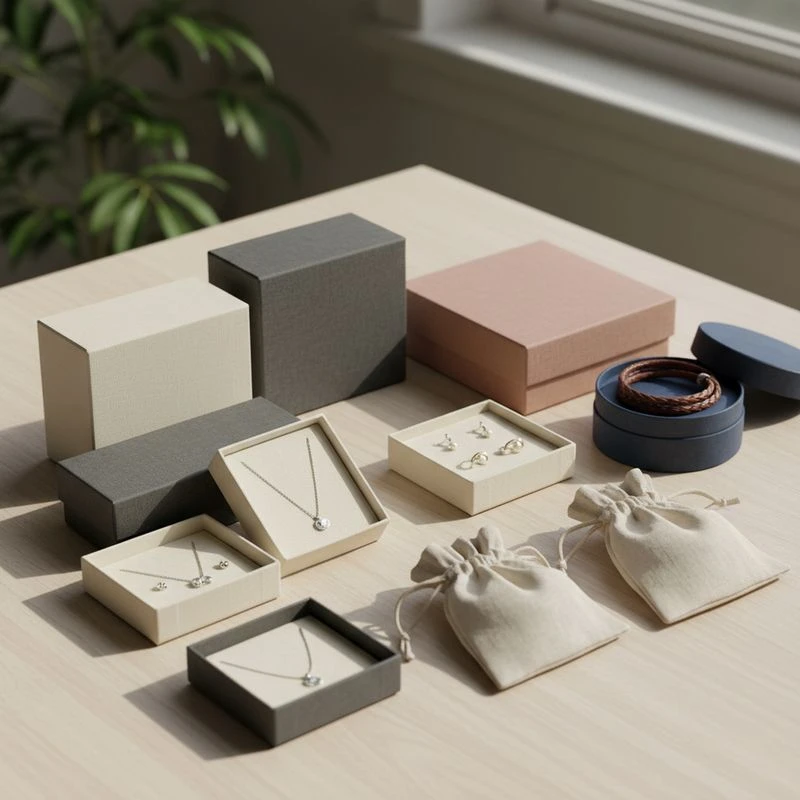
Custom packaging for fashion accessories and jewellery should do three jobs at once: protect the item, make it easy to present or sell, and express the value of the brand before the customer sees the product. The right format depends on the product’s size, finish, weight, sales channel and intended unboxing experience.
For South African brands, retailers and procurement teams, the most practical approach is to start with the item itself rather than an attractive box style. Define how each item must be held, protected and displayed, then select materials, print finishes and inserts that support that purpose without adding unnecessary bulk or complexity.
Accessory Packaging
Fashion accessories cover a wide range of products, from sunglasses and scarves to watches, belts, hair accessories and small leather goods. Jewellery packaging has its own demands because pieces can tangle, scratch, tarnish or move around in transit. A well-specified pack prevents these issues while remaining suitable for retail shelves, gifting or e-commerce fulfilment.
Match the packaging format to the product
There is no single best box for all accessories. The pack should fit the product’s physical needs and the way it will be sold.
| Product type | Suitable packaging formats | Key consideration |
|---|---|---|
| Rings, earrings and pendants | Rigid two-piece boxes, hinged boxes, small drawer boxes | A fitted insert should stop the piece from moving. |
| Bracelets and watches | Long rigid boxes, drawer boxes, pillow packs for lighter items | Allow for the product’s shape without forcing or bending it. |
| Necklaces | Shallow boxes with card inserts or retaining tabs | Keep chains separated and reduce tangling. |
| Sunglasses | Folding cartons, rigid cases, sleeve-and-box combinations | Protect frames and lenses from pressure and abrasion. |
| Scarves and fabric accessories | Tissue-lined folding cartons, mailer boxes, branded wraps | Avoid creasing where the product presentation matters. |
| Belts and small leather accessories | Longer folding cartons, drawer boxes or roll-friendly boxes | Consider whether the item is folded, coiled or displayed flat. |
| Hair accessories | Card-backed packs, window cartons or compact gift boxes | Ensure small parts are secure and easy to inspect. |
A box that is too large can make a premium product feel under-filled and permits movement during handling. One that is too tight may be difficult to pack consistently, especially where products vary slightly by design or supplier. Request a sample or physical mock-up before confirming a full production order, particularly when inserts, closures or windows are involved.
Choose protective materials with care
Protection does not always mean using the thickest possible board. The material should suit the product, the distribution channel and the intended finish.
Common choices include:
- Folding carton board: A practical option for lightweight accessories, retail packs and product ranges that need efficient flat packing.
- Rigid board construction: Often used for gift boxes and higher-value presentation where shape retention and a substantial feel matter.
- Paperboard inserts: Useful for holding earrings, necklaces, bracelets or watches in position.
- Tissue paper or paper wraps: Helps separate delicate surfaces and adds a considered opening experience.
- Fabric-covered or foam-style inserts: Can create a refined jewellery presentation, but should be assessed for fit, surface contact and end-of-life considerations.
- Corrugated mailer boxes: Useful when the presentation box must also provide protection for direct-to-customer shipments.
For plated, polished or delicate jewellery, confirm that the insert and any wrapping material are appropriate for direct contact with the product. Material compatibility can vary according to metal finishes, coatings and storage conditions. Do not assume that an insert suitable for one collection will be suitable for another.
Consider the full journey, not just the shelf
A jewellery box may be placed in a bag at a point of sale, sent as a gift or packed into a shipping carton for an online order. Each stage can affect the packaging specification.
Ask these questions early:
- Will the item be packed by hand, and how quickly must that happen?
- Does the presentation box need an outer protective carton?
- Will customers open the box before purchase, or should the product remain sealed?
- Is the packaging intended for a single product, a set or a seasonal gift bundle?
- Will a label, barcode, price sticker or product information need dedicated space?
- Does the item need a tamper-evident element, such as a seal or sticker?
- Are there components that could detach or create a hazard if the pack is damaged?
When selling online, design the presentation packaging as one part of a larger packing system. A beautiful rigid jewellery box can still arrive in poor condition if it is not supported by suitable outer protection.
Luxury Look
A luxury appearance comes from consistency, proportion and tactile quality—not simply from adding more finishes. A restrained design with the right board, fit and print treatment often feels more considered than a box carrying several competing effects.
Build value through structure and detail
The box opening mechanism has a strong influence on perceived value. A lift-off lid, magnetic closure, drawer reveal or ribbon pull can make a product feel gift-ready. However, each element adds considerations for assembly, storage, production and product fit.
For jewellery and premium accessories, the following details can be effective when used purposefully:
- clean edges and accurately aligned lid-to-base proportions;
- a snug, product-specific insert;
- soft-touch, uncoated or textured paper finishes;
- subtle metallic foil details for logos or line art;
- embossing or debossing for a tactile logo treatment;
- a printed interior message, care note or brand pattern;
- tissue paper, seals or sleeves that complement the main pack;
- a limited palette that reflects the product collection.
Use embellishments to direct attention rather than decorate every surface. For example, a small foil mark on a matte box can have more impact than foil, gloss coating, dense artwork and multiple colours used together.
Select finishes with practical use in mind
Some finishes need greater care during storage, packing and handling. Dark solid colours can show scuffs. Large foil areas can reveal registration variations. Matte surfaces may mark more easily than other finishes. A magnetic closure can be useful for presentation, but it may not be necessary for every product range.
Before final approval, check:
- whether the chosen finish suits frequent handling;
- whether printed colours remain clear against the selected stock;
- how the logo appears at the actual printed size;
- whether barcodes and required product information remain readable;
- whether labels will adhere to the selected surface;
- whether the box can be assembled and packed without damaging the finish.
A physical proof or production sample is particularly valuable for luxury packaging because screen colours rarely show the exact texture, sheen or depth of a printed material.
Avoid overpacking
Luxury packaging should not create a difficult or wasteful experience. Oversized boxes, excessive layers and inserts that are hard to remove can frustrate customers and increase material use. The goal is a deliberate reveal that protects the product and feels appropriate to its value.
For gift packaging, consider whether the box can serve a second purpose, such as safe product storage. A reusable jewellery box or accessory case can add practical value when it is genuinely useful and robust enough for repeated handling.
B2B Printing
For business buyers, successful custom packaging depends on a clear specification and a repeatable approval process. Artwork is only one part of the order. Dimensions, board type, structural design, insert configuration, print method, finishing, packing method and quality expectations all need to be defined.
Prepare a usable packaging brief
A good brief reduces revisions and makes quotations easier to compare. Include the following information:
- product type, dimensions and approximate weight;
- whether the product is wrapped, bagged or protected before entering the box;
- internal and external box dimensions, if already known;
- preferred box style and opening method;
- insert requirements, including the number of product positions;
- artwork files, brand colours and logo usage rules;
- print coverage, including interior printing if required;
- finishing requirements such as foil, embossing, lamination or spot effects;
- quantity by design, size, colourway or product variant;
- whether the pack must be supplied flat or assembled;
- labelling, barcode and product-information requirements;
- intended retail, gifting, wholesale or e-commerce use;
- sample, proofing and approval requirements.
If you do not yet know the dimensions, provide an actual product sample or a detailed product drawing to the packaging supplier. This is more reliable than estimating from photographs.
Understand quantities and design variation
Packaging procurement often becomes more complex when a range includes multiple colours, sizes or seasonal collections. A single structural box design may be shared across variants, while sleeves, labels or printed inserts distinguish each product. This can be a sensible way to keep the core presentation consistent while allowing collection-specific messaging.
However, standardising too early can be limiting. Check that a shared box size does not leave some products loose or poorly presented. For jewellery, a universal insert may not suit rings, earrings and pendants equally well.
When comparing suppliers, ensure that each quotation covers the same specification. A lower price may reflect a different board grade, no insert, fewer print colours, a different finish, flat-packed supply or exclusions for set-up and sampling. Clarify exactly what is included before making a procurement decision.
Supply artwork that supports production
Print-ready artwork should be created using the supplier’s dieline and technical requirements. Keep critical logos, text and fine details away from folds, cut lines and glue areas. Leave suitable space for production tolerances around folds and edges.
Useful checks before release include:
- spelling, contact details and product names;
- correct brand marks and colour references;
- legibility of small text;
- barcode scanability where applicable;
- inclusion of legally required or retailer-required information, where relevant;
- accurate placement of labels, seals or security elements;
- consistency across all product variants.
Requirements for product labelling, packaging claims, consumer information and material declarations may differ by product category and sales channel. Verify the requirements that apply to your product and intended market before printing.
For brands needing a range of formats, custom packaging boxes can provide a useful starting point for comparing structures, sizes and print options.
Plan approval stages
A practical packaging workflow normally includes structural confirmation, artwork review and a final approval step before production. Do not treat a digital artwork approval as proof that the product fits or that a special finish looks as expected.
Where the packaging is complex, approve separately:
- the structural sample and product fit;
- the artwork layout and copy;
- the colour and finish representation;
- the assembled pack with insert and product;
- the outer shipping configuration, if applicable.
Keep approved files and specifications organised. This makes later reorders, range extensions and seasonal updates easier to manage.
Display
Packaging can act as a display tool when it helps customers understand, inspect and compare an accessory without reducing protection. The right display format depends on whether the product is sold from a counter, shelf, display stand, pop-up environment or online storefront.
Retail-ready packaging options
For smaller accessories, display-focused packaging may include a hanging tab, euro slot, window panel, card mount or shelf-ready outer carton. These formats can make product features visible, but they need to be selected carefully.
A window can help customers see colour, texture or product shape, yet it may expose the item to dust, light, handling or surface damage. It can also reduce available space for graphics and product information. Use windows where visual inspection is genuinely important, not as a default feature.
Hanging packs should be tested for balance. A heavier item can pull, sag or tear if the board, slot position or hole reinforcement is inadequate. Counter display boxes can support small product ranges, but the individual packs still need to be easy to remove and replenish.
Design for an orderly shelf presence
A strong retail presentation usually depends on a few repeatable cues:
- product category is clear at a glance;
- the brand logo appears in a consistent position;
- key product differences are easy to identify;
- colour coding is used consistently across a range;
- front-panel messaging remains readable from normal viewing distance;
- the package is stable when stacked or hung;
- the item can be returned to its packaging neatly after customer inspection, where appropriate.
Avoid packing so much information onto the front that the product and brand become unclear. Place detailed care instructions, material information or collection stories on the back, inside panel, label or insert where they can be read without cluttering the primary display face.
E-commerce display still matters
Online customers do not encounter the packaging until after purchase, but it still affects product perception, gifting and repeat orders. An e-commerce package can be simpler than a retail display pack, provided it protects the item and presents it well on opening.
For online jewellery, consider a compact presentation box inside a suitable outer shipping pack. This separates the gift experience from the protective transport layer and can make returns or exchanges easier to manage. Confirm that the packaging dimensions suit your fulfilment process and that staff can pack the product consistently.
Brand Identity
Packaging is one of the most visible expressions of a fashion or jewellery brand. It should connect with the product’s price position, design language and customer expectations without being confused with the product itself.
A minimalist jewellery brand may use quiet colours, fine typography and a simple debossed logo. A playful accessory range may rely on brighter colour blocks, pattern and product illustrations. Neither approach is automatically more premium; the important point is that the packaging feels intentional and coherent.
Create a packaging system, not isolated boxes
Think beyond one box design. A packaging system can include product boxes, gift sleeves, carrier bags, tissue paper, stickers, care cards, thank-you cards and shipping labels. These elements should work together without requiring every item to carry the full logo, full colour palette and every message.
Start by defining:
- the primary brand colour or colours;
- typefaces and logo variations;
- tone of voice for product and care messages;
- image style, illustration or pattern rules;
- finish hierarchy for standard versus premium collections;
- packaging formats for different product categories;
- how seasonal or limited-edition products will be identified.
This approach helps a growing range remain recognisable even when different box sizes or product types are needed.
Include information customers can use
Inside packaging is a useful place for concise information that supports ownership and reduces uncertainty. Depending on the item, this could include care guidance, storage suggestions, material details, sizing information or instructions for fastening and wearing the accessory.
Keep claims precise. Do not use sustainability, material, origin or performance statements unless they can be substantiated. If you are choosing recycled, recyclable, reusable or compostable materials, confirm what those terms mean for the exact packaging components and the disposal options available to your customers.
Common mistakes to avoid
The most frequent issues in accessory and jewellery packaging are usually preventable:
- choosing a box before measuring the product and protective wrap;
- using one insert design for products with very different shapes;
- selecting finishes from screen images alone;
- leaving no clear place for labels or barcodes;
- adding too many embellishments without a defined purpose;
- making gift packaging too bulky for e-commerce shipping;
- placing important artwork too close to folds and cut edges;
- forgetting that customers may reuse the box for storage;
- making environmental claims without verifying the full material specification;
- approving artwork without checking a physical sample and product fit.
FAQ
What is the best packaging for jewellery?
The best jewellery packaging holds the piece securely, protects delicate surfaces and matches the brand’s intended presentation. Small rigid boxes with fitted inserts are common for gift-oriented jewellery, while folding cartons and card mounts may suit lighter products or retail display. The correct choice depends on the item’s shape, weight, finish and sales channel.
Should fashion accessory packaging use rigid or folding boxes?
Rigid boxes generally suit premium gifting, reusable storage and products that benefit from a substantial presentation. Folding boxes are often more space-efficient and can work well for lightweight accessories, retail ranges and larger quantities. Compare product protection, storage requirements, assembly needs and visual objectives before deciding.
Do I need an insert in a jewellery box?
An insert is advisable when it prevents movement, tangling or surface contact. Rings, earrings, necklaces and watches often benefit from a product-specific holder. For simpler or lower-risk products, tissue, a card mount or a carefully sized box may be enough. Test the packed item rather than assuming.
What should be confirmed before ordering custom packaging?
Confirm final product dimensions, box structure, material, insert fit, artwork, print finishes, quantity by variation, assembly method, labelling needs and sample approval process. If the packaging will be used for online orders, also confirm the outer protective packaging requirements.
The most effective custom packaging for fashion accessories and jewellery is the one that fits the product accurately, supports the intended sales channel and makes the brand feel consistent at every touchpoint. Begin with a physical product sample and a concise packaging brief, then compare structures and finishes against real handling needs before finalising your specification.
