
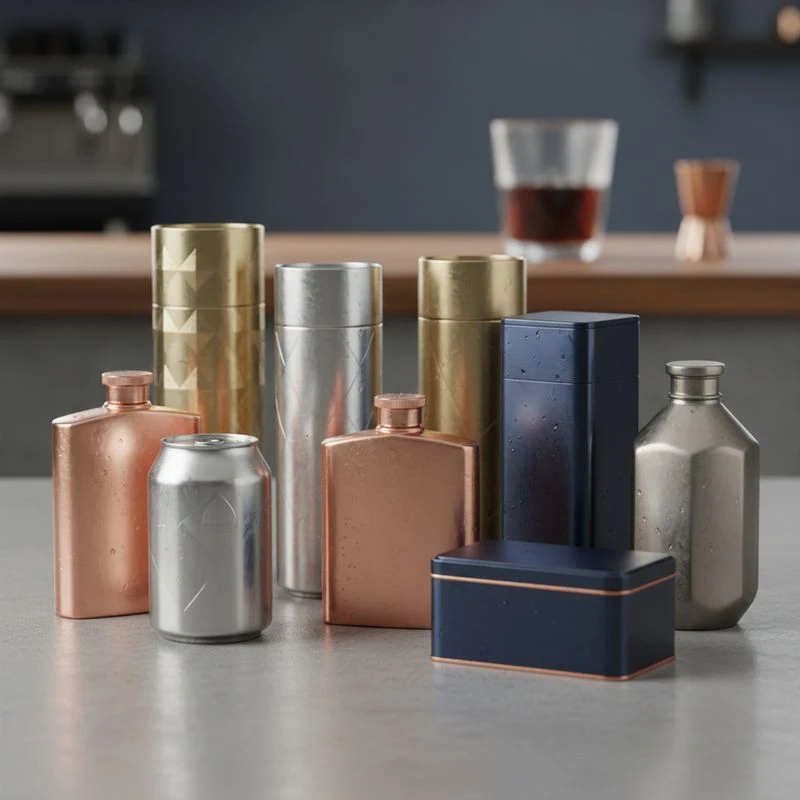
Transforming Brand Identity and Consumer Experience in a Dynamic Market
Metal Packaging
For premium beverage brands navigating the vibrant and increasingly competitive South African market, the choice of packaging is a pivotal strategic decision, with metal packaging emerging as a clear frontrunner. It transcends mere containment, acting as a robust shield and a powerful brand ambassador that speaks volumes before the first sip. The intrinsic durability of metal – whether aluminum or steel – offers unparalleled protection against external factors like light, oxygen, and physical impact, ensuring that the integrity and pristine quality of your premium beverage remain uncompromised from the production line to the consumer’s hand. This is particularly crucial for delicate formulations such as craft beers, artisanal spirits, or high-end sparkling non-alcoholic drinks, where flavour stability and shelf-life are paramount.
Beyond its protective attributes, custom metal packaging inherently communicates a sense of quality and premiumisation that resonates with discerning South African consumers. Unlike alternative materials, metal possesses a tactile coolness and a visual sleekness that immediately elevates perceived value. For brands looking to make a significant impact, leveraging these material characteristics through bespoke finishes and forms offers a distinct competitive edge. For instance, a small-batch rooibos infusion or a unique gin could be presented in a custom-designed metal can or bottle, instantly distinguishing it from competitors on crowded retail shelves. The robust nature of metal also contributes to a premium unboxing or uncorking experience, implying a product that has been carefully crafted and thoughtfully packaged. Integrating custom metal packaging into your brand strategy means investing in a solution that safeguards your product, enhances its market presence, and reinforces your commitment to quality at every touchpoint. This strategic shift helps brands to mitigate potential pitfalls associated with fragile packaging that can lead to product spoilage or damage, thereby protecting both reputation and profit margins in a bustling market.
Navigating the South African market requires an understanding of logistics and consumer expectations, and metal packaging stands up well to both. Its stackability and inherent strength contribute to more efficient transportation and storage, potentially reducing losses due to breakage – a common concern with glass. Furthermore, the modern South African consumer, increasingly aware of environmental impacts, appreciates the recyclability of metal, aligning with a brand’s responsible image. The initial investment in custom metal packaging might seem higher than generic alternatives, but when considering the extended shelf life, enhanced brand perception, reduced damage rates, and strong environmental credentials, the long-term value proposition for premium beverage brands becomes undeniably compelling. It’s about securing market share and building lasting brand loyalty through a tangible commitment to excellence.
Luxury Cans
The rise of the luxury can in the premium beverage sector, especially within South Africa, marks a transformative shift, challenging long-held perceptions and opening new avenues for brand expression. Historically associated with mass-market beverages, the can has undergone a remarkable metamorphosis, evolving into a sophisticated vessel that now embodies convenience, innovation, and undeniable luxury. For South African premium beverage brands – from craft gin distillers to artisanal sparkling wine producers and bespoke coffee brewers – embracing custom luxury cans offers a unique opportunity to redefine their market presence and captivate a modern, on-the-go consumer base without compromising on elegance. The inherent portability and shatterproof nature of cans make them ideal for outdoor events, travel, and various social settings that are integral to the South African lifestyle, allowing premium products to be enjoyed in previously inaccessible contexts.
What truly elevates a standard can to a luxury can is the meticulous attention to design and finishing. This is where custom metal packaging shines, offering an extensive palette of tactile and visual effects. Brands can opt for sophisticated matte finishes that exude understated elegance, high-gloss lacquers that reflect brilliance, or even textured surfaces that provide a unique sensory experience upon touch. Embossing and debossing techniques can add three-dimensional elements, creating intricate patterns or raising a brand logo to give it a tangible prominence. Furthermore, advanced printing technologies allow for photorealistic imagery, vibrant colour gradients, and metallic inks that shimmer and catch the light, transforming the entire surface into a work of art. Imagine a premium South African cider presented in a sleek, slimline can with a tactile finish and an embossed pattern inspired by local flora; such a product immediately stands out, communicating quality and a thoughtful design aesthetic that resonates deeply with consumers seeking unique experiences.
The strategic adoption of luxury cans also presents an opportunity to cater to evolving consumer preferences in South Africa, where convenience often intertwines with a desire for quality. These cans allow brands to offer single-serve portions of premium products, perfect for individual enjoyment or curated gift sets, without diluting the brand’s upscale image. The 360-degree canvas of a can provides significantly more space for storytelling compared to a bottle with a label, enabling brands to convey their heritage, ingredients, and unique selling propositions in a compelling and immersive way. However, brands must be mindful of potential pitfalls, such as ensuring that the quality of the print and finish truly matches the premium nature of the product. Investing in high-resolution graphics, collaborating with experienced packaging designers, and rigorous quality control are essential to ensure that the final product upholds the brand’s luxury promise. By leveraging custom metal packaging for luxury cans, South African premium beverage brands can successfully merge functionality with high-end aesthetics, appealing to a new generation of consumers who value both convenience and exceptional quality.
B2B Branding
For premium beverage brands operating in South Africa, custom metal packaging extends its influence far beyond the end consumer; it serves as a critical B2B branding tool, significantly impacting relationships with distributors, retailers, and hospitality partners. In a competitive market where shelf space is fiercely contested and buyer decisions are often made at a glance, the visual impact of packaging can be the decisive factor in securing prime placement and fostering strong trade partnerships. Packaging isn’t just about protecting the product; it’s about making a powerful first impression on those who ultimately decide whether your premium beverage will reach its target audience.
An exceptionally designed custom metal package acts as a silent salesperson in the retail environment. For distributors, a visually striking and high-quality package signals a brand’s commitment to excellence and its potential for strong sales. It demonstrates that a brand has invested not only in the quality of its liquid but also in its presentation and marketability, which instils confidence in the product’s commercial viability. Retailers, constantly seeking products that will attract customers and drive sales, are more likely to allocate valuable shelf space to beverages presented in packaging that screams “premium” and “unique.” Imagine a buyer walking through a trade show; a custom-embossed aluminum bottle or a matte-finish luxury can instantly differentiates itself from a sea of conventional glass bottles or standard cans, sparking curiosity and initiating a conversation. This differentiation is paramount for emerging or niche premium brands aiming to break into established retail chains or exclusive hospitality venues across South Africa.
Furthermore, custom metal packaging allows for the articulation of a brand’s story and values in a way that resonates with B2B partners. If a brand emphasizes sustainability, the recyclability of metal can be highlighted through subtle on-pack messaging, aligning with a retailer’s own green initiatives. If the brand boasts a unique heritage or artisanal crafting process, intricate designs and special finishes can visually communicate this narrative, making the product more appealing for upscale restaurants or boutique hotels looking for exclusive offerings. Providing retailers with aesthetically superior packaging also simplifies their merchandising efforts, as the product itself becomes an attractive display element. A potential pitfall for brands is to opt for generic packaging, which can result in their premium product blending into the background, making it harder to capture the attention of busy buyers. To counteract this, brands should invest in thorough market research to understand the aesthetic preferences of their target retailers and distributors, and then collaborate with experienced designers who can translate these insights into a truly impactful custom metal packaging solution. By strategically leveraging the power of custom metal packaging, South African premium beverage brands can not only enhance their consumer appeal but also forge stronger, more profitable relationships within the B2B landscape.
| Feature of Custom Metal Packaging | Benefit for Distributors/Retailers (B2B) | Impact on South African Market |
|---|---|---|
| Distinctive Design & Finishes | Enhanced shelf appeal, easy product differentiation, attracts customer attention. | Secures premium shelf placement in competitive retail environments. |
| Durability & Protection | Reduced breakage and spoilage, lower handling costs, preserved product quality. | Optimises logistics, minimises losses, ensures consistent product integrity for partners. |
| Sustainability (Recyclability) | Aligns with corporate social responsibility (CSR) goals, appeals to eco-conscious consumers. | Strengthens brand image, supports circular economy initiatives in SA. |
| Brand Storytelling Canvas | More space for unique branding, origin stories, and premium cues. | Enables effective marketing narratives for various sales channels, including hospitality. |
This table illustrates how specific features of custom metal packaging directly translate into tangible benefits for B2B partners, making a compelling case for its adoption by premium beverage brands. By understanding these advantages, South African brands can articulate the value proposition of their packaging more effectively to secure partnerships and market share.
Reusability
In an era defined by increasing environmental consciousness, particularly within South Africa, the reusability and recyclability of packaging materials have become paramount considerations for both consumers and brands. Custom metal packaging stands at the forefront of this sustainability revolution, offering premium beverage brands a powerful narrative and a tangible commitment to eco-friendly practices. Unlike many other materials, metal – specifically aluminum and steel used in beverage packaging – is infinitely recyclable without any loss of quality or structural integrity. This means that a can or bottle, once recycled, can return to its original form repeatedly, closing the loop on a truly circular economy and significantly reducing the demand for virgin resources.
For South African premium beverage brands, leveraging the inherent reusability and recyclability of custom metal packaging is not just a regulatory compliance issue; it’s a strategic advantage that resonates deeply with a growing segment of environmentally aware consumers. Modern consumers are increasingly making purchasing decisions based on a brand’s environmental footprint, and transparently communicating the sustainable attributes of your packaging can foster stronger brand loyalty and differentiate your product in a crowded market. Brands can actively promote their commitment to sustainability by including clear recycling instructions on their custom metal packaging, highlighting the percentage of recycled content used, or even partnering with local recycling initiatives to reinforce their message.
Consider the example of a high-end craft beer or a premium sparkling water in South Africa. When presented in a sleek, custom-designed aluminum can, the brand can not only boast about its product quality but also about its contribution to reducing waste. This message can be subtly integrated into the design, perhaps through an eco-friendly graphic or a QR code linking to information about the brand’s sustainability efforts. The robust recycling infrastructure for metals in South Africa, while continually improving, provides a solid foundation for these claims, making it easier for consumers to act on their recycling intentions. A potential pitfall for brands could be making vague sustainability claims without concrete backing; consumers are savvy and can spot ‘greenwashing.’ Therefore, it is crucial to ensure that any claims made about reusability or recyclability are accurate, verifiable, and part of a broader, genuine commitment to environmental stewardship.
By actively embracing custom metal packaging and championing its environmental benefits, South African premium beverage brands can not only reduce their ecological impact but also enhance their brand image, appeal to a wider demographic, and build a reputation as responsible corporate citizens. This commitment to reusability and recyclability is not merely a trend; it’s a fundamental shift in consumer values that brands must acknowledge and integrate into their core identity to thrive in the long term. It becomes a critical part of the brand story, demonstrating an awareness of global challenges and a proactive approach to local solutions, further cementing the brand’s premium status in a conscious market.
Design
In the fiercely competitive landscape of the South African premium beverage market, design is not merely an aesthetic embellishment; it is the silent, yet most eloquent, salesperson for custom metal packaging. A strategic and innovative design transforms a simple container into a powerful brand ambassador, capable of capturing attention, communicating intrinsic value, and forging an emotional connection with the discerning consumer. For premium brands, the design of their metal packaging is paramount, acting as the initial point of contact that determines whether a product is picked up, examined, and ultimately purchased.
The 360-degree canvas offered by custom metal packaging provides an unprecedented opportunity for creative expression. Unlike traditional labels on glass bottles, the entire surface of an aluminum can or steel bottle can be integrated into the design, allowing for complex graphics, vibrant colour palettes, and intricate textures that wrap seamlessly around the product. This comprehensive design approach enables brands to tell a complete story, from the brand’s heritage and unique ingredients to its ethos and target audience. For instance, a premium craft beer in South Africa might feature a design that incorporates local artistic motifs, rich earthy tones, and a tactile finish that mimics the feel of wood or natural fibres, instantly conveying authenticity and connection to the region. The interplay of matte and gloss finishes can create depth and highlight specific elements, while metallic inks can add a luxurious shimmer that screams premium quality.
The design process for custom metal packaging is an intricate journey that demands careful consideration at every stage. It typically begins with a deep dive into the brand’s identity, target market, and the unique selling propositions of the beverage. This is followed by conceptualisation, where initial ideas are sketched and refined, often involving mood boards and competitor analysis to ensure differentiation. Prototyping is a critical phase, allowing brands to see and feel how their design translates onto the metal, making necessary adjustments to colours, finishes, and the overall tactile experience. Selecting the right metal type (aluminum for its lightweight and excellent printability, or steel for its robust feel) is also an integral design decision, impacting both aesthetics and functionality. Finally, rigorous quality control during production ensures that the final custom metal packaging perfectly matches the approved design, maintaining brand consistency and upholding the premium image.
A common pitfall in packaging design is either over-designing, leading to a cluttered and confusing aesthetic, or under-designing, resulting in a generic look that fails to stand out. The solution lies in striking a balance between boldness and clarity, ensuring the design is impactful yet easy to understand. Furthermore, brands must consider how the design will perform on different retail shelves and in varying lighting conditions within the South African market. Working with experienced packaging design agencies that specialise in metal printing technology can mitigate these risks, ensuring that the vision translates effectively from screen to physical product. By investing in thoughtful and innovative design for custom metal packaging, premium beverage brands can not only capture immediate attention but also build a lasting impression that reinforces their quality and distinctiveness, ultimately driving consumer preference and market success.
| Design Element | Description & Application | Impact on Premium Perception |
|---|---|---|
| Matte & Gloss Finishes | Tactile coatings that absorb (matte) or reflect (gloss) light. Used for contrast or overall aesthetic. | Sophistication (matte), vibrancy & luxury (gloss), enhances custom feel of metal. |
| Embossing / Debossing | Creating raised (embossing) or recessed (debossing) areas on the metal surface. | Adds tactile appeal, structural depth, and a premium, handcrafted feel. |
| Metallic Inks & Special Effects | Inks with metallic pigments (gold, silver) or reactive coatings (thermochromic, UV sensitive). | Enhances luminosity, opulence, and interactive elements for a unique experience. |
| Strategic Colour Palette | Selection of colours aligned with brand identity, product category, and target consumer psychology. | Evokes specific emotions (e.g., luxury, freshness), improves shelf visibility and brand recognition for custom metal packaging. |
| Typography & Imagery | Choice of fonts, illustrations, and photographic elements that convey brand story and product type. | Communicates brand narrative, product quality, and target audience appeal effectively. |
This table outlines various design elements critical for creating impactful custom metal packaging. Each element, when applied strategically, contributes significantly to the premium perception of a beverage brand in the South African market, helping products stand out and resonate with consumers. Thoughtful integration of these features is key to elevating the overall brand experience.
| Characteristic | Aluminum Cans/Bottles | Steel Cans/Bottles |
|---|---|---|
| Weight | Very lightweight | Heavier, more substantial feel |
| Malleability/Formability | Highly malleable, ideal for various shapes and deep drawing | Less malleable, typically used for cylindrical forms |
| Recyclability | Infinitely recyclable with high recycling rates in SA and globally | Infinitely recyclable, good recycling infrastructure |
| Corrosion Resistance | Excellent, forms a protective oxide layer | Requires internal coating to prevent rust with acidic beverages |
| Thermal Conductivity | High, cools quickly | Lower, retains temperature longer (both hot and cold) |
| Print Surface Quality | Excellent for high-resolution graphics and varied finishes for custom metal packaging | Good, often used for lithographic printing |
| Cost (Relative) | Generally higher raw material cost per kg than steel, but lighter weight can balance out. | Generally lower raw material cost per kg than aluminum. |
This comparison highlights the distinct advantages of aluminum and steel for custom metal packaging in the beverage industry. South African brands can select the material that best aligns with their product characteristics, desired premium feel, logistical needs, and sustainability goals. Understanding these differences is crucial for making informed packaging decisions that ultimately enhance brand value and consumer experience.
