
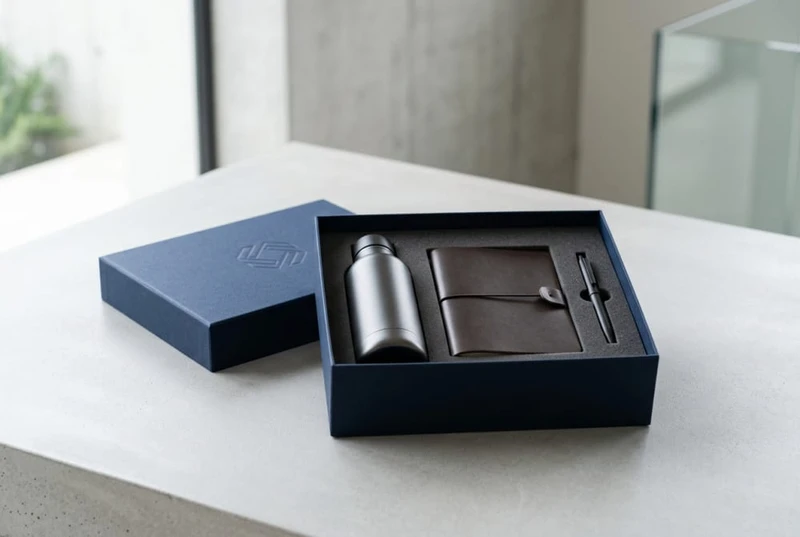
In South Africa, corporate gift packaging does far more than protect branded products in transit. It shapes how a campaign is received, how a company is remembered, and whether a promotional gift feels routine or genuinely considered. For B2B marketers running onboarding programmes, account-based marketing campaigns, conference mailers, year-end gifting, and retention initiatives, the right packaging can turn a mixed set of products into a coherent brand experience.
When decision-makers in Johannesburg, Cape Town, Durban, Pretoria, Gqeberha, and Bloemfontein receive a branded gift, they usually judge the presentation before they assess the items inside. A mug, notebook, pen, apparel item, snack, or tech accessory may all be useful, but without structure, quality finishing, and clear organisation, the package can feel generic. This is why many companies now move beyond plain cartons and use purpose-built gift boxes, inserts, labels, seals, and presentation methods that support campaign objectives.
For South African businesses, this shift is also practical. Gifts may need to move through road freight corridors between Gauteng and KwaZulu-Natal, through fulfilment hubs near OR Tambo, or through coastal logistics channels linked to the Port of Durban and the Port of Cape Town. Good packaging must therefore combine premium presentation with distribution realism. That means selecting the right board strength, insert style, finishing detail, and sealing method for both hand delivery and courier distribution.
If your team is planning branded merchandise campaigns and wants a more polished presentation, it helps to evaluate gift packaging solutions as part of the campaign strategy rather than as a final add-on. The packaging should be designed around the audience, the product mix, the delivery method, and the message the brand wants to communicate.
Box concepts for onboarding kits, holiday gifts, event mailers, and promotional sets
Different B2B campaigns need different box concepts because the purpose of the gift shapes the structure. A new employee onboarding kit often needs a practical, ordered layout that communicates welcome, professionalism, and readiness. A holiday gift set may focus more on warmth, generosity, and strong visual impact. Event mailers typically need compact dimensions, efficient shipping, and easy unboxing. Promotional sets sent to target accounts may require more personalisation and segmentation.
In South Africa, onboarding kits often include apparel, stationery, desk accessories, welcome cards, and sometimes small technology items. These are best packed in rigid or semi-rigid boxes with partitions or die-cut inserts so each component has a clear place. That structure helps the set feel deliberate rather than assembled from spare merchandise. For remote staff joining companies in Johannesburg or Cape Town, this matters because the gift may be their first physical interaction with the employer brand.
Holiday gifts tend to allow more flexibility in presentation. A two-piece lid-and-base box, magnetic closure box, or shoulder box can create a more elevated look, especially when paired with textured paper, foil stamping, or a sticker seal. Event mailers for expos in Sandton, meetings in Century City, or conferences in Durban often benefit from slim mailer cartons with protective inserts, allowing brands to keep courier costs under control while still delivering a premium opening experience.
Promotional sets are often the most varied category because they may combine drinkware, printed material, gourmet items, notebooks, and promotional accessories. In these cases, custom dimensions are more efficient than forcing products into standard stock sizes. Brands comparing options can also explore custom box production to create packaging around the actual items instead of compromising on fit.
| Campaign type | Typical contents | Recommended box style | Why it works | Best delivery method | Perceived brand effect |
|---|---|---|---|---|---|
| Onboarding kit | Notebook, bottle, T-shirt, welcome note, pen | Rigid mailer with insert | Keeps mixed items organised | Courier or handover | Professional and structured |
| Holiday gift | Snacks, candle, mug, card, branded accessory | Lid-and-base box | Creates stronger reveal moment | Courier or in-person | Warm and generous |
| Event mailer | Brochure, sample, badge, pen, invitation | Slim corrugated mailer | Efficient for transport | Courier | Compact but polished |
| ABM account gift | Tech accessory, note, premium notebook, drinkware | Magnetic closure box | Supports premium targeting | Courier | High-value and intentional |
| Retention set | Thank-you card, gourmet item, desk gift | Shoulder box | Looks formal and well-composed | Courier or hand delivery | Appreciative and refined |
| Channel partner pack | Sales tools, branded products, printed collateral | Large presentation box | Holds multiple materials neatly | Road freight or handover | Reliable and complete |
The table above shows that campaign intent should guide box selection. A premium structure is not just about visual appeal; it also improves consistency, protects mixed items, and helps recipients understand the gift as a curated set rather than a random bundle.
This line chart illustrates a realistic growth trend in South African demand for B2B gift packaging as more brands move from standard promotional packing to campaign-led presentation systems.
How custom structures make mixed-product gift kits feel more intentional
One of the biggest reasons branded gifts underperform is that they are packed without hierarchy. If a bottle rolls into a notebook, a charger sits loose under tissue, or multiple products shift in transit, the kit can look improvised even if the contents themselves are valuable. Custom structures solve this by giving each product a defined position.
Die-cut paperboard inserts, corrugated partitions, EVA alternatives, folded card retainers, and layered presentation trays can all be used to control movement and improve sequencing. When the recipient opens the box, they immediately understand the composition of the kit. This creates a sense of order and intention. It also improves the storytelling of the gift: a welcome card on top, key products in the centre, and supporting items beneath or beside them.
For South African B2B campaigns, mixed-product kits are common because brands often combine imported and locally sourced items. A campaign may include a South African roasted coffee pack, a notebook, an insulated tumbler, and a branded cable set. Since these items differ in size, weight, and fragility, standard inner packing usually fails to create a premium result. Custom structure makes the kit feel built for the recipient instead of packed for convenience.
From a technical perspective, custom structures can also reduce breakage and scuffing during regional distribution. This matters when parcels travel through busy urban logistics networks around Midrand, Durban North, or Cape Town’s Montague Gardens industrial area. Better internal fit means fewer damaged products, fewer replacements, and a more consistent campaign outcome.
| Structure option | Best for | Protection level | Presentation quality | Cost position | Typical use case |
|---|---|---|---|---|---|
| Die-cut paper insert | Notebook, pen, card, bottle | Medium | High | Moderate | Onboarding and event kits |
| Corrugated insert | Heavier merchandise | High | Medium | Moderate | Courier shipping |
| Layered tray | Multi-level gift sets | High | Very high | Higher | Executive gifting |
| Partition grid | Multiple small items | Medium | Medium | Lower | Promotional assortments |
| Folded card retainer | Lightweight products | Low to medium | High | Lower | Compact mailers |
| Custom moulded support | Fragile or shaped items | Very high | High | Higher | Premium account gifts |
The comparison above shows that there is no single correct insert method. The best choice depends on the product weight, mailing conditions, campaign budget, and how elevated the presentation needs to feel.
Sticker options for personalisation, campaign grouping, and account segmentation
Stickers are often underestimated in corporate gifting, yet they are one of the most flexible tools for personalisation and campaign management. In South Africa’s B2B environment, where brands often need to run segmented campaigns across industries, regions, and account tiers, sticker systems can support both presentation and logistics.
A personalised name sticker on the outer seal immediately changes the tone of a package. It signals that the kit was prepared for a specific recipient rather than pulled from general stock. Campaign grouping stickers can also help internal teams sort gift sets by event, account segment, sales region, or language preference. This is particularly useful for companies managing multi-city campaigns across Gauteng, Western Cape, KwaZulu-Natal, and the Eastern Cape.
Stickers can also be used for security and consistency. Tamper-evident seals, branded closing labels, QR-linked campaign markers, and colour-coded batch labels all improve handling. For product managers and marketers, this provides an efficient way to organise stock without changing the entire printed box design. Businesses that want more adaptable finishing often add custom sticker options so one core box can support multiple recipient groups.
From a visual standpoint, sticker materials matter. Matte paper stickers suit understated premium boxes. Gloss labels work well for energetic promotional sets. Clear stickers can create a subtle modern look on textured or coloured stock. Metallic effects may be suitable for festive campaigns or executive gifting, but they should be used carefully so the result feels sophisticated rather than overly decorative.
| Sticker type | Main purpose | Best material | Operational value | Visual effect | Ideal campaign |
|---|---|---|---|---|---|
| Name sticker | Recipient personalisation | Matte paper | Easy manual application | Personal and direct | ABM and onboarding |
| Colour-coded label | Segment sorting | Coated paper | Fast warehouse grouping | Functional | Multi-region rollouts |
| Tamper seal | Security and closure | Adhesive security stock | Improves trust | Clean and reassuring | Courier deliveries |
| QR campaign sticker | Digital tracking | Synthetic label | Supports analytics | Modern and interactive | Event follow-up |
| Clear logo sticker | Minimal branding | Transparent film | Simple box adaptation | Subtle premium finish | Executive gifts |
| Seasonal seal | Theme reinforcement | Textured paper | Flexible short runs | Warm and branded | Holiday gifting |
The value of stickers lies in their versatility. They help brands bridge personalisation, inventory control, and visual identity without needing separate packaging formats for every campaign variation.
Premium finishing details that suit modern corporate gifting projects
Premium gifting does not always mean elaborate packaging. In many South African B2B campaigns, the most effective boxes use restrained finishing details that feel modern, clean, and tactile. Finishing should enhance the box without competing with the brand message or the products inside.
Common premium details include soft-touch lamination, embossing, debossing, foil accents, spot UV, textured paper wraps, coloured inner linings, ribbon pulls, and neatly wrapped tissue. Soft-touch surfaces can make a box feel more refined when used on executive gifting or retention campaigns. Embossing and debossing create a quieter form of branding that works well when the company wants confidence rather than visual noise.
Foil can be effective on year-end gifts or ceremonial packs, but it should align with the corporate identity and the recipient profile. A financial services firm in Sandton may prefer understated metallic details, while a creative agency in Cape Town may favour bolder textures or layered print effects. Spot UV works well for subtle contrast on monochrome or dark-coloured boxes, while interior print can help carry campaign messaging inside the lid or on the insert base.
Premium finishing also depends on production quality. A well-made box should have accurate alignment, crisp folding, strong wrap adhesion, and reliable colour consistency across batches. Our workshop supports this level of detail through advanced equipment that improves die-cut accuracy, printing consistency, and finishing control, which is especially important when clients need cohesive presentation across small pilot runs and larger repeat orders.
| Finishing detail | Look and feel | Best use | Brand tone | Relative cost | Notes |
|---|---|---|---|---|---|
| Soft-touch lamination | Smooth and refined | Executive gift boxes | Modern premium | Medium | Works best with minimalist graphics |
| Embossed logo | Tactile raised effect | Corporate programmes | Confident and subtle | Medium | Good for understated identity |
| Debossing | Pressed-in detail | Luxury retention sets | Quiet sophistication | Medium | Often stronger on thicker board |
| Foil stamping | Reflective accent | Holiday and VIP gifts | Formal premium | Medium to high | Use selectively |
| Spot UV | Gloss contrast | Brand pattern highlights | Contemporary | Medium | Best on darker or matte surfaces |
| Textured wrap paper | Material richness | High-end presentations | Crafted and elegant | High | Adds depth without overprinting |
The table shows that premium finishing is most effective when it supports the intended brand tone. Too many effects can weaken the result, while one or two well-chosen details can lift the perceived value significantly.
This bar chart compares estimated sector demand levels. Industries with stronger relationship management cycles, such as finance and technology, generally invest more in premium gift presentation than sectors focused mainly on volume distribution.
Packaging methods for shipping branded merchandise or handing it out in person
The right packaging method depends heavily on how the gift will reach the recipient. In South Africa, some campaigns rely on direct courier delivery from a fulfilment point near Johannesburg or Durban, while others are distributed at conferences, client meetings, boardroom presentations, or internal company events. The packaging must match the handling conditions.
For shipping, durability becomes a key priority. Outer mailer strength, crush resistance, secure sealing, and internal stabilisation matter more than purely decorative elements. A magnetic rigid box may still work, but it often needs an external protective carton if it will move through courier networks. Corrugated mailers with premium printed wraps or refined internal inserts can offer a better balance between presentation and transport resilience.
For handouts, visual presence and ease of carrying become more important. Rope-handle bags, sleeve-wrapped boxes, lift-off lid cartons, or presentation cases can perform well at launch events, partner meetings, and conferences. If the gift will be handed over in person in places such as Sandton Convention Centre or the Cape Town International Convention Centre, the box should photograph well, feel easy to handle, and provide a strong first impression without additional protective layers.
Service planning is just as important as box selection. Our team supports clients with flexible production planning for both small-batch campaigns and large-volume orders, helping brands align packaging style with fulfilment realities. This is useful when the same campaign includes a mix of courier shipments and face-to-face distribution.
| Distribution method | Recommended packaging | Main priority | Risk level | Brand impact | Practical advice |
|---|---|---|---|---|---|
| Courier nationwide | Corrugated mailer with insert | Protection | High | Good if well printed | Use secure seals and snug fit |
| Metro same-day delivery | Rigid mailer | Balanced presentation | Medium | High | Suitable for urgent account gifting |
| Event handout | Presentation box or bag | Visual impact | Low | Very high | Optimise for easy carrying |
| Boardroom delivery | Magnetic closure box | Premium feel | Low | Very high | Ideal for executive packs |
| Road freight bulk delivery | Stackable cartons with inner boxes | Load efficiency | Medium to high | Medium | Protect final presentation boxes inside |
| In-office distribution | Lid-and-base box | Consistency | Low | High | Good for onboarding programmes |
This table highlights that premium packaging is not a single format. It should be planned as a system that reflects logistics, handling, and the setting where the gift will be opened.
Common packaging weaknesses that reduce the perceived value of promotional gifts
Even quality promotional merchandise can feel disappointing if packaging weaknesses undermine the presentation. One common issue is oversized boxing. When the outer box is too large for the contents, products shift, corners crush, and the gift appears poorly planned. Another issue is inconsistent branding, where stickers, printed cards, and box graphics do not match in colour or tone.
Low-grade board is another frequent problem. Thin stock may buckle during transit or soften under humidity, which is especially relevant in coastal areas such as Durban. Weak adhesive application can cause wraps to peel, while poor insert design allows products to collide or tilt. Cheap tissue, badly cut foam, or loosely packed filler can also make a premium campaign look improvised.
There are also messaging errors. Too much sales copy on the outside of the box can make the package feel promotional rather than thoughtful. Generic thank-you cards reduce emotional relevance. Missing segmentation creates confusion when account tiers should receive different merchandise mixes. Finally, poor timing can damage the experience just as much as poor structure. A year-end gift delivered after staff leave dates or a conference mailer that arrives after the event has lost much of its intended impact.
Strong manufacturing controls reduce these risks. In our production process, material selection, precision cutting, assembly control, and final inspection all support consistency. This is important because premium gifting projects are judged by small details, including neat edges, insert fit, print registration, and batch uniformity.
The area chart shows the market shift toward more customised presentation formats. As more brands compete for attention in B2B relationship marketing, basic cartons continue to lose ground.
How gift packaging supports ABM, retention, and relationship-building campaigns
Gift packaging plays a strategic role in account-based marketing because ABM is built on relevance, timing, and perceived effort. When a target account receives a package designed around its industry, stakeholder seniority, or campaign theme, the packaging itself reinforces the idea that the outreach is specific and intentional. This is especially valuable in South Africa, where many B2B sales cycles are relationship-driven and depend on trust-building over time.
For ABM, the outer box can be customised by account tier, sector, or campaign message. Financial clients in Sandton may receive a more formal monochrome box with discreet branding, while hospitality groups in Cape Town may receive a warmer presentation with more tactile finishes. Inserts can also support storytelling by arranging products in a sequence that connects to the proposal, event invitation, or personalised message card.
Retention campaigns benefit in a different way. Existing clients generally know the brand already, so packaging should communicate appreciation rather than introduction. Strong retention packs often feel quieter, more mature, and more curated. They suggest that the company values the relationship enough to invest in the presentation. This can be meaningful for annual reviews, contract renewals, milestone celebrations, or thank-you campaigns following major projects.
Relationship-building gifts used by channel managers, enterprise sales teams, and customer success departments also need reliable scalability. Some accounts may receive 20 boxes, others 200, and some campaigns may start with a pilot in Gauteng before expanding nationally. This is where service flexibility matters. Our workshop supports both low-volume customised production and larger-scale manufacturing so campaigns can test premium formats before broader rollout.
| Campaign objective | Packaging role | Recommended feature | Personalisation level | Expected outcome | Best audience |
|---|---|---|---|---|---|
| ABM outreach | Signals targeted intent | Name label and custom insert | High | Stronger meeting conversion | Priority accounts |
| Client retention | Shows appreciation | Premium finishing and message card | Medium | Better relationship depth | Existing clients |
| Partner engagement | Improves consistency | Structured gift set | Medium | Higher programme participation | Distributors and resellers |
| Employee onboarding | Introduces brand culture | Organised kit layout | Medium | Improved first impression | New hires |
| Event follow-up | Keeps brand visible | Compact mailer and QR sticker | Low to medium | Better recall after event | Prospects and delegates |
| Milestone gifting | Marks significance | Rigid presentation box | Medium to high | Stronger emotional response | Long-term accounts |
The table indicates that packaging should be matched to campaign purpose. In ABM and retention, the box itself becomes part of the communication strategy, not just a container.
When simple cartons are no longer enough for premium B2B gifting programmes
Simple cartons stop being enough when the packaging begins to undermine the value of the gift, the status of the recipient, or the objectives of the campaign. This usually happens in four situations: when the contents are premium, when the target audience is high-value, when products are mixed and need structure, or when the gifting moment is tied to a strategic business relationship.
If a company is sending executive gifts to procurement leaders, CIOs, CFOs, or founders, a plain carton can create a mismatch between message and presentation. The same applies when the gift contains a carefully selected set of branded merchandise and local products intended to show thoughtfulness. Without better structure and finish, the investment inside the box is not fully visible.
South African brands also reach this threshold when they expand gifting across multiple regions or campaign waves. At that point, consistency matters more. A custom box system helps standardise presentation across deliveries to Johannesburg head offices, Durban branches, Cape Town agencies, or clients in industrial zones around Gqeberha. It can also improve storage, picking, and packing efficiency for recurring programmes.
Looking ahead to 2026, three trends will make simple cartons even less suitable for premium B2B gifting programmes. First, sustainability expectations are rising, with more clients asking for recyclable materials, reduced plastic use, and efficient pack design. Second, policy and procurement requirements are becoming stricter, especially in large organisations that evaluate supplier capability, material quality, and packaging waste. Third, technology is changing fulfilment, with variable data printing, QR-linked experiences, and more segmented campaign execution becoming standard.
Our capabilities align with these future needs. On the technology side, advanced machinery supports precise cutting, controlled finishing, and repeatable production quality. On the manufacturing side, we manage both small customised batches and larger runs with consistent quality checks. On the service side, we work flexibly with clients from concept refinement to final inspection so packaging solutions fit both campaign goals and operational demands.
This comparison chart shows the typical difference in perceived premium value across packaging formats. As gift complexity and relationship importance increase, more advanced box formats usually deliver stronger brand impact.
South African market considerations for buyers
Buyers in South Africa should evaluate packaging suppliers through a practical commercial lens. Lead times, shipping routes, material sourcing, and fulfilment support all affect campaign success. A beautiful sample means little if the supplier cannot hold consistent quality across a full production run or adapt to changing account lists near dispatch time.
Local conditions also matter. Inland and coastal climates affect material performance. Courier handling varies by route. Some campaigns may need strong outer protection for deliveries into mining, manufacturing, or agricultural areas, while others may prioritise visual presentation for urban corporate recipients. Durban and Cape Town remain important logistics gateways, and Gauteng remains central to many national B2B distributions, so packaging planning should reflect where stock is packed, stored, and shipped.
Buyers should ask about prototyping, insert testing, colour control, batch consistency, and final inspection procedures. It is also wise to confirm whether the supplier can support multiple SKUs under one campaign, such as standard, VIP, and executive versions of the same gift set.
| Buying factor | Why it matters | Questions to ask | Risk if ignored | Who should check | Best practice |
|---|---|---|---|---|---|
| Material strength | Protects contents in transit | What board grade is used? | Damage and returns | Procurement | Match board to route risk |
| Insert precision | Keeps items stable | Can inserts be sample-tested? | Loose and messy presentation | Marketing | Test actual products inside |
| Finishing consistency | Supports premium feel | How is quality controlled? | Uneven branding | Brand team | Approve production standard |
| Scalable production | Helps campaign growth | Can volumes increase quickly? | Delayed rollout | Operations | Plan pilot and scale phases |
| Service flexibility | Handles campaign changes | Can SKUs be segmented? | Packing errors | Sales operations | Use coded workflow |
| Inspection process | Reduces defects | Is final inspection included? | Inconsistent deliveries | Quality team | Review sign-off checkpoints |
This buying framework helps teams evaluate suppliers beyond price alone. In premium gifting, operational reliability often has as much value as the visual design.
Case examples and practical applications
A technology company onboarding remote hires across Johannesburg, Durban, and Cape Town may use a rigid mailer with a die-cut insert for a laptop sleeve, bottle, notebook, and welcome message. The insert keeps each product aligned, while a name sticker on the seal personalises the kit without requiring unique print for every box.
A financial services firm running an ABM campaign toward senior decision-makers in Sandton could use a magnetic closure box with debossed branding, a soft-touch finish, and a layered tray holding a premium notebook, pen, and curated local product. The packaging supports the tone of exclusivity and preparation expected in enterprise outreach.
A consumer brand launching a distributor incentive programme in Durban and Gqeberha might choose corrugated printed mailers with colour-coded segmentation stickers to separate partner tiers. This balances cost control, warehouse organisation, and professional presentation across larger quantities.
An event organiser preparing mailers ahead of a conference at the Cape Town International Convention Centre may select slim boxes that hold event credentials, printed schedules, a branded accessory, and a QR-linked sticker. The format keeps the pack easy to ship and easy to open while still feeling considered.
FAQ
What is the best box style for South African corporate gift campaigns?
There is no single best option. Rigid mailers work well for onboarding and courier delivery, while magnetic closure or lid-and-base boxes suit premium account gifting and executive presentations.
Can simple sticker personalisation make a visible difference?
Yes. Name stickers, campaign labels, and tamper seals can quickly improve relevance, organisation, and perceived effort, especially in segmented ABM or regional campaigns.
How do we choose between shipping protection and premium presentation?
The best approach is often a layered system: a refined inner gift box supported by a practical outer mailer, or a strong premium mailer that combines both functions.
Are premium finishes always necessary?
No. Many strong B2B gift boxes use just one or two details such as soft-touch lamination or embossing. The goal is alignment with the brand, not decoration for its own sake.
What should we prioritise for 2026 planning?
Focus on recyclable materials, efficient pack structures, digital personalisation options, and suppliers that can support both short-run testing and scalable national programmes.
For B2B brands in South Africa, premium corporate gift packaging is no longer just about appearance. It supports logistics, improves product organisation, reinforces campaign segmentation, and helps branded merchandise feel more valuable and more memorable. When the packaging is designed with the campaign objective in mind, the result is a gift that does more than arrive safely; it strengthens the relationship the brand is trying to build.
