
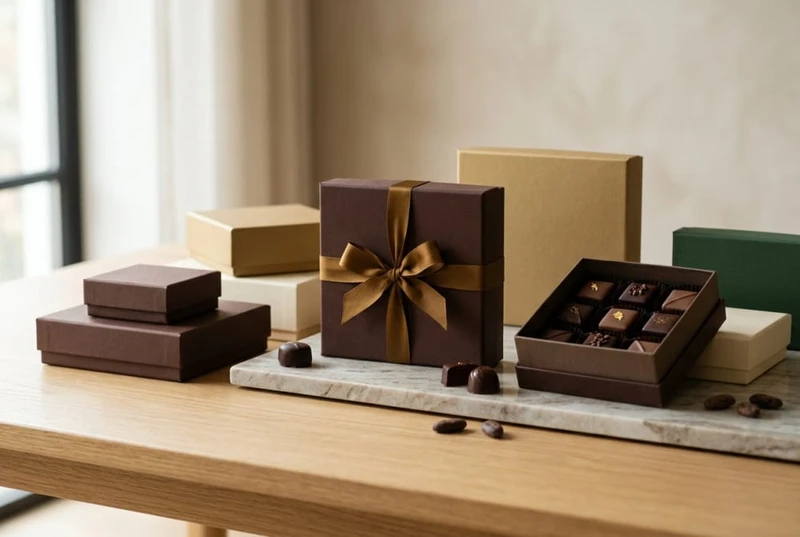
In South Africa, confectionery packaging does far more than protect sweets. It influences gifting appeal, supports shelf impact, helps products survive transport between Johannesburg, Cape Town, Durban and Gqeberha, and shapes how shoppers judge quality before the lid is even lifted. For chocolate makers, biscuit brands, artisan truffle studios and seasonal sweet collections, the right packaging can raise perceived value, improve presentation and create a more memorable unboxing experience without forcing a complete redesign of every product line.
The strongest packaging strategy for confectionery usually combines structure, finish and flexibility. A rigid gift box may work beautifully for premium truffles in Sandton boutiques, while a lighter folding carton with a well-designed insert can suit retail rollouts in supermarkets across Gauteng and the Western Cape. Seasonal demand also changes the packaging equation. Valentine’s Day, Easter, Eid gifting, Mother’s Day, corporate year-end hampers and December holiday collections all create bursts of demand that reward packaging systems built for short runs, add-on decoration and easy versioning.
For brands that want packaging to feel polished without overcommitting inventory, it helps to combine gift packaging solutions with adaptable labels, inserts and sleeves. That approach supports both boutique launches and larger volume programmes while keeping presentation consistent across product families.
This guide looks at packaging ideas for chocolates, cookies, truffles, assortments and holiday collections; the role of gift-ready box structures; when stickers are practical; how shelf-ready packaging differs from direct-shipping formats; and how seasonal planning can stay commercially sensible in the South African market. It also covers material and finish choices, common design mistakes that make confectionery boxes feel ordinary, and the manufacturing, technology and service capabilities that matter when choosing a packaging partner.
Packaging ideas for chocolates, cookies, truffles, assortments, and holiday collections
Different confectionery formats need different packaging logic. Chocolates and truffles are presentation-sensitive and often require neat spacing, low movement and an upscale opening experience. Cookies need more crush resistance and often benefit from inner wraps or trays. Assortments need clarity so customers can understand flavour variety without opening the box. Holiday collections need visual drama but also adaptable production planning. The best results come from matching structure to product behaviour, not simply choosing a decorative outer box.
Chocolate assortments often perform well in lid-and-base rigid boxes, magnetic closure boxes or drawer-style formats. These structures allow chocolates to sit in cavities or compartments that keep finishes intact and reduce scuffing. For premium gifting in Cape Town’s tourism and hospitality channels, a structured box with a clean flavour map can make a mixed assortment feel curated rather than generic. Truffles, especially dusted or hand-finished varieties, benefit from deeper wells or soft-touch inserts that prevent rolling and preserve decorative coatings.
Cookies and biscuit gift packs require another mindset. Many South African confectionery and bakery brands sell butter biscuits, shortbread, iced cookies and festive gingerbread-style products that are more vulnerable to edge cracking than chocolates. A folding carton with a reinforced tray, corrugated support or divided paperboard insert can improve protection without making the pack bulky. Window panels can work for cookies if the product is photogenic and uniformly arranged, but the window should never weaken the panel where compression is needed most.
Holiday collections usually benefit from modular packaging. Instead of producing a completely new box for each event, brands can use a stable base structure and then change sleeves, stickers, belly bands, ribbons or printed cards. This keeps procurement practical while still giving Easter, spring gifting, Diwali promotions or Christmas ranges their own personality. For companies launching limited editions, a dependable custom box programme can support a family of formats that scale across core and seasonal lines.
| Product type | Recommended structure | Key protection need | Presentation priority | Best sales channel | Seasonal flexibility |
|---|---|---|---|---|---|
| Premium chocolates | Rigid lid-and-base box | Prevent scuffing and movement | High-end reveal | Boutique retail and gifting | High with sleeves |
| Handmade truffles | Magnetic closure gift box | Stable individual cavities | Luxury positioning | Corporate gifts and direct orders | High |
| Cookies | Folding carton with tray | Crush resistance | Visible arrangement | Retail shelf and hampers | Medium to high |
| Mixed assortment | Drawer box with insert | Segregate flavours | Organised variety | Speciality retail | High |
| Holiday mini collections | Sleeved paper box | Light stacking support | Seasonal graphics | Promotional runs | Very high |
| Corporate festive hampers | Rigid presentation box | Handle mixed contents | Gift-ready experience | B2B seasonal campaigns | High |
The table shows why structure should align with the product’s fragility and selling context. A cookie brand that copies a chocolate box format may look premium but still underperform in transport. Likewise, a truffle range placed in a simple undivided carton may lose visual appeal before the customer opens it.
The growth trend indicates why premium confectionery packaging is receiving more investment. Between online gifting, tourism retail, corporate year-end orders and speciality food channels, South African brands increasingly need packaging that supports both visual differentiation and logistics.
How gift-ready box structures improve presentation and perceived value
Gift-ready packaging increases perceived value because it removes friction from the buying decision. When a shopper sees a confectionery box that already looks suitable for gifting, they do not need to imagine how to present it, wrap it or elevate it. This matters in high-impulse seasonal periods, from Easter mall gifting to last-minute December purchases in Durban and Pretoria. The structure itself communicates effort, generosity and product worth.
Several box styles perform particularly well in confectionery. Lid-and-base boxes feel classic and premium. Magnetic closure boxes suggest occasion-driven gifting and work well for corporate presentation. Drawer boxes create theatre and help maintain neat alignment for assortments. Book-style boxes are effective when a brand wants more storytelling space, while shoulder-neck rigid boxes can create a refined reveal for high-end collections or hotel welcome gifts.
The improvement in value perception comes from several small details working together: controlled opening resistance, a stable lid fit, clean edges, the sound and feel of the board, and an interior arrangement that looks deliberate. If a confectionery box opens too loosely, products slide around, or the insert feels flimsy, customers often downgrade their opinion of the sweets inside. In contrast, a well-fitted box can make even a modest assortment look more considered and premium.
Gift-ready structures also help retailers. A box that can move directly from shelf or display to gifting reduces the need for extra wrapping stations and makes the product more attractive for tourists, business travellers and corporate buyers collecting orders quickly. In major commercial hubs near OR Tambo, Sandton and Umhlanga, convenience and presentation often combine to influence choice as much as flavour variety does.
| Box style | Perceived value effect | Opening experience | Best for | Relative cost level | Gift readiness |
|---|---|---|---|---|---|
| Lid-and-base rigid box | Classic premium | Clean lift reveal | Chocolate assortments | Medium-high | Excellent |
| Magnetic closure box | Luxury and occasion-led | Book-like presentation | Corporate gifts | High | Excellent |
| Drawer box | Modern and curated | Controlled slide-out | Truffles and tasting sets | Medium-high | Very good |
| Folding carton with insert | Neat but less premium | Practical tuck open | Cookies and retail packs | Medium | Good |
| Shoulder-neck box | High-end reveal | Layered opening effect | Luxury festive ranges | High | Excellent |
| Sleeved paper box | Stylish with flexibility | Simple slide or lift | Short seasonal campaigns | Low-medium | Good |
This comparison shows that premium perception is not limited to the most expensive format. In many cases, a well-finished folding carton with a tidy insert can outperform an overly ambitious rigid box if the latter feels oversized or poorly fitted. The best value comes from choosing the right degree of ceremony for the product and target buyer.
Sticker uses for flavor maps, short runs, holiday drops, and promotional editions
Stickers are one of the most practical tools in confectionery packaging because they allow change without forcing a full packaging reprint. They can identify flavours, mark allergens, distinguish limited editions, update compliance information or add a festive visual layer for a promotion. For South African confectionery brands balancing core stock with short seasonal runs, stickers often create the flexibility needed to stay agile without tying up cash in excess printed inventory.
Flavor maps are especially useful for assorted chocolates and truffle boxes. Customers want to know what they are choosing, particularly when assortments include coffee, rooibos caramel, Amarula-inspired flavours, citrus, nut, nougat or chilli combinations. A sticker placed on the underside of the lid, the outer base or a belly band can provide a simple legend that keeps the interior elegant while still being informative.
Short runs and holiday drops are another strong use case. A standard gift box can be adapted for Valentine’s Day, Heritage Month gifting, Christmas, wedding favours or a local event campaign simply by changing one or two label applications. This is especially useful for emerging brands testing demand in markets such as Stellenbosch, Ballito or the Garden Route before investing in a large print run. A quality custom sticker solution can also support batch coding, promo seals and co-branded collaborations.
Promotional editions benefit from stickers because they enable segmentation. A confectionery brand may want one base box but different versions for retail, hospitality, online gifting or corporate clients. Rather than overcomplicating production, targeted label sets can create channel-specific messaging. The important point is that the sticker must look intentional. Cheap adhesive labels with poor colour matching can make an otherwise premium package feel temporary in the wrong way.
| Sticker application | Main purpose | Best position | Ideal for | Cost advantage | Risk to avoid |
|---|---|---|---|---|---|
| Flavor map | Identify assortment contents | Inside lid or bottom panel | Chocolate and truffle boxes | Avoids multiple inner prints | Unreadable small text |
| Holiday edition seal | Seasonal differentiation | Front closure or sleeve | Christmas and Easter drops | Supports short runs | Misaligned placement |
| Promotional label | Campaign messaging | Outer face or side panel | Retail promotions | Fast update cycle | Cheap-looking finish |
| Batch and date code | Traceability | Side or underside | All confectionery types | Operational flexibility | Poor adhesive performance |
| Co-branding label | Partnership branding | Sleeve or lid top | Events and hotels | No new carton needed | Brand mismatch |
| Allergen reminder | Clear product warning | Side or back panel | Mixed assortments | Easy content update | Low-contrast text |
The table highlights where stickers add value without replacing good packaging design. They work best as a controlled extension of the system, not as a patch for unresolved structure or branding decisions.
Retail shelf packaging compared with direct-shipping packaging for fragile sweets
Retail shelf packaging and direct-shipping packaging serve different missions. Shelf packaging must win attention quickly, communicate flavour and quality, and handle stacking or display rotation in stores. Direct-shipping packaging must survive handling, vibration, pressure changes and longer transit periods, especially when fragile sweets move between cities or through busy logistics routes connected to Durban Port, Cape Town Port and inland distribution centres.
For retail, appearance leads. The front panel, side visibility, colour blocking, finish and product clarity matter most. Shelf-ready confectionery packaging often needs stable base dimensions, easy restocking and enough compression strength for display. If products are sold in pharmacies, food halls, delis or airport stores, the packaging must also remain neat after repeated handling by customers.
For direct shipping, internal restraint becomes more important than front-of-pack drama. The box may need stronger board, corner reinforcement, a snug fit around inserts, cushioning or an outer transit carton. Chocolates and truffles are especially sensitive because they can shift, mark one another or crack decorative shells if too much movement occurs. Cookies need protection against crushing and vibration. Assortments with delicate toppings or dusted finishes require even more careful compartment engineering.
South African shipping conditions add another layer. Summer temperatures, cross-country transport times and mixed courier handling standards mean some confectionery brands need dual packaging logic: one pack optimised for shelf and one for e-commerce. Others use a gift box inside a mailer, preserving the premium experience while protecting the product in transit. That hybrid model often performs well for premium online orders to Johannesburg, Bloemfontein, Polokwane and coastal destinations.
The demand pattern shows why corporate gifting and e-commerce deserve special attention. Both channels place a high premium on presentation, but they also require packaging reliability because the buyer may never physically inspect the product before delivery.
| Packaging priority | Retail shelf focus | Direct-shipping focus | Chocolate boxes | Cookie packs | Recommended approach |
|---|---|---|---|---|---|
| Visual impact | Very high | Medium | Strong front presentation | Window or graphic hierarchy | Keep shelf face clean |
| Internal movement control | Medium | Very high | Cavity inserts required | Tray support required | Use fitted inserts |
| Outer strength | Medium | High | Protect corners and lid | Prevent crush damage | Add transit mailer if needed |
| Stackability | High | Medium | Stable box geometry | Uniform dimensions | Design for display and storage |
| Unboxing experience | High | High | Important for gifting | Important for premium cookies | Use layered opening sequence |
| Cost efficiency | High | High | Balance premium and protection | Avoid overpacking | Test by channel |
This comparison makes clear that “one box for every channel” is not always efficient. Where products are delicate and shipping distances are long, a retail-optimised format may need extra transport support. The most effective packaging plans account for this from the start rather than reacting after breakage complaints appear.
Insert and compartment layouts that keep confectionery products neat and appealing
In confectionery packaging, inserts are not secondary accessories. They are central to both product protection and visual order. A beautifully printed box loses value quickly if chocolates arrive skewed, cookie stacks collapse or truffles roll out of place. Well-designed inserts maintain spacing, preserve decoration, support flavour distinction and make the inside of the pack feel considered.
Cavity trays are common for chocolates and truffles because they stop collision damage and give each piece its own stage. The cavity depth matters. If the well is too deep, retrieval becomes awkward and the pack loses elegance. If too shallow, pieces shift during transport. Divided paperboard grids work well for mixed assortments and can support a more crafted, less plastic-heavy look. For cookies, linear channels or stacked dividers are often better than individual cavities because they support edge integrity across the row.
Assortment layout also affects sales. Customers tend to read boxes visually before they read flavour text. Symmetry, colour distribution and spacing create an impression of abundance and care. A 12-piece chocolate box can feel fuller and more premium than a badly arranged 16-piece box if the layout is balanced and clean. For gifting, this visual order is especially important because the recipient judges the product immediately on opening.
Seasonal packs sometimes require mixed layouts, such as a combination of truffles, chocolate bars, mini biscuits and foil-wrapped treats. In that case, a layered insert system or stepped compartments may work better than forcing every product into equal spacing. The structure should support the product story. A festive collection can feel abundant without looking cluttered if product sizes are grouped intelligently.
| Insert type | Best product | Main advantage | Visual effect | Shipping suitability | Notes |
|---|---|---|---|---|---|
| Individual cavity tray | Truffles | Prevents rolling and touching | Clean luxury layout | High | Ideal for dusted finishes |
| Shallow moulded tray | Chocolate pralines | Stable piece placement | Orderly premium look | High | Good for assorted sets |
| Paperboard divider grid | Mixed confectionery | Separates flavours neatly | Craft and gift appeal | Medium-high | Supports eco positioning |
| Linear channel tray | Cookies | Protects edges in rows | Structured presentation | High | Works with inner wraps |
| Stepped insert | Holiday collections | Handles varied product sizes | Layered reveal | Medium | Good for hamper-style boxes |
| Lift-out platform | Luxury assortments | Adds theatrical opening | Very premium | Medium | Use when ceremony matters |
The table shows that insert design should be judged by both handling performance and display effect. In premium confectionery, the insert often determines whether the box feels mass-produced or carefully assembled.
Surface finishes that work especially well for premium confectionery brands
Surface finishes do a lot of emotional work in confectionery packaging. They communicate indulgence, refinement and occasion before the customer tastes anything. In South Africa’s premium sweets market, successful finishes usually mirror the product character: smooth and elegant for fine chocolates, warm and tactile for artisanal biscuits, festive and luminous for holiday collections, and understated but sharp for corporate gifting.
Soft-touch lamination is widely used because it adds a velvety hand-feel that pairs well with luxury chocolates and truffles. Foil stamping can highlight logos, seasonal motifs or flavour cues, especially in gold, copper, rose gold or muted metallics that echo cocoa and caramel tones. Spot UV adds contrast and works best when used selectively, such as on a crest, ingredient illustration or pattern. Embossing and debossing create depth, which helps a simple design feel richer without overcrowding it.
Textured papers can be highly effective for confectionery brands that want a crafted or boutique feel. Linen, lightly grained or natural-fibre-look wraps often work well for handmade sweets, wedding favours and regional gift lines. Matte finishes usually feel more premium than high-gloss in upscale confectionery, although gloss can still suit bright promotional collections or youth-oriented candy formats. The key is consistency. A premium finish should support the brand message, not compete with it.
From a production viewpoint, finish selection should also reflect machinery capability and run size. Our workshop uses advanced equipment and controlled finishing processes to maintain colour consistency, edge quality and surface precision across gift boxes, paper boxes and decorative label applications. That matters when a brand wants repeatable presentation over multiple seasonal cycles rather than one successful run followed by inconsistency.
The trend shift suggests that premium finishing is moving toward a combination of tactile appeal and more responsible material choices. By 2026, brands are likely to favour finishes that still feel elevated but are easier to integrate into sustainability commitments and recycling pathways.
| Finish type | Visual character | Tactile effect | Best confectionery use | Premium impact | Watch-out |
|---|---|---|---|---|---|
| Soft-touch lamination | Refined matte | Velvety | Truffles and luxury chocolates | Very high | Can show marks if mishandled |
| Gold or copper foil | Luminous accent | Smooth | Festive and corporate gifting | High | Overuse feels flashy |
| Spot UV | Contrast detail | Slick highlight | Logo and pattern emphasis | Medium-high | Needs good design restraint |
| Embossing | Raised depth | Dimensional | Brand marks and premium panels | High | Poor registration weakens effect |
| Textured paper wrap | Crafted and warm | Paper grain feel | Artisan biscuits and handmade sweets | High | Needs clean printing control |
| Matte aqueous coating | Subtle protection | Lightly smooth | Mid-premium retail boxes | Medium | Less dramatic than specialty finishes |
This finish comparison helps brands avoid treating decoration as an afterthought. In confectionery, surface choice directly influences how gift-worthy the product feels in hand.
Design choices that make confectionery packaging feel too ordinary
Confectionery packaging often feels ordinary when brands rely on generic visual formulas instead of building structure and graphics around product personality. Overused chocolate browns, predictable ribbon illustrations, crowded front panels and stock-style festive icons can make even a high-quality product look familiar in the wrong way. Ordinary packaging does not always look cheap; it simply fails to create memorability.
One common problem is overexplaining on the front panel. When too many claims, flavour names, promotional bursts and legal cues compete for attention, the package loses elegance. Another issue is mismatch between outside promise and inside experience. A box can look luxurious on shelf but disappoint if the insert is sloppy, the spacing is irregular or the product count feels stingy. Proportion matters too. Oversized boxes with limited fill create disappointment, especially in gifting.
Material shortcuts are another cause. Thin board, weak corners, poorly aligned foil, low-contrast typography and stickers that look like emergency fixes all reduce perceived value. Ordinary packaging also often copies trends without adapting them to local context. South African confectionery brands selling through farmers’ markets, malls, online stores and hospitality channels need packaging that speaks to their audience and route to market, not a borrowed luxury style from another category.
Distinctive packaging usually comes from disciplined editing. Better typography, fewer but stronger graphic elements, well-chosen colour systems and a more intentional opening sequence do more for premium perception than adding random decorative effects. The box should express what is special about the confectionery, whether that is handmade quality, gifting convenience, festive abundance or refined flavour curation.
How to plan seasonal packaging without overextending inventory commitments
Seasonal packaging is profitable when it creates urgency without creating dead stock. Many confectionery brands overspend by printing fully bespoke packaging for every occasion, then struggle with leftover inventory if demand shifts. A better strategy is to separate the packaging system into stable components and variable components. Stable elements include the core box structure, base board size and standard insert. Variable elements include sleeves, stickers, ribbons, cards, colour accents or limited-edition outer wraps.
This modular approach reduces forecasting risk. A brand can carry neutral premium boxes that work year-round, then add seasonal identity close to the selling window. That is especially helpful when planning for volatile periods such as Easter, winter gifting, spring launches and year-end holiday peaks. It also supports B2B responsiveness when corporate clients place late orders for staff gifts or event packs.
Good seasonal planning also depends on production and service reliability. Our packaging operation supports both small-batch customisation and larger volume manufacturing, allowing brands to test concepts before scaling. That manufacturing flexibility matters for South African brands that may have uneven demand across regions or channels. Instead of committing to one large speculative run, they can stage production based on confirmed orders, historical sales and promotional timing.
Technology also plays a role. Accurate dielines, finishing control and consistent inspection help ensure that seasonal sleeves, labels and inserts fit correctly across multiple runs. Our professional team pays close attention from material selection through final inspection, which helps brands keep presentation standards consistent even when mixing core boxes with promotional elements. On the service side, flexible project handling, responsive communication and the ability to support both short and large runs can make the difference between a profitable holiday range and an expensive inventory burden.
The comparison highlights which capabilities matter most when selecting a packaging supplier for seasonal confectionery. A supplier should not only print attractive boxes; it should also be able to support versioning, inserts, quality consistency and scalable production planning.
| Planning method | Inventory risk | Speed to market | Brand consistency | Best for | Commercial value |
|---|---|---|---|---|---|
| Fully bespoke seasonal boxes | High | Medium | High if forecast is accurate | Major annual campaigns | Strong only with reliable volume |
| Core box plus sleeve | Low-medium | High | High | Holiday drops | Very strong |
| Core box plus stickers | Low | Very high | Medium-high | Tests and promotions | Excellent for agility |
| Neutral gift box plus insert card | Low | High | Medium-high | Corporate orders | Good for personalisation |
| Seasonal outer carton only | Medium | Medium-high | High | Retail campaigns | Good when transport is stable |
| Staged production release | Low | Medium | High | Brands with variable demand | Very strong for cash flow |
The most commercially resilient option is often a hybrid system: a standard premium base with variable outer expression. It protects margins, simplifies procurement and still gives shoppers a seasonal experience.
South African market outlook, industries, applications and local buying advice
South Africa offers several strong demand pockets for premium confectionery packaging. Gourmet retail in Johannesburg and Cape Town, tourism gifting in wine regions and coastal towns, hotel and lodge welcome gifting, event favours, wedding confectionery, supermarket seasonal promotions and corporate year-end gifting all reward better presentation. E-commerce continues to expand this demand because packaging must now sell visually online and perform physically in transit.
Applications vary by industry. Artisan chocolate makers need premium presentation and flavour mapping. Bakeries need crush protection and freshness support. Hospitality groups often need branded gift boxes for guests or room drops. Event planners want packaging that feels celebratory and photo-ready. Corporate buyers need consistency, personalisation options and reliable delivery schedules. These are different buying contexts, but all benefit from structured packaging planning rather than ad hoc design decisions.
Local suppliers should be assessed on more than unit price. Brands should ask about machinery capability, finishing range, structural sampling, insert development, small-batch support, consistency across repeat orders and quality control during inspection. In a market with seasonal spikes and channel diversity, service flexibility matters almost as much as print quality. A supplier that can move from prototype to short run to scaled production gives a confectionery brand more room to respond to demand.
When buying packaging in South Africa, it is also wise to test for route conditions. Boxes destined for in-store gifting in Melrose Arch may not face the same stress as packs shipped across provinces. Sample approval should include product fit, opening feel, stacking behaviour and courier simulation where relevant. This practical testing is often what separates attractive packaging from packaging that truly performs.
Case examples and practical selection scenarios
Consider an artisan truffle brand in Cape Town supplying boutiques, online orders and hotel hampers. It could use a rigid 12-piece box as the base format, add a flavour-map sticker under the lid, and create seasonal versions with sleeves for Valentine’s Day and Christmas. For shipping, the same gift box could sit inside a protective outer mailer, preserving the premium reveal while reducing transit damage.
A biscuit brand in Durban selling festive cookie tins and boxed assortments might choose a folding carton with reinforced internal channels rather than a decorative but fragile presentation box. The packaging can still feel gift-ready by using textured stock, foil accents and a neat belly band, but the structure reflects the product’s transport reality.
A Johannesburg corporate gifting supplier may need rapid turnaround for year-end chocolate boxes carrying both the confectioner’s branding and the client’s logo. In that situation, a neutral premium box combined with a co-branded sleeve or sticker is often more practical than commissioning a fully bespoke carton for each account. It keeps lead times shorter and inventory more manageable.
These case examples show how good packaging decisions come from matching product type, channel, season and forecast confidence. The goal is not simply to make the box look expensive; it is to make the product feel valuable, protected and ready for the moment in which it is sold or gifted.
2026 trends for confectionery packaging in South Africa
Looking ahead to 2026, three packaging trends are likely to influence confectionery brands in South Africa. First, premium sustainability will become more precise. Buyers will continue to want packaging that looks gift-worthy, but they will increasingly prefer right-sized structures, reduced material waste, recyclable paper-based components and inserts that avoid unnecessary complexity. Brands will need to communicate responsibility without making packaging look plain.
Second, policy and compliance awareness will rise. As labelling expectations, waste management discussions and retailer requirements evolve, adaptable packaging systems will become more valuable. Brands that rely on modular labels, flavour maps and variable information panels will find it easier to respond to updates than those locked into inflexible print programmes.
Third, packaging technology will support shorter, smarter runs. Better finishing control, improved colour matching, digital workflow integration and more efficient inspection processes will help brands launch seasonal or limited-edition lines with less risk. This will favour suppliers that combine advanced machinery with disciplined quality systems and responsive service, especially when confectionery brands need both small-batch testing and larger production capacity.
FAQ
What is the best box style for premium chocolates?
Rigid lid-and-base boxes and drawer boxes are usually the strongest options because they combine presentation with stable insert support.
Are stickers suitable for premium confectionery packaging?
Yes, if they are well designed and applied neatly. They are especially useful for flavour maps, short runs, promotions and seasonal versions.
Should retail and e-commerce confectionery use the same packaging?
Sometimes, but fragile sweets often need added transit protection or a different internal layout for direct shipping.
How can a brand reduce seasonal packaging risk?
Use a core packaging structure year-round and vary sleeves, stickers, cards or wraps for seasonal launches.
What matters most in a packaging supplier?
Look for structural capability, finish quality, insert development, production flexibility, inspection control and responsive service.
Can small brands still use premium gift packaging?
Yes. Small-batch customisation and modular decoration make it possible to launch premium-looking formats without excessive inventory exposure.
Confectionery packaging works best when it is planned as a commercial tool, not just a decorative shell. In South Africa, where premium gifting, retail display and direct shipping often overlap, the most effective solutions combine gift-ready structure, disciplined inserts, practical sticker use, finish quality and seasonal flexibility. Brands that design around product fragility, channel needs and inventory risk are far more likely to create packaging that not only looks good but also improves sales, gifting confidence and perceived value.
