
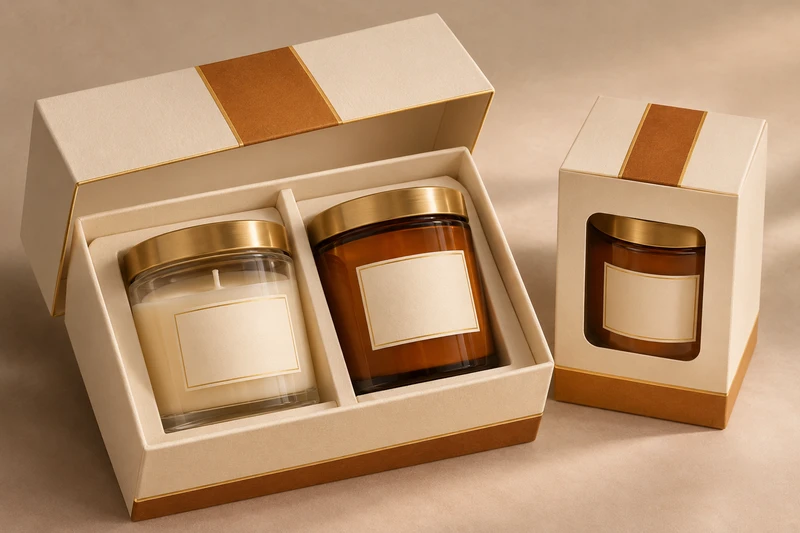
For candle brands, the best candle packaging ideas start with the jar rather than the artwork. A box for one glass vessel needs an efficient footprint, clear shelf presence and easy removal. A candle duo or gift set needs a planned layout that keeps each product separate, makes the set feel intentional and supports the opening experience.
For packaging buyers in South Africa, this means briefing the actual candle vessel dimensions, filled weight, lid shape and intended sales channel before selecting a box style. Retail shelves, online orders, corporate gifting and event favours can all call for different outer packaging, even where the candle itself is similar.
XGolden Print designs and produces custom paper packaging boxes, gift packaging, labels and stickers for applications including candles. We can support a candle packaging brief through structural design, material selection, artwork support, printing, finishing, fitted inserts and sample approval before production.
A different packaging idea for each candle-jar use
A single candle jar, a pair of matching candles and a curated gift set should not automatically use the same box concept. The contents, buying occasion and packing workflow all affect the structure.
| Candle-jar use | Main packaging requirement | Suitable box approach | Points to define in the brief |
|---|---|---|---|
| Single jar for retail | Compact display, clear branding and straightforward product access | Custom box sized around one vessel | Jar diameter, total height, filled weight, lid profile and shelf-facing artwork |
| Candle duo | A balanced layout that separates two jars | Lid-and-base box with a fitted two-vessel layout | Whether vessels sit side by side or lengthways, spacing and removal access |
| Candle gift set | A more deliberate unboxing sequence for one or more products | Magnetic closure gift box or custom gift box | Contents list, order of presentation, insert layout and gifting message |
| Corporate or event candle gift | Consistent presentation across a defined gifting programme | Coordinated box, insert and label or sticker artwork | Quantity, recipient details, event artwork, packing method and destination |
| Online candle order | A presentation box that works alongside a separate transit solution | Retail or gift box placed within a shipping layer | Presentation box dimensions, outer shipping layer and packing workflow |
The primary candle container is the jar, tin or other vessel that holds the wax. The paper box is an outer presentation layer. A fitted insert may hold the jar in position inside that box, but it does not replace the primary container or a separately planned shipping arrangement.
Before choosing from candle packaging ideas, decide what customers should receive. Is it one fragrance in a branded retail box? A seasonal two-candle pairing? A candle, matches and care card arranged as a gift? The answer shapes the internal layout as much as the outer box.
For ranges with several scents, use one structural format where jar dimensions are consistent, then differentiate variants through artwork, labels, stickers or printed fragrance names. Where vessels differ in diameter or height, confirm whether separate inserts, separate box sizes or a revised product range layout is needed. Trying to make one insert suit very different jars can result in an untidy presentation and awkward product removal.
Single jars on a retail shelf
A single-jar candle box should make the candle range recognisable while giving retail teams the information they need to identify the product. The front panel is usually the first visual surface seen on shelf, but the side and back panels also matter when boxes are stacked or displayed in rows.
Start with the physical dimensions:
- Measure the widest point of the vessel, not only the stated jar diameter.
- Record the jar height including its lid, stopper or decorative closure.
- Provide the filled product weight, as an empty vessel can give a misleading indication of the finished pack.
- Identify any irregular features, such as a domed lid, footed base, handle or tied ribbon.
- Consider how a person will lift the jar out of the box without needing to turn the package upside down.
A close-fitting box may create a neat retail silhouette, but it still needs practical clearance for packing and removal. The dimensions should be developed around the actual finished candle, including any label, lid and secondary decoration already applied to the jar.
Artwork should also follow the selling context. A shelf-facing candle pack may need a prominent fragrance name, scent family, collection name or variant cue. Brands selling in South Africa may also choose artwork that accommodates the languages and product information relevant to their own market and distribution plan. Provide final copy early, as text length can influence panel planning and visual hierarchy.
For a premium single jar, consider how the customer first encounters the product. A lid-and-base format provides a separate lid lift, while a drawer box introduces a pull-out motion. A simpler carton-style presentation may be appropriate where the priority is an efficient branded outer pack. The right choice depends on the retail position, candle vessel and intended opening experience, rather than a fixed rule about price point.
Labels and stickers can complement the box rather than duplicate it. A candle jar label can carry the fragrance identity on the primary vessel, while a sticker can identify a box variant, seal tissue or add a campaign message. Specify the intended surface—such as glass, a paper box or a bag—along with label dimensions, shape, placement and whether labels are supplied on rolls or sheets. Application method matters: a label intended for hand application may call for a different practical format from one applied during a repeat packing process.
A candle duo in a lid-and-base box
A candle duo needs more than a larger single-candle box. Two jars create a layout decision: should they sit beside one another, in a row, or as part of a broader set with cards or accessories? The opening should reveal the pair neatly and allow each jar to be removed without disturbing the other.
A lid-and-base box can suit a candle duo where a separate lid lift supports the presentation. The LB-324 candle duo lid-and-base box is a relevant style example for considering this format. Its inclusion as an example does not establish dimensions, materials or compatibility with a particular vessel; these should be confirmed against your candle jars and intended layout.
For a two-jar layout, define the relationship between the products:
- Matching pair: Two of the same candle may suit a symmetrical layout and repeat branding.
- Fragrance pairing: Complementary scents can be identified through distinct positions, colour cues or printed names.
- Day and evening set: The internal order can help tell the set’s story, with an opening card or divider providing context.
- Gift pair: Leave room for a message card, ribbon, product information or other planned gift element only if it is part of the final pack-out.
Spacing is important. If the jars are too close, the layout can appear crowded and make removal difficult. If they are too far apart, the box may become unnecessarily large for its contents. Structural design should consider the vessel width, the gap between products, the width of any insert walls and the clearance needed for fingers to reach each candle.
Also consider the packing sequence. Teams assembling the gift set need a repeatable order: place insert, position first candle, position second candle, add card if required, then close the lid. If the process requires excessive adjustment to make products sit correctly, the layout may need refinement before production.
Magnetic gift boxes and the opening experience
A magnetic closure box can be appropriate for a candle gift set where the opening experience is central to the product presentation. Rather than simply exposing a jar, the box can create a moment of reveal for a duo, a larger candle paired with smaller items, or a curated gifting collection.
The MC-324 candle gift magnetic box is a candle-gift magnetic style example. It can help buyers visualise a magnetic closure structure when discussing a gift box brief. Confirm the final dimensions, materials, internal layout and suitability against the specific candle products before proceeding.
The opening experience should be designed around a clear sequence:
- The recipient sees the outer brand and gift message.
- The closure opens without the contents immediately looking disordered.
- The candles and any accompanying pieces are presented in a deliberate arrangement.
- Each product can be lifted out without damaging the overall presentation.
- The box remains useful for the intended gifting moment, whether it is a retail purchase, corporate gift or event item.
For a candle gift box, the opening panel is a useful place for a printed message, collection description or brand detail. The inside of the lid can carry artwork that would not fit naturally on a shelf-facing outer panel. This is especially useful when the box is intended to be opened as part of a gifting occasion rather than selected quickly from a retail shelf.
Avoid overfilling the box. Adding too many pieces without planning their relative sizes can make a gift set feel improvised. List every intended component: candles, cards, accessories, wrapping and inserts. If a product is likely to change during development, flag this early, because a change in vessel height or diameter may affect the complete internal arrangement.
For corporate gifting or special events, coordinated branding can extend across the box, insert, candle labels and stickers. Event planners should provide the event name, artwork, recipient messaging, pack-out plan, quantity and required delivery destination as part of the initial brief. This helps distinguish a simple branded candle box from a multi-part gifting project.
Explore XGolden Print’s gift packaging options when the brief includes multiple products, coordinated branding and a planned opening experience.
Inserts and spacing around glass vessels
Glass candle vessels need an insert layout designed around their actual form. The purpose of the insert is to organise the contents inside the presentation box and provide a consistent visual arrangement. It should be considered with the full product, not as a generic add-on selected after the box has been designed.
Useful questions for the insert brief include:
- Does each vessel have a straight-sided, tapered or rounded profile?
- Is the widest point at the rim, body or base?
- Will a lid, dust cover, label or neck decoration change the finished dimensions?
- Must customers lift the candle from above, from the side or through a finger notch?
- Are there two equal jars, or a mix of candle sizes and accompanying items?
- Should the insert be visible as a design feature or mainly support a clean layout?
An insert can use individual cavities, dividers or a more open presentation layout depending on the products. The best option should be developed from the candle dimensions and the desired appearance. Do not assume that an insert intended for one jar will suit another glass vessel just because both have a similar nominal capacity.
Removal access is often overlooked. A tightly positioned jar may look tidy in a visual mock-up, yet be inconvenient for a customer to remove. Conversely, oversized cut-outs can make the contents look loose. A practical sample check lets the brand assess how the finished jar sits, how it is removed and whether the box closes as intended.
Where a gift set combines candles with non-candle items, identify which components need their own spaces. Cards, small accessories and printed inserts can shift the balance of the layout. The aim is not simply to fill empty space, but to make every item look considered when the box is opened.
Sample checks and a separate shipping layer
A physical sample is particularly useful for candle packaging because the jar’s real dimensions, weight and removal feel are difficult to judge from artwork alone. Sample approval before production gives the buyer an opportunity to check the structure, internal arrangement and visible presentation against the actual finished products.
For a candle jar sample review, check:
- The jar fits the agreed box and insert layout.
- The lid or closure does not interfere with closing the box.
- Both jars in a duo are correctly positioned and easy to remove.
- Product labels face the intended direction where orientation matters.
- Artwork panels, fragrance names and variant details appear in the right places.
- The packing team can follow a straightforward assembly sequence.
- Any cards, stickers, tissue or other planned components fit within the final layout.
A presentation box should also be distinguished from a complete transport protection system. A retail box or gift box is designed for presentation and product organisation. For online orders or distribution, plan a separate shipping layer around the finished presentation pack. The configuration of that outer layer, packing materials and handling requirements should be assessed for the individual project rather than assumed from the gift box structure.
This distinction is important for e-commerce teams. The customer may open an outer shipping pack first and then receive a clean, branded candle box inside. Planning the two layers separately helps preserve the intended gift or retail experience while allowing the fulfilment workflow to be discussed realistically.
Preparing a candle packaging brief
A detailed brief reduces avoidable changes during design and sampling. It also allows the packaging structure to be considered alongside artwork and pack-out requirements from the start.
Include the following when discussing custom candle packaging ideas:
- Candle vessel details: diameter at the widest point, total height, lid dimensions and filled weight.
- Set configuration: one jar, two jars, or a multi-product gift set, including all non-candle components.
- Use case: retail shelf, direct-to-consumer order, corporate gifting, wedding favour or special event.
- Box preference: lid-and-base, magnetic closure, drawer box or another custom paper box direction.
- Internal layout: individual cavities, divider requirements, product orientation and removal access.
- Artwork: logos, copy, fragrance names, local-language requirements, colour direction and files available.
- Labels or stickers: intended surface, placement, size, shape and preferred roll or sheet format.
- Quantity and timing: required quantity, sample expectations, required delivery date and destination.
- Shipping plan: whether the presentation box will sit inside a separate outer shipping layer.
XGolden Print brings 27 years of experience to custom paper packaging projects, supported by a 15,000 square metre factory, 500+ employees and 10M+ production capacity. Material selection, finishes, fitted inserts, order quantities, sample terms, pricing and schedules remain project-specific and should be confirmed for the individual candle range.
For a single jar, candle duo or gifting collection, discuss a custom box project with XGolden Print. Share your vessel dimensions, filled weight, quantity, artwork, required delivery date and destination so the packaging brief can be assessed around the finished candle products.
