
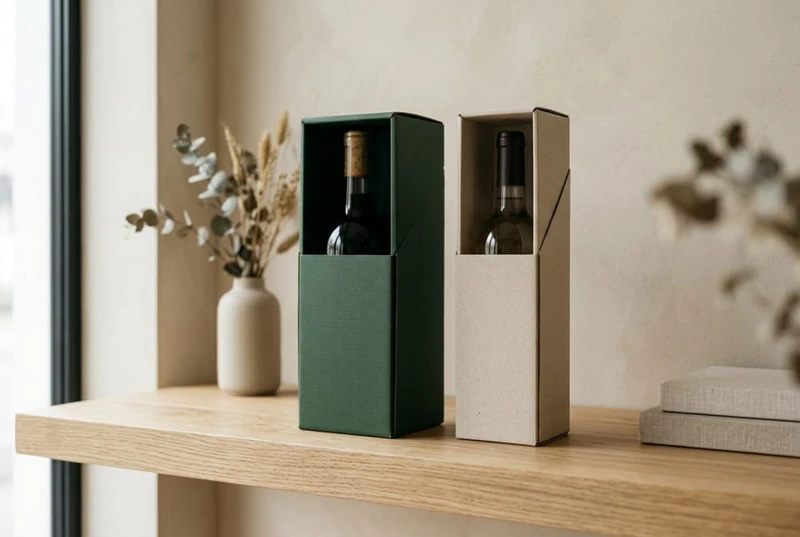
For beverage brands in South Africa, custom packaging is no longer only about wrapping a bottle. It is a practical tool for protection, retail performance, gifting value, and market positioning. Whether a brand sells cold-pressed juices in Johannesburg, botanical wellness shots in Cape Town, craft gin in Stellenbosch, or limited-edition syrups through online channels in Durban, the packaging has to do several jobs at once. It must protect glass, communicate quality, support handling across warehousing and transport routes, and still look sharp on shelf or when opened as a gift.
The strongest packaging systems are usually built in layers: the bottle label or sticker handles flavour and campaign messaging, the primary box creates visual presence and structure, inserts manage movement and impact, and the outer carton supports shipping, stacking, and cleaner retail handling. This approach helps brands reduce breakages, present products more consistently, and move into higher-value channels where presentation matters as much as protection. Businesses looking for tailored custom box solutions often find that a well-planned structure can lower long-term costs even when the initial unit cost is slightly higher.
Why this matters in the South African beverage market
South Africa offers a diverse beverage landscape with very different packaging demands across provinces and channels. Premium gifting ranges move through urban retail zones in Sandton, Rosebank, Umhlanga, and the V&A Waterfront, while larger distribution volumes pass through trade and logistics corridors connected to Durban Port, Cape Town Port, and inland hubs around Gauteng. Temperature variation, long road journeys, mixed handling practices, and a growing e-commerce market all influence packaging design choices.
Consumers are also buying differently. Retail shoppers want shelf clarity, premium appearance, and confidence that the bottle inside is secure. Online buyers expect protective delivery, neat unboxing, and packaging that feels intentional rather than overbuilt. Hospitality buyers, tasting rooms, specialty food shops, farm stalls, and wellness retailers each need slightly different box formats, display logic, and quantity configurations. For that reason, beverage packaging should be developed with the sales route in mind, not only the product itself.
Product categories and where packaging makes the biggest difference
In practice, bottled drinks, wellness products, and specialty beverages each create different risks and opportunities. A juice brand may need strong transit support and moisture-tolerant board selection. A premium olive brine tonic or kombucha range may need messaging space for ingredients and functional benefits. A giftable liqueur or small-batch spirit needs a more rigid presentation structure with a premium opening experience.
| Product segment | Common bottle type | Main packaging risk | Retail need | Online order need | Best packaging focus |
|---|---|---|---|---|---|
| Craft spirits | Heavy glass | Impact damage at neck and base | Premium shelf presence | Secure single-ship format | Rigid box with fitted insert |
| Cold-pressed juices | Light glass | Breakage from compression and vibration | Clear flavour visibility | Multi-pack stabilization | Partitioned corrugated system |
| Wellness shots | Small glass bottle | Movement inside gift or trial packs | Functional branding | Compact parcel efficiency | Close-tolerance inserts |
| Kombucha and specialty ferments | Tall glass | Top-heavy tipping in transit | Natural premium look | Leak-aware cushioning | Deep cell dividers and outer carton |
| Syrups and mixers | Medium glass | Label scuffing and bottle clash | Clean shelf display | Bundle handling | Display box plus shipping carton |
| Gift beverages | Decorative glass | Presentation damage | Seasonal visual appeal | Unboxing impact | Premium paper box with insert |
The table shows why one format rarely suits every beverage type. When structure follows the actual bottle size, weight, and route-to-market, packaging performs better and gives buyers a stronger impression of the brand.
Different packaging needs for bottled drinks, wellness products, and specialty beverages
Bottled drinks sold through supermarkets and convenience stores often need a balance between cost control and speed on shelf. These products may move in higher volumes, so packaging should be efficient to assemble, easy to stack, and clear in its messaging. Shelf-ready formats can reduce labour at store level, especially when distributors service multiple branches across Pretoria, Bloemfontein, East London, and Port Elizabeth.
Wellness products are different. They usually carry a more information-led value proposition, with functional claims, ingredients, dosage advice, or premium natural positioning. In these cases, the box or label should provide enough surface area for compliant, readable communication without making the product feel clinical. Smaller bottles also tend to shift around inside larger packs, so inserts are especially important in trial kits, subscription packs, and promotional samplers.
Specialty beverages such as craft spirits, non-alcoholic aperitifs, infused tonics, artisanal syrups, and festive releases benefit most from packaging that supports a premium story. Buyers in these categories often respond to tactile finishes, better board weight, deliberate opening sequences, and cleaner bottle presentation. This is where custom gift packaging can create a direct commercial return. A buyer comparing two bottles at a premium deli or online marketplace may decide based on perceived gift value as much as flavour profile.
For brands that need a more polished presentation layer, structured gift packaging options can support tastings, launch campaigns, corporate hampers, and festive bundles without requiring a total redesign of the bottle itself.
Insert designs that keep glass bottles safe during retail distribution and shipping
Insert design is one of the most important but most underestimated parts of beverage packaging. Many brands focus on print and finish first, then treat the insert as a basic add-on. In reality, the insert often decides whether the product arrives intact. A good insert reduces bottle movement, separates glass surfaces, absorbs shock, and keeps the bottle positioned correctly even after repeated handling.
In South Africa, where distribution may include long-distance trucking from production sites to urban retailers or fulfilment centres, vibration and repeated loading are common causes of packaging failure. Neck support is particularly important for taller bottles. Base locking matters for heavy spirits and oils. Multi-bottle sets require spacing that avoids bottle-to-bottle contact. If the package will be opened in a retail environment, the insert also has to look neat after the lid is lifted.
| Insert type | Best for | Main benefit | Appearance level | Shipping performance | Cost position |
|---|---|---|---|---|---|
| Folded paperboard cradle | Gift bottles and tasting packs | Clean fit and easy branding | High | Moderate | Medium |
| Corrugated divider grid | Retail multi-packs | Separates bottles efficiently | Medium | High | Low to medium |
| Die-cut locking insert | Single premium bottles | Controls neck and base movement | High | High | Medium |
| Pulp-mould style support | E-commerce sets | Shock absorption | Medium | Very high | Medium |
| Sleeve-and-collar insert | Tall bottles | Reduces top sway | High | Moderate to high | Medium |
| Foam alternative hybrid insert | Fragile premium items | Extra cushioning | High | Very high | High |
This comparison shows that insert choice should be tied to route, bottle fragility, and sales channel. A premium presentation insert may look excellent in-store, but if the product also ships direct to consumer, the structure may need reinforcement or a separate transit carton.
Gift-ready box concepts for holiday releases, tasting sets, and promotional bundles
Gift-ready packaging works best when it is designed around a specific occasion and quantity logic. A holiday release may need a dramatic reveal and stronger visual finishes. A tasting set should guide the order of discovery while holding several small bottles securely. A promotional bundle may need room for a branded card, garnish, glass accessory, or tasting notes. In all three cases, the packaging becomes part of the product experience rather than a simple outer shell.
For festive campaigns in South Africa, beverage brands often benefit from shorter seasonal runs timed around year-end corporate gifting, hospitality events, tourism traffic, and summer trade. This makes flexible print planning important. Instead of changing the main bottle label entirely, many brands keep the core packaging structure and update the lid print, slipcase, belly band, or sticker set. That protects brand recognition while keeping seasonal execution manageable.
Gift formats can also support local storytelling. A Cape Winelands tasting set, a Durban-inspired mixer collection, or a Johannesburg urban craft bundle can use regional cues in print and colour. These details help brands feel more rooted in place, which matters in premium food and beverage retail. The strongest box concepts are usually not the most ornate; they are the most coherent, with bottle fit, graphics, gifting purpose, and price point all aligned.
Sticker strategies for limited editions, flavors, and short-run campaigns
Stickers are one of the most cost-effective tools for beverage brands that need flexibility. They allow brands to manage flavour variation, batch coding, trial launches, market testing, and event-specific campaigns without replacing all printed packaging components. This is especially useful for emerging beverage businesses or seasonal ranges that do not justify a large run of fully pre-printed boxes.
A smart sticker system can separate fixed brand assets from variable campaign assets. For example, the main carton remains consistent, while colour-coded stickers identify flavour, holiday edition, tasting order, or retailer-exclusive variants. This approach reduces obsolete inventory and helps marketing teams respond faster to short campaign windows. Businesses that need this adaptability often use custom sticker printing for product campaigns to add short-run messaging without disturbing the base packaging program.
| Sticker application | Typical use | Best sales channel | Main benefit | Design tip | Risk to avoid |
|---|---|---|---|---|---|
| Flavour identifier | Multi-SKU ranges | Retail and online | Easy visual sorting | Use colour families consistently | Poor contrast on dark boxes |
| Limited edition badge | Seasonal launches | Gift retail | Adds urgency | Keep wording brief | Overcrowding premium design |
| Promotional callout | Bundles and offers | Mass retail | Quick campaign activation | Place away from opening seams | Torn stickers during handling |
| Batch or release marking | Small-batch products | Specialty stores | Supports authenticity | Use handwritten-style fields if suitable | Unreadable small text |
| QR code label | Storytelling and traceability | Direct-to-consumer | Extends brand content | Test scan on curved surfaces | Low print clarity |
| Retailer-exclusive marker | Channel-specific SKUs | Chain stores | Fast differentiation | Use a discreet brand-matched finish | Confusing mixed channel stock |
The real advantage of stickers is strategic flexibility. They help a beverage brand test, localize, and personalise stock with far less risk than reprinting every packaging component from scratch.
Outer carton planning for storage, handling, and cleaner shelf display
Outer cartons are often treated as back-end logistics tools, but they influence both cost and presentation. If the master carton dimensions are inefficient, brands waste storage space, pay more for transport, and create handling problems for retailers. If the outer carton is too weak, it crushes under stacking. If it is too large, inner units shift and suffer damage. If it opens badly, staff may damage the shelf-ready packs inside.
For beverage brands supplying supermarkets, deli chains, independent bottle stores, and online fulfilment partners, outer carton planning should cover unit count, hand holes if needed, pallet pattern, stacking strength, and ease of decanting onto shelf. Clean shelf display begins with outer packaging that protects printed sales units from dust, compression, and abrasion before they are opened.
| Factor | Operational purpose | Retail impact | Online impact | Common mistake | Better approach |
|---|---|---|---|---|---|
| Carton size | Fits pallet and storage racking | Less damage before shelfing | Improves parcel consolidation | Oversized void space | Design around exact inner pack count |
| Board strength | Supports stacking load | Protects display units | Prevents split cartons | Choosing lowest-cost board | Test for route and weight |
| Opening style | Speeds unpacking | Cleaner merchandised shelf | Faster fulfilment picking | Messy tear access | Add controlled tear lines |
| Internal partitioning | Reduces movement | Better bottle condition | Less transit breakage | No bottle separation | Use matched dividers |
| Print identification | Supports warehouse accuracy | Avoids wrong shelf stock | Improves order picking | Unclear variant coding | Large readable carton marks |
| Moisture resilience | Maintains structure | Keeps units presentable | Helps mixed-temperature movement | Ignoring humidity exposure | Choose board and coating accordingly |
Strong outer carton planning often saves more money than brands expect because it improves warehouse handling, lowers replacement costs, and protects the appearance of the sellable pack inside.
How packaging priorities change between retail channels and online orders
Retail packaging is built around visibility, shelf efficiency, and shopper decision-making. Online packaging is built around delivery survival, dimensional efficiency, and unboxing. The best beverage brands do not assume that one format can optimise both equally. Sometimes the answer is a dual system: a premium primary box for the product itself and a secondary transit carton for courier shipment.
In brick-and-mortar retail, facings, colour blocking, front-panel clarity, and shelf replenishment speed matter. A bottle should be easy to identify from one metre away. Staff should be able to replenish without damaging the pack. The box should hold shape even after some customer handling. In online sales, however, drop risk, edge crush, internal movement, and parcel weight become more important than visual stand-out in a crowded shelf set.
South African brands selling through both direct websites and physical stores often get better results when they map packaging by channel. Single-bottle premium orders may need stronger e-commerce inserts. Retail cases may need shelf-ready trays. Subscription wellness packs may need compact formats that reduce courier charges. This channel-based thinking prevents brands from overengineering retail packs or underprotecting online shipments.
Cost issues that beverage brands often overlook in packaging development
One of the most common packaging mistakes is focusing only on quoted unit price. The real cost of beverage packaging includes breakage, damage claims, assembly labour, warehousing inefficiency, poor pallet yield, delayed packing speed, excess void fill, outdated campaign stock, and missed premium pricing opportunities. A cheaper box that causes even a small increase in breakage can become more expensive than a better-structured solution.
Brands also overlook tooling logic, print complexity, and SKU proliferation. If every flavour gets a fully separate printed box, stock management becomes harder and leftover packaging can pile up. If a rigid gift box is used for an everyday SKU, the brand may spend too much for the actual market position. If the insert takes too long to assemble, labour costs can erode margin during peak season.
| Overlooked cost area | What happens | Short-term effect | Long-term effect | Who feels it most | Prevention step |
|---|---|---|---|---|---|
| Breakage replacements | Damaged bottles need resupply | Margin loss | Retail trust damage | Online sellers | Test inserts and shipper design |
| Slow packing time | Complex assembly at fulfilment | Higher labour cost | Peak season bottlenecks | Gift pack brands | Simplify folding sequence |
| Excess storage space | Bulky flat packs or cartons | Warehouse inefficiency | Higher overhead | Growing brands | Review footprint early |
| Obsolete printed stock | Campaign or flavour changes | Write-offs | Planning rigidity | Seasonal brands | Use stickers for variable data |
| Courier dimensional weight | Large low-density parcel | Higher shipping charge | Reduced online margin | DTC sellers | Optimise pack dimensions |
| Weak shelf presentation | Poor premium impression | Slower sell-through | Limits pricing power | Premium beverage brands | Align design with value tier |
The explanation is simple: packaging cost should be evaluated as a system cost, not only as a piece price. Brands that do this early usually make better decisions on structure, print variation, and channel strategy.
How custom packaging helps beverage products move into higher-value market segments
Custom packaging plays a major role when a beverage brand wants to move from a commodity position into a premium, specialty, or giftable segment. Buyers often read packaging as a signal of quality before they read tasting notes. A better-structured box, cleaner insert, stronger material choice, and more coherent visual system can justify higher price points because they change how the product is perceived in-store and online.
This does not always mean luxury in the traditional sense. In many cases, premium value comes from clarity, fit, consistency, and purpose. A wellness tonic packed in a disciplined, well-proportioned box with thoughtful flavour coding can feel more trustworthy. A spirit tasting kit with secure inserts and a well-planned opening sequence feels suitable for gifting. A short-run botanical beverage with refined labels and a protective carton looks ready for boutique retail and hospitality partnerships.
In higher-value segments, packaging also supports market access. Specialty retailers, curated gift shops, airport retail, premium grocers, and corporate gifting programmes often prefer products that arrive in presentation-ready formats. The more polished and resilient the pack, the easier it is for buyers to stock, display, and sell the product with confidence.
Market outlook and future direction to 2026
Looking toward 2026, South African beverage packaging will continue shifting around three forces: premiumisation, channel diversification, and sustainability expectations. More brands will seek packaging that supports both direct shipping and retail display. Regulations and buyer expectations around materials, waste reduction, and clearer information will place more pressure on structural efficiency and smarter print planning. Digital short runs and modular packaging systems are likely to become more common as brands try to balance variety with inventory control.
Technology will matter more as well. Better die-cut precision, faster proofing, and more accurate small-batch print handling will help beverage companies test limited editions with less risk. Sustainability will increasingly move from broad claims to measurable design choices such as right-sized cartons, reduced mixed materials, improved recyclability, and stronger transport efficiency. Policy and procurement pressure from retailers may also push brands toward more consistent data, traceability, and material transparency.
This line chart reflects a realistic upward demand pattern for premium beverage packaging as gifting, specialty retail, and direct-to-consumer formats expand across South Africa.
The bar chart highlights which beverage segments are most likely to invest in custom packaging, with gift sets and craft spirits typically showing the strongest packaging intensity.
The area chart shows how sustainability-led packaging choices are likely to grow, especially where transport efficiency and recyclability can be improved together.
This comparison chart illustrates why custom packaging tends to outperform standard off-the-shelf formats where premium perception, SKU management, and product safety are important.
Buying advice for beverage brands choosing custom packaging
Start with the bottle, not the artwork. Confirm dimensions, weight, cap profile, and label tolerance first. Then map the product journey: palletised wholesale, retail shelving, courier delivery, gifting, or all of these. From there, decide whether you need one structure or a layered system made up of primary box, insert, and outer carton. This approach reduces redesign later.
Next, classify which packaging elements need to stay constant and which need to change. Brand structure, core box format, and base printing can often remain stable while stickers, sleeves, or top labels carry campaign variation. This is especially useful for South African brands with seasonal demand spikes and multiple flavour lines.
Finally, request practical samples before full rollout. A good sample phase should test fit, opening experience, transit logic, and how the pack looks after routine handling. This is particularly important for glass bottles moving across long inland routes or through courier networks.
Applications across industries
Custom beverage packaging serves more than one industry. Retail grocery uses it for improved shelf efficiency and variant clarity. Hospitality uses it for minibar, tasting, and guest gifting formats. Corporate gifting uses it for branded bundles and year-end packs. Tourism uses it for region-themed products that need a strong takeaway feel. Wellness retail uses it for trust-building presentation and functional product explanation. Export-adjacent channels use it to improve resilience and presentation across multiple handling points.
Because these industries have different operational needs, packaging development should not be led only by visual preference. It should be guided by who handles the product, how often it moves, and what experience the buyer expects when receiving it.
Case examples from the local market context
A small craft distillery near Stellenbosch might use a premium single-bottle box with a locking insert for cellar-door sales and corporate gifting, while shipping the same product in a reinforced transit carton for online orders. A wellness start-up in Johannesburg may choose a standard outer box format and use colour-coded stickers to launch new shot blends without printing separate cartons for every variation. A Durban beverage brand supplying coastal gift stores could adopt moisture-aware outer cartons and compact tasting-set inserts to improve both presentation and storage.
These examples show that the best packaging strategy usually combines structural discipline with controlled flexibility. Brands do not need the most expensive solution. They need the right match between product, route, presentation goal, and replenishment model.
Working with local suppliers and production partners
Local supplier selection should focus on more than price and lead time. Beverage brands should look for partners who understand structural packaging, can advise on inserts and outer cartons, and can support both smaller custom runs and scale-up requirements. Access to production near major trade corridors can help with planning for deliveries into Gauteng, Cape Town, and KwaZulu-Natal. It is also useful to work with a supplier that can manage both presentation packaging and practical shipping formats instead of treating them as disconnected items.
Ask how the supplier handles proofing, fit checks, run consistency, and final inspection. For short campaigns, ask about efficient changeovers and sticker-based variation systems. For growing beverage brands, ask about repeatability across future orders so that packaging quality remains stable while the business scales.
Our packaging approach for South African beverage brands
Our operation supports beverage packaging through modern production technology that helps maintain accuracy in cutting, print application, and finishing. This technical capability is especially useful where bottle fit, insert tolerance, and repeatable presentation quality matter across gift boxes, paper boxes, and campaign-specific packaging.
On the manufacturing side, we can support both small-batch custom work and larger production volumes, which is valuable for beverage brands balancing test launches with ongoing retail supply. That flexibility allows businesses to develop tasting kits, holiday runs, promotional bundles, and standard retail packs without forcing every project into the same production model.
From a service perspective, our team works with attention to material choice, detail control, and final inspection so the finished packaging reflects the intended brand standard. For South African beverage companies, this means support not only in making attractive packaging, but in building packaging systems that suit handling, gifting, storage, and market positioning.
Frequently asked questions
What is the best box style for glass beverage bottles?
It depends on bottle weight, height, and channel. Single premium bottles often work best in rigid or folding cartons with locking inserts, while multi-packs usually need corrugated divider systems and strong outer cartons.
Are inserts really necessary for retail packs?
Yes, especially for glass. Inserts reduce breakage, keep the bottle centred, and improve the look of the product when the package is opened.
Can one pack work for both retail and e-commerce?
Sometimes, but not always. Many brands get better results by using a premium primary pack for display and a separate shipper for courier delivery.
How can brands control cost on short runs?
Keep the core box design stable and use stickers, sleeves, or limited print changes for seasonal and flavour variation. This reduces waste and improves stock flexibility.
What should South African brands consider for distribution?
They should consider long transport distances, mixed handling conditions, humidity exposure, storage efficiency, and retail replenishment needs across different provinces and sales channels.
Can custom packaging help justify a higher selling price?
Yes. Better packaging improves perceived value, gifting appeal, and buyer confidence, which can help products enter premium retail, hospitality, and specialty channels.
