
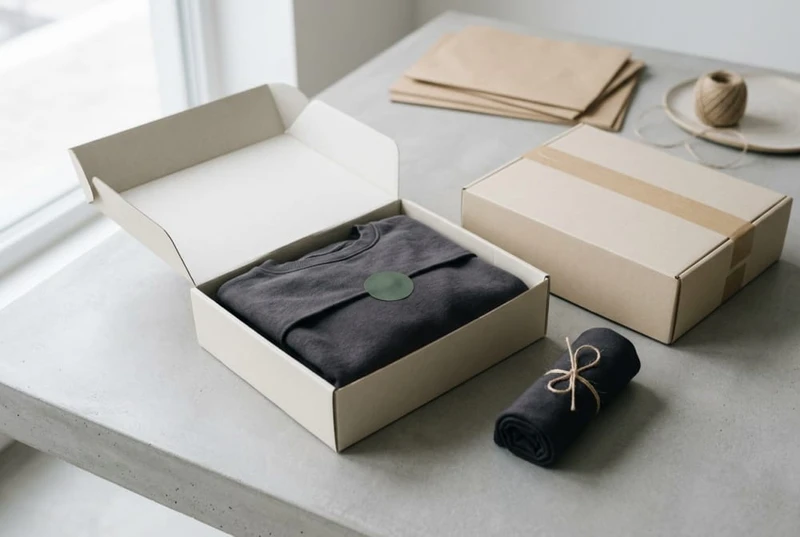
Apparel packaging does more than protect garments. In South Africa, it shapes how shoppers judge quality in Sandton boutiques, how buyers receive assortments in Durban and Cape Town distribution routes, and how online customers react when a parcel lands at their door in Johannesburg, Pretoria or Gqeberha. The right custom box, tissue wrap, insert card and sticker system can make a private-label range look cohesive across stores, wholesale deliveries and courier fulfilment. The wrong combination can create size confusion, damaged presentation and mixed brand signals.
For fashion businesses managing both shelf display and shipping cartons, the most effective approach is to match packaging to sales channel, garment type and customer expectation while keeping a consistent visual system. A boutique unboxing moment is different from a wholesale replenishment order. A premium launch set is different from a daily basics line. A satin-finish rigid box may suit a giftable capsule collection, while a strong folding carton with accurate size stickers may be better for volume movement. Across these needs, apparel brands often benefit from combining custom box solutions, branded sleeves, tissue, labels and apparel sticker options into one controlled packaging programme.
This guide explains how packaging changes between channels, what box styles work for folded garments and accessories, how premium gift presentation supports launches, and how material choices influence returns, reviews and repeat orders. It also covers common consistency problems in private-label packaging and practical ways to align packaging across garments, accessories and boxed sets for the South African market.
South African market context for apparel packaging
The South African fashion market is shaped by mixed retail formats. Formal mall retail remains important in areas such as Rosebank, Canal Walk and Gateway, while online apparel orders continue to grow through direct-to-consumer sites, social commerce and marketplace fulfilment. At the same time, wholesalers supply independent boutiques, chain buyers and regional resellers serving inland and coastal routes. Because stock may move through ports such as Durban or Cape Town, then into warehousing hubs in Gauteng, packaging must balance appearance with transit resilience.
For local apparel brands and importers, packaging decisions are often driven by six pressures: shelf presentation, freight efficiency, warehouse identification, returns reduction, social-media friendliness and cost discipline. A fashion business selling premium shirts in Hyde Park needs neat fold retention and refined finishing. A private-label basics supplier moving high volumes through wholesale accounts may need stackable cartons, clear sticker coding and easy replenishment handling. An online accessories label may need compact mailer-compatible cartons that survive courier networks without looking generic.
Buying teams in South Africa increasingly want packaging that supports sustainability claims without sacrificing polish. Recyclable board, water-based coatings and plastic-free inserts are becoming more important, especially for urban consumers who compare packaging details as part of overall brand value. By 2026, policy pressure on material traceability, extended producer responsibility thinking and retail waste reduction is likely to push apparel brands towards smarter board grades, simplified pack structures and better print planning.
Direct answer: what apparel brands should do first
If an apparel brand sells through boutiques, wholesale channels and online orders, it should create one packaging architecture with three execution levels. First, define a common brand system: colours, logo placement, typography, tissue style, insert tone of voice and sticker coding. Second, tailor structure by channel: elegant presentation boxes for boutique shelves, efficient transit-friendly cartons for wholesale and shock-resistant mailer-compatible packs for e-commerce. Third, separate premium and standard collections with finish upgrades rather than redesigning everything from scratch.
This approach keeps costs controlled while allowing each sales channel to perform. It also helps with reorders, onboarding new product lines and training warehouse teams. When the same label language, size sticker method and seal design appear across shirts, knitwear, accessories and coordinated gift sets, the customer perceives a stronger brand. The easiest win for most South African apparel businesses is to standardise sizing stickers, fold cards and box dimensions before investing in luxury add-ons.
What changes between boutique packaging, wholesale packaging, and online order packaging
Boutique packaging is presentation-led. It must look refined on shelf, protect folds, support gifting and make each piece feel considered. Boxes for boutique use often need cleaner edges, better print registration, softer-touch finishes or elegant inserts that frame a garment when opened. These boxes should not be oversized, because excess space can cheapen the presentation. Folded shirts, scarves or coordinated sets benefit from tissue layers, belly bands or neck cards that keep shape and reduce handling marks on display.
Wholesale packaging is efficiency-led. Buyers need reliable counting, barcoding, size visibility and easy warehouse movement. Instead of expensive decorative elements on every unit, wholesale packs often use sturdy folding cartons, inner separators, master cartons and strong sizing stickers that can be scanned or checked quickly. The packaging still needs to represent the brand, but unit economics matter more. For multi-size assortments and replenishment orders, sticker systems become crucial for reducing picking mistakes.
Online order packaging is delivery-led but still emotional. The parcel must survive courier handling, weather shifts and stacking pressure, especially across long-distance routes between coastal and inland cities. E-commerce garment packs need secure closures, moisture-aware materials and an unboxing experience strong enough to generate positive reviews. Customers will forgive simpler finishes if the garment arrives clean, crease-controlled and easy to return. They are less forgiving when luxury-looking packaging fails in transit.
In practice, many apparel brands in South Africa use a layered system: a branded inner garment box or wrap for presentation, then an outer shipping carton for courier movement. This protects the retail feel while controlling damage. For wholesale, the same branded inner units can be grouped into practical transit cartons. The structural design changes by channel, but the visual identity remains linked.
| Channel | Main objective | Typical box style | Sticker priority | Return risk | Recommended finish level |
|---|---|---|---|---|---|
| Boutique retail | Visual appeal and gifting | Rigid box or premium folding carton | Subtle size and seal labels | Low in-store, medium after purchase | High |
| Wholesale packs | Fast handling and stock control | Stackable folding cartons | Clear size, SKU and carton labels | Low if counting is correct | Moderate |
| Online direct orders | Transit protection and unboxing | Mailer-ready cartons with inner wrap | Seal, returns and campaign labels | Higher if fit expectations fail | Moderate to high |
| Marketplace fulfilment | Compliance and efficiency | Compact standardised cartons | Barcode and routing stickers | Medium | Moderate |
| Premium capsule launch | Memorable reveal and social sharing | Magnetic rigid gift box | Limited-edition campaign labels | Medium if transit is weak | Very high |
| Seasonal promotions | Fast turnaround with festive identity | Printed folding cartons | Promotional theme stickers | Medium | Moderate |
The table shows that the channel changes the packaging objective first, and the decoration level second. A strong apparel packaging system therefore starts with operational fit, then layers in brand expression.
Box and insert ideas for folded garments, accessories, and coordinated sets
Folded garments need support that preserves shape without adding unnecessary bulk. Shirts, blouses, knitwear and trousers often perform best in rectangular cartons with a calibrated depth, tissue wrap and a fold card that keeps edges straight. For delicate fabrics, an inner sheet can reduce abrasion from movement. For knitwear, breathable paper structures help prevent compression marks.
Accessories demand different proportions. Belts, scarves, ties, caps and small leather goods can look lost in oversized boxes, so inserts are essential. Die-cut board inserts, paper trays and custom sleeves keep the item centred and improve perceived value. Earrings or fashion jewellery packaged as apparel add-ons need snug internal holders and anti-scratch surfaces. If the item is sold near tills or gifted with garments, a compact gift box format works better than adapting a garment carton.
Coordinated sets such as shirt-and-tie combinations, sleepwear duos, baby sets, athleisure bundles or festive collections need packaging that communicates “complete outfit” at first glance. Window panels can help in physical retail if the fabrics and colours are part of the selling point. For premium sets, compartment inserts prevent the pieces from colliding and maintain neat separation. For online orders, compartment structures also reduce shifting during courier transport.
In South Africa, brands often benefit from standardising three to five core box sizes rather than creating a unique box for every SKU. This lowers cost, simplifies warehousing and improves reorder planning while still allowing multiple inserts for different products. A flexible insert system can support shirts in one season, scarves in another and bundled promotions during holiday campaigns.
| Product type | Best box format | Useful insert | Protection need | Display value | Best use channel |
|---|---|---|---|---|---|
| Folded shirts | Shallow rectangular carton | Fold card and tissue wrap | Medium | High | Boutique and online |
| Knitwear | Mid-depth carton | Soft tissue and shape board | Medium | High | Boutique and premium gifting |
| Scarves | Narrow box or sleeve box | Wrap band or rolled insert | Low | High | Boutique and seasonal sales |
| Belts | Long rigid or folding box | Die-cut hold-down insert | Medium | High | Retail gifting |
| Coordinated sets | Compartment box | Divider tray | High | Very high | Launches and premium orders |
| Caps and soft accessories | Protective carton with depth | Shape support insert | High | Medium | Online and wholesale |
This comparison shows why inserts matter as much as box shape. A well-designed insert can lift a standard carton into a premium presentation without requiring a full rigid-box budget.
Gift-packaging options for premium collections, launches, and seasonal promotions
Gift packaging is most effective when it signals occasion rather than simply adding cost. Premium collections can justify rigid boxes with magnetic closures, foil-stamped logos, textured papers, ribbon pulls or layered reveal sequences. However, the design should still fit the apparel category. A premium menswear shirt collection may suit understated embossing and deep matte colours. A festive women’s accessories launch may benefit from warmer colour accents, satin labels or illustrated tissue.
For launches, speed and memorability are often more important than ultra-complex structure. A folding carton with a high-impact sleeve, campaign sticker and printed message card may generate better return on budget than a heavy rigid box. Seasonal promotions such as Mother’s Day, year-end gifting, spring launches or heritage-themed collections can use temporary graphics, colour-coded labels and insert cards that sit over a core box style. This keeps the base packaging system consistent while making the campaign visible.
Premium gift packaging also performs well for influencer seeding, VIP clients and limited drops. In those cases, brands should think about camera-readability: clean top surfaces, strong opening sequence, neat edge wrapping and colours that photograph well in natural light. For South African businesses sending promotional packs between Johannesburg, Durban and Cape Town, the outer shipping layer should be strong enough that the inner gift box arrives without dented corners.
Brands wanting more variety can integrate gift packaging options for apparel with reusable boxes, drawer-style formats or structured sleeves for coordinated sets. The key is to keep branded details recognisable, even when the seasonal graphic treatment changes.
| Campaign type | Suggested structure | Visual feature | Budget level | Best product match | Operational note |
|---|---|---|---|---|---|
| Premium core collection | Rigid shoulder box | Embossed logo | High | Formalwear and premium knitwear | Best for lower volumes |
| Capsule launch | Drawer box | Campaign sleeve | High | Curated apparel sets | Excellent for reveal storytelling |
| Seasonal promotion | Printed folding carton | Theme sticker and insert card | Moderate | Accessories and gifts | Fast to update each season |
| Corporate gifting | Magnetic flap box | Name card holder | High | Branded apparel sets | Good for custom presentations |
| Holiday online offer | Mailer-safe premium carton | Printed tissue and seal label | Moderate | Single garments and bundles | Balances transit and presentation |
| Limited-edition drop | Numbered presentation box | Series sticker | Moderate to high | Collectors’ apparel and collaborations | Needs tight inventory control |
The table highlights that gift packaging should match both occasion and logistics. Seasonal flexibility matters as much as visual appeal.
Sticker uses for sizing, campaign themes, brand seals, and drop management
Stickers are one of the most cost-effective tools in apparel packaging because they solve operational problems and marketing needs at the same time. Size stickers help boutiques, wholesalers and warehouse teams identify stock without opening every box. For folded garments displayed in-store, a discreet size sticker on the side or base preserves the front presentation while improving staff efficiency. For wholesale cartons, larger external stickers can identify size ratio packs, colour assortments, SKU codes and destination details.
Campaign stickers help seasonal collections feel fresh without changing every printed box. A neutral core box can become a spring launch pack, a festive promotion or a limited-edition drop simply through updated sticker artwork, colour coding and messaging. This reduces waste and allows brands to react faster to market changes.
Brand seal stickers are particularly valuable for tissue wraps, inner paper bands and closure points. They create a sense of finishing care and reassure customers that the garment has not been handled excessively. For premium collections, textured or foil-accent stickers can act as subtle authenticity markers. For direct-to-consumer orders, return instruction stickers or tamper-evident seals can also help clarify whether a product was opened before return.
Drop management is another growing use case. Limited runs, collaboration pieces and numbered product batches often require visual differentiation that warehouse teams can recognise instantly. Colour-coded sticker systems are useful when stock moves quickly or when multiple drops launch near the same period. In South Africa’s mixed distribution environment, where products may pass from factory to warehouse to retailer or courier hub, sticker clarity saves time and reduces fulfilment errors.
| Sticker type | Main function | Where applied | Best material | Risk reduced | Brand value added |
|---|---|---|---|---|---|
| Size sticker | Fast product identification | Box side or base | Matte paper or removable stock | Picking errors | Low to medium |
| Campaign sticker | Seasonal visual update | Lid, sleeve or tissue seal | Printed paper | Obsolete stock appearance | High |
| Brand seal | Closure and authenticity cue | Tissue wrap or flap | Textured or foil label | Tampering concerns | High |
| Drop code sticker | Batch management | Outer carton and unit pack | Durable adhesive label | Inventory confusion | Medium |
| Returns sticker | Process guidance | Inside lid or insert card | Readable matte label | Return misuse | Medium |
| Outlet or markdown sticker | Price stage control | Temporary outer area | Removable adhesive stock | Packaging damage on removal | Low |
This table shows how stickers can do much more than decorate. They support stock accuracy, campaign agility and customer trust.
How packaging affects returns, product reviews, and repeat customer perception
Packaging has a direct impact on apparel returns because it shapes first impressions and product clarity. When a garment arrives badly creased, loose in the box or with inconsistent sizing signals, the customer becomes less confident in the purchase even before trying it on. On the other hand, neat folding, clear insert guidance and professional sealing suggest care and accuracy. That confidence can lower the emotional trigger for returns.
Customer reviews often mention details that brands underestimate: whether the garment looked premium on arrival, whether the box felt gift-worthy, whether the tissue and stickers appeared thoughtful or cheap, and whether the returns process was easy to understand. In e-commerce especially, packaging often becomes part of the product story. A customer ordering a premium coordinated set expects packaging that supports the price point. If the pack looks generic, the review may still criticise “value” even when the garment itself is acceptable.
Repeat purchasing is strongly linked to packaging consistency. Customers remember whether a brand feels reliable. If every order arrives with the same quality level, visual language and practical touches, the brand earns trust. This matters for subscription-like buying patterns, restocks of basics and seasonal repeat purchases. Consistency also helps when brands expand into accessories and giftable sets, because the customer instantly recognises the packaging family.
Return logistics can also improve through better packaging design. Reusable cartons, simple opening methods and a clearly placed returns card make reverse logistics easier. For South African customers dealing with courier collections or regional drop-off points, frustration with re-packing can turn into negative brand feedback. Packaging should therefore support both the outbound and return journey.
Material and finish choices that reflect different fashion positioning
Material and finish choices communicate brand positioning before the garment is touched. A minimalist premium label often benefits from dense board, soft-touch lamination, subtle embossing and disciplined colour use. A youthful streetwear brand may work better with kraft textures, bold print contrast, black seals or industrial-style stickers. A sustainable fashion range may lean into uncoated recycled board, soy-based inks and visible material honesty rather than heavy coatings.
In the South African market, material choice should also reflect transport realities and humidity changes along logistics routes. Thin board may look fine in a sample meeting but fail in courier handling. Overly glossy finishes may scratch in warehouse movement. Matte finishes can look elegant but need enough scuff resistance. For accessories, heavier board can improve shape protection. For large apparel sets, reinforced corners or structured inserts may be more important than decorative extras.
Brands should think about finish in tiers. Standard lines may use clean printed cartons with one brand colour and a reliable seal sticker. Mid-tier collections can add spot UV, textured paper or coloured inner printing. Premium collections can use rigid structures, foil accents or layered reveal components. The strategic point is that each finish choice should clearly support price positioning, not simply add ornament.
Looking towards 2026, packaging trends for fashion in South Africa are likely to include stronger demand for fibre-based materials, reduced plastic content, smarter digital short-run printing for seasonal launches, scannable QR elements for authenticity and care guidance, and more transparency about recyclability. Retailers may increasingly prefer suppliers who can adapt finishes without disrupting lead times.
The line chart indicates a realistic upward demand trend as more apparel brands combine retail display requirements with e-commerce fulfilment needs.
Mistakes that make private-label apparel packaging look inconsistent
The first major mistake is changing visual elements too often. When logo placement shifts between shirts, scarves and gift sets, or when colour tones vary from one production run to another, the brand begins to look fragmented. Private-label businesses are especially vulnerable because they often manage multiple SKUs, seasonal updates and different order sizes. Without a packaging standards guide, inconsistency creeps in quickly.
The second mistake is mixing structure quality levels without reason. A premium-looking shirt box paired with a flimsy accessory sleeve can create confusion. So can a luxury rigid set box followed by a plain, unbranded courier presentation for online reorders. Customers may wonder whether products came from the same company.
The third mistake is poor sticker discipline. Oversized size labels, crooked seals, mismatched campaign graphics and ad hoc markdown labels can instantly weaken otherwise good packaging. Since stickers are often added late in the process, they need strict placement and design rules.
Another common problem is ignoring product-specific fit. Using one oversized box for everything can reduce packaging costs on paper but often creates poor presentation, damaged folds and wasted void space. The result is both operational inefficiency and a lower-end feel. The opposite mistake is over-customising every SKU, which complicates procurement and inventory.
Finally, some brands separate design and operations too much. Marketing creates a beautiful concept, but warehouse teams cannot label it efficiently or couriers damage it in transit. Consistent private-label packaging only works when design, manufacturing and fulfilment are aligned from the beginning.
The bar chart shows that online fashion and wholesale private-label demand are among the strongest drivers of apparel packaging decisions in the current market.
How to keep packaging aligned across clothing, accessories, and boxed sets
Alignment starts with a packaging matrix. This should define approved box sizes, core materials, logo positions, sticker styles, colour references, insert templates and finish tiers. Once the matrix exists, clothing, accessories and boxed sets can share the same visual DNA even when structures differ. A shirt box may be rectangular, a scarf box narrow and a coordinated set box compartmentalised, but they can still use the same palette, typographic rules, tissue print and seal system.
Brands should also define a hierarchy of touchpoints. For example, the logo on the outer lid may always sit centred or top-left. Size stickers may always use the same typography and colour key. Insert cards may always speak in the same tone. If a customer buys a blouse online, then later receives an accessory gift set in-store, the packaging should feel unmistakably related.
Another practical tool is modular inserts. A common outer box can be adapted with different internal structures for belts, folded tops, scarves or promotional bundles. This reduces SKU complexity while preserving fit and presentation. It also makes seasonal campaigns faster, because the core carton remains unchanged and the inside arrangement does the work.
For brands operating across South Africa’s retail and courier landscape, alignment also means documenting how products are packed at dispatch. Standard folding methods, tissue counts, seal placement and outer-carton protocols prevent presentation drift between different warehouses or fulfilment partners. This matters when orders are dispatched in different provinces but must still feel identical to the customer.
The area chart reflects a clear trend shift: apparel brands are moving away from generic packaging towards more standardised branded systems that support customer retention.
Buying advice for South African apparel brands
When buying apparel packaging, start with operational questions before visual upgrades. Ask how many box sizes are truly needed, which items require inserts, how stickers will be managed, what transit risks the packaging must survive, and whether returns need to be supported. Then build finish levels around those answers.
For smaller brands, it is often smarter to invest in one strong core system rather than a mix of unrelated packs bought from different suppliers. A standard folding carton, a premium box option, a branded tissue design and a disciplined sticker family can already create a professional experience. Larger brands should audit stock movement patterns by category and channel, then set packaging specifications based on actual order profiles.
Buyers in Johannesburg and Pretoria may prioritise lead time and warehouse efficiency, while coastal operators near Durban and Cape Town may focus more on freight resilience and moisture-aware board selection. In both cases, requesting production samples packed as actual garments is better than approving flat material swatches alone.
Industry applications and product segments
Apparel packaging is relevant across fashion retail, schoolwear, uniforms, promotional clothing, boutique accessories, corporate gifting, occasion wear, athleisure, maternity, babywear and seasonal lifestyle sets. Each segment has different demands. Uniform suppliers often prioritise accurate size coding and bulk handling. Occasion wear brands require shape protection and premium reveal. Athleisure labels want modern presentation that still fits courier economics. Boutique accessory brands often need compact structures with high perceived value.
For private-label operations, the most useful packaging systems are those that can flex across multiple garment categories without losing identity. This is why modular inserts, consistent stickers and controlled print standards matter so much.
Case-style examples from the local market
A Cape Town resortwear label selling both in-store and online may use a crisp folding carton with soft tissue for shirts and kaftans, then add seasonal stickers during summer promotions aimed at tourists and gift buyers. A Johannesburg menswear brand may invest in structured shirt boxes for boutique shelves while using coded master cartons for wholesale replenishment into Gauteng and KwaZulu-Natal retailers. A Durban accessories brand may rely on compact premium sleeves inside stronger shipping cartons so beach humidity and transport handling do not affect presentation.
These examples show that there is no single best box. The best choice is the one that fits product, route, audience and channel while staying visibly connected to the brand.
Our company for South Africa apparel packaging projects
For apparel brands needing a dependable packaging partner, our role is to help translate brand intent into workable production specifications. On the technology side, our workshop uses advanced machinery that supports accurate box construction, reliable print execution and controlled finishing across gift boxes, paper boxes, stickers and coordinated packaging components. This matters when a fashion brand needs clean repeat quality from sampling to production.
On the manufacturing side, we are set up to handle both smaller custom runs and larger-scale orders with consistent attention to detail. Material selection, structural accuracy and final inspection are handled carefully so that apparel boxes, inserts and stickers match the requirements of different clothing lines, accessories and promotional sets. That flexibility is valuable for South African brands balancing launches, core stock and replenishment cycles.
On the service side, we support clients who need packaging solutions rather than isolated products. That means helping align gift boxes, folding cartons, seals and labels into one practical system, whether the need is boutique presentation, wholesale efficiency or online order protection. The goal is packaging that works commercially and visually, not just packaging that looks good in a mock-up.
The comparison chart illustrates the advantage of working with a packaging supplier that can support structure, stickers and premium presentation within one coordinated process.
FAQ
What box style is best for folded garments? A shallow rectangular carton with tissue and a fold card works well for most shirts, blouses and lightweight knitwear because it preserves shape and presents neatly.
Are rigid boxes necessary for premium apparel? Not always. Many premium collections perform well in strong folding cartons with refined finishes and elegant inserts. Rigid boxes are best when gifting and presentation are central to the sale.
How can brands reduce packaging inconsistency? Use a standards guide covering box sizes, finishes, logo placement, sticker rules, insert templates and packing instructions across all channels.
Do stickers really matter that much? Yes. They improve sizing accuracy, support campaign changes, help stock management and create a more finished customer experience.
What should South African brands prioritise for 2026? Smarter fibre-based materials, better recyclability, digital flexibility for short runs, clearer traceability and packaging systems that perform across both retail shelves and e-commerce deliveries.
Apparel packaging in South Africa works best when it is channel-aware, product-specific and visually consistent. Brands that align boutique display, wholesale handling and online delivery through the right mix of boxes, inserts, gift packaging and stickers are more likely to reduce confusion, protect garments, improve reviews and build repeat customer trust.
